Category Archives: research

Meteorological tower erected on campus

Georgia Power erected a meteorology tower on the UGA Marine Science Campus. The tower is the first construction of a two-year project that will also include three wind turbines. The 198-foot tower was raised into position on Feb. 24.

OLYMPUS DIGITAL CAMERAThe structures are part of a demonstration project to study the feasibility of generating wind power in Georgia using small scale wind turbines. The Georgia Power-sponsored project will feature small scale turbines, up to 10 kilowatts each—the size customers might install on their own property—plus a meteorological tower.

Georgia Southern University is also partnering in the research for this project. GSU’s primary focus is to study the environmental aspects of small wind turbines including the impact on noise levels and avian life.

A time lapse video of the raising can be viewed on YouTube:

Death in the ocean keeps Skidaway Institute’s Harvey’s research alive

UGA Skidaway Institute of Oceanography scientist Elizabeth Harvey travels to the farthest reaches of the globe and in the nastiest weather to study microscopic marine plants known as phytoplankton. Last fall, Harvey spent a month on board a research ship in the turbulent North Atlantic as part of a NASA-funded project to learn more about these tiny organisms that are vital to life on the planet.
OLYMPUS DIGITAL CAMERAHarvey is one of UGA Skidaway Institute’s newest researchers, having joined the faculty in August of last year. Originally from Maine, she received her doctorate in oceanography from the University of Rhode Island and followed that with a position as a post-doctoral investigator at Woods Hole Oceanographic Institute. While she has a broad set of interests, phytoplankton have become the focus of her research.

“Phytoplankton are really important to a lot of different processes that impact life on Earth,” Harvey said. “They are at the bottom of the food chain so they are really important for feeding higher trophic levels like fish — and even higher — to whales really.”

Phytoplankton also play an important role in how nutrients and carbon are cycled around the world. It’s estimated that phytoplankton provide about 50 percent of the oxygen we breathe.

“So if you like breathing oxygen, you should like phytoplankton,” she said.

To study phytoplankton, she said, is to look into a world where lots of different interactions happen. Harvey’s work specifically focuses on the interactions between those single cell plants and the other organisms around them, including microzooplankton predators, bacteria and other phytoplankton. She hopes to better understand some of those individual interactions in order to make predictions on a larger scale.

“You wouldn’t think a single cell could be so dynamic, but phytoplankton are really complex,” Harvey said. “Rumor is NASA once took a look at one particular class of phytoplankton to see if they were extra-terrestrial.”

Using sensors on their cell surface, phytoplankton can sense their immediate surroundings — detecting organisms around them, sensing predators and modifying their behavior to escape predation. Some also produce toxic compounds in self-defense.

“Amazingly, they have very specific but very important interactions with other organisms,” she said. “You wouldn’t think a single cell could to that, but they do, and it can have some large-scale consequences.”

Last fall’s cruise on board the Woods Hole Research Vessel Atlantis was part of the NASA-sponsored North Atlantic Aerosols and Marine Ecosystems Study, or NAAMES. It was the first of a series of cruises to study an annual spring phytoplankton bloom in the North Atlantic. Harvey was one of 32 scientists on board. Her particular role was to measure phytoplankton mortality by both looking at the rate that phytoplankton were subject to predation or “grazing” by microzooplankton and also mortality due to viruses.

“I like to try to get people’s attention by telling them I am interested in death, which I sort of am,” Harvey said. “I am interested in how phytoplankton die.”

Understanding the relationship of phytoplankton mortality due to grazing compared to viral infections is important when trying to understand how carbon flows through marine ecosystems. The carbon from phytoplankton cells consumed by microzooplankton may continue to travel up the food web, while carbon from phytoplankton killed by viruses fuels the growth of other microbes, or could result in carbon sinking to the deep ocean.

Cruising the North Atlantic in November was no picnic. Harvey recalled 30-foot seas and 50-knot winds.

“That was a little adventurous,” she said. “We couldn’t do deck work. I didn’t tell my parents or husband about that.”

However, at 274 feet long and displacing more than 3,500 tons, the R/V Atlantis is a fairly large research ship, and Harvey says she never felt unsafe.

The days frequently started at 4 a.m. when scientists would lower an instrument package over the side to measure ocean conditions like salinity and temperature and to collect water samples. The scientists would work until eight or nine in the evening before catching some sleep and starting again the next morning.

“It’s a lot of long, hard work, but, on the other hand, your life becomes very simple,” she said. “The commitments in your normal life fade away. Someone even cooks your food for you every day.

“You work for long hours, but in the scheme of things, that is what you are there to do. There are no other distractions.”

Harvey says she was very happy to be part of the science team on the first cruise of the NAAMES project, and she enjoyed working with the other scientists on board.

“Everyone was very collegial and thrilled to be a part of a really cool project,” she said. “Scientists always like to get data, so sometimes I think that if I can be collecting new data, I am happy.”

Skidaway Institute’s Diaz studies the tiny organisms with a big impact

Like many oceanographers, Julia Diaz is difficult to categorize. Is she a biologist, or is she a chemist? The answer is — a little of both. Diaz’s research interests lie where biology and chemistry meet.

“My absolute favorite thing in the world is looking at phytoplankton under the microscope,” she said. “And I am also very passionate about chemistry.

OLYMPUS DIGITAL CAMERA“Our chemical environment really shapes our health and impacts our climate and all kinds of natural resources. So I am interested in the intersection of those two parts of nature — how tiny microscopic life interacts with the invisible chemistry out there to shape the environment in some pretty big ways.”

Diaz joined the faculty of UGA Skidaway Institute of Oceanography in fall 2015 as a homecoming of sorts. She was raised in Alpharetta just outside Atlanta. She graduated summa cum laude from the University of Georgia with a degree in biology and then went on to earn a Ph.D. in earth and atmospheric sciences from Georgia Tech. Her postdoctoral work took her to Harvard University and Woods Hole Oceanographic Institution.

Diaz targeted science as her future from an early age. Her father is a retired Georgia State University professor, and her entire family was involved in education. Her brother is an astrophysicist, and she jokes that they study opposite ends of the universe—with her specializing in the very small while he studies the very large.

“I grew up talking about science with my dad, my brother and my mom,” she said. “It was always on my mind, and I was pretty good at it. It felt good to learn and to always be exploring new things.”

As an undergrad at UGA, her interest in science grew into a passion.

“I got into some really cool classes, where we basically spent two days out of the week staring down a microscope at pond water and it was just the coolest thing,” she said. “All these creatures that you would never imagine are there. It’s amazing — this whole other world that really drew me in.”

In graduate school, Diaz focused more on chemistry to complement her background in biology.

“I originally got interested in marine chemistry and biology because I was inspired by the fact that, billions of years ago, marine microbes created oxygen and other life-giving chemicals to make this planet the habitable place that it is,” she said.

Diaz’s work has taken her from the Caribbean to Antarctica.

“One of the best parts about this job is that it lets you see the world. Antarctica was the most amazing experience — you never get tired of seeing penguins,” she said.

Diaz with her penguin friends

Diaz with her penguin friends

“Personally, I never got tired of looking at Antarctic phytoplankton, either. They can attach to the underside of sea ice, making it look like it’s been dipped in coffee, but under the microscope, it’s like peering inside a jewelry box of gorgeous single cells, so many ornate shapes and vibrant colors. It’s just magical.”

Many of Diaz’s projects focus on phytoplankton — microscopic plantlike organisms that drift with the ocean’s currents. They form the base of the marine food chain and produce half of the oxygen in the atmosphere. Among other projects, she studies how starving phytoplankton obtain the chemical nutrients they need from seawater, and she attempts to identify the enzymes that drive those biogeochemical processes.

Diaz is also interested in how phytoplankton convert chemical elements into forms that can be harmful or beneficial to life, such as reactive oxygen species, or ROS, types of oxygen with additional electrons. They are produced in all living things as a byproduct of metabolism.

“ROS can be toxic, but they can also be very beneficial to life,” Diaz said. “They can serve as cell signals that promote growth and immune defense. Our own white blood cells produce ROS as a defense mechanism against invading pathogens.”

An important facet her work seeks to understand is how phytoplankton may use ROS to survive stressful situations, such as attack by predators. These ROS-driven processes may play a role in the formation and decline of giant phytoplankton blooms so large they can be seen by satellites.

She admits her work can be challenging to communicate outside of her field, because much of the research cannot be seen by the naked eye. However, she said, those invisible chemical processes are occurring in the ocean over sizeable areas and long time periods, and they produce large visible effects that shape our daily lives.

“From starvation to cell defense, a lot of the work I do relates to stress in the oceans — how marine life copes with stressful conditions, how stress changes the chemistry of the oceans and ultimately how that changes the environment on a global scale. The oceans are under increasing amounts of stress due to climate change, pollution and other human impacts, so I think this kind of research has an important place in the understanding of our changing planet.”

###

Black gill stakeholders meeting set for June 22

As the 2016 Georgia shrimping season gets underway, the University of Georgia Marine Extension and Georgia Sea Grant, and the UGA Skidaway Institute of Oceanography will host a meeting to present the latest research and other information on black gill in Georgia and South Carolina shrimp. The meeting will be held at the UGA Marine Extension Aquarium at the north end of Skidaway Island in Savannah, Ga. on Wednesday, June 22, from 1-4 p.m.

Black gill is a condition affecting the coastal shrimp population. It is caused by a microscopic parasite. Many shrimpers believe black gill may be largely responsible for reduced shrimp harvests in recent years. UGA Skidaway Institute scientist Marc Frischer is leading a research project, now in its third year, into the causes and effects of black gill on the Georgia and South Carolina shrimp population.

A shrimp with the Black Gill condition clearly evident.

A shrimp with the Black Gill condition clearly evident.

The purpose of the meeting is to provide stakeholders, such as shrimpers, fish house owners, wholesalers or anyone else interested in black gill, with an update on black gill research efforts.  Frischer and South Carolina Department of Natural Resources scientist Amy Fowler and will present their latest research findings. UGA Marine Extension and the Georgia Department of Natural Resources will also provide updates. The meeting will be open to the public.

The meeting is for information purposes only. No management decisions will be made.

For additional information, contact Bryan Fluech, UGA Marine Extension, at (912) 264-7269.

What: Black Gill Stakeholders Meeting

When: Wednesday, June 22, 1-4: p.m.

Where: UGA  Aquarium, 30 Ocean Science Circle, Savannah, Ga., 31411

Directions: http://marex.uga.edu/visit_aquarium/

Gray’s Reef sponsors ‘A Fishy Affair’ to combat lionfish

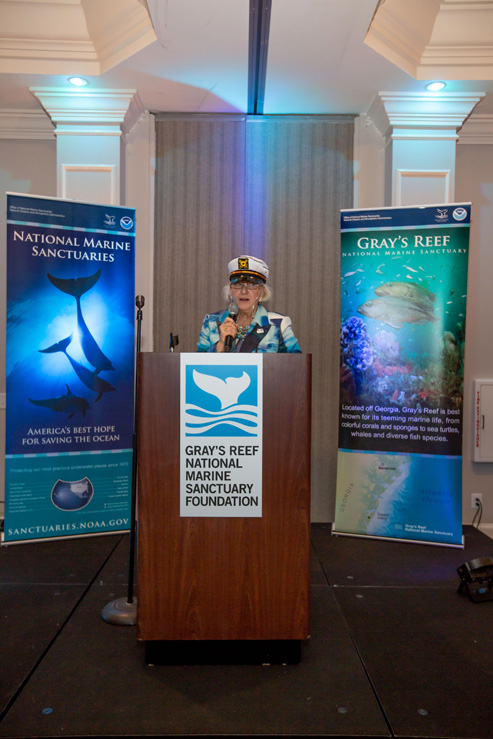
The Gray’s Reef National Marine Sanctuary Foundation hosted its first major fundraiser on Sept. 24 – “A Fishy Affair: Malicious but Delicious.” Four of Savannah’s prominent chefs cooked up their best lionfish dishes in an effort to encourage restaurants to put lionfish on their menus because they are invasive — but tasty – creatures. The event was sold out, and almost 250 people enjoyed the evening.

A Fishy Affair board member Kathryn Levitt.

A Fishy Affair board member Kathryn Levitt.

The lionfish is native to the tropical waters of the South Pacific and Indian Oceans. They are popular in home aquariums but are now invading ecosystems throughout the Atlantic coast and Caribbean. Lionfish damage the ocean by eating up to 20 small fish per day. With a very quick reproduction rate and no natural predators in Atlantic waters, they have multiplied quickly and threaten the natural biodiversity that provides economic and recreational opportunities. While completely removing lionfish from Atlantic and Caribbean waters is unlikely, reducing their numbers is critical to the ocean and for Gray’s Reef.

A Fishy Affair featured a full dinner, a short award-winning lionfish film, “Ocean Invaders,” by Mandee Malonee, a live Lionfish for viewing and a small live auction.  All proceeds benefit Gray’s Reef National Marine Sanctuary Foundation.

‘Modena’ strikes oil

The UGA Skidaway Institute Autonomous Underwater Vehicle “Modena” found oil last summer, but not in the way anyone expected.

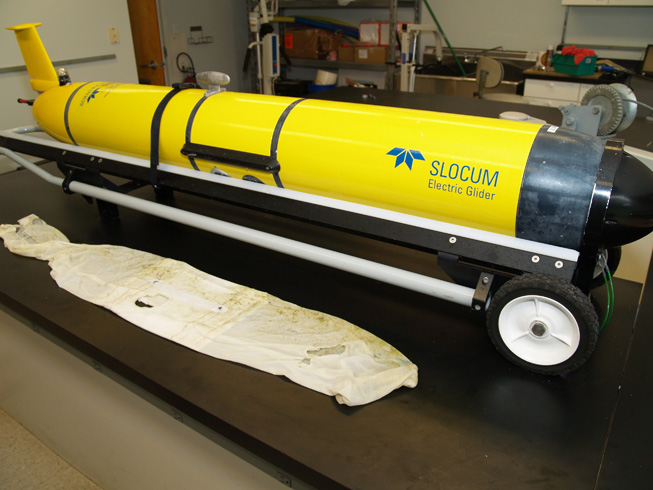
Modena was dispatched into the Gulf of Mexico as part of the ECOGIG (Ecosystem Impacts of Oil & Gas Inputs to the Gulf) research project to study the long-term effects of the Deepwater Horizon oil spill on the Gulf ecosystem. When the researchers, including Skidaway Institute scientist Catherine Edwards, recovered Modena, they discovered her fabric skin was covered with dark blotches. At first the team thought it was some sort of algae. Closer examination revealed the spots were created by oil droplets in the water.

Modena and  her oil-stained skin.

Modena and her oil-stained skin.

Oil stains on Modena's skin.

Oil stains on Modena’s skin.

Edwards and the team believe the oil stains were caused by droplets from the spill that have remained suspended in the water column.

Gray’s Reef conducts drifter and dye studies


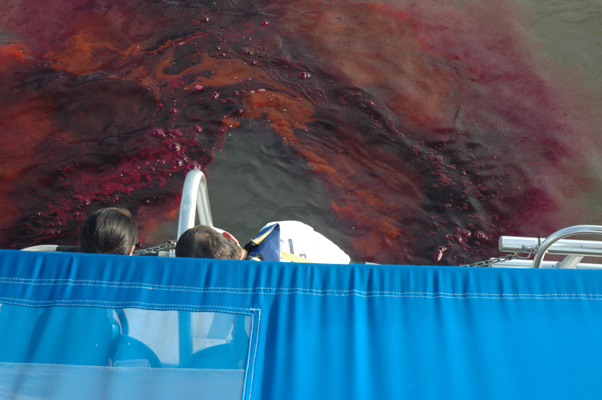
In September, Gray’s Reef and its partner, Georgia Southern University, completed the last in a series of dye and drifter releases to track the outflow of the Altamaha River. The Altamaha is the third largest river basin on the Atlantic seaboard, and its watershed drains almost 25 percent of Georgia’s land mass.  It is also the closest freshwater source to Gray’s Reef, found 16 miles offshore.

Dye being released from the stern of the research boat.

Dye being released from the stern of the research boat.

By tracking the path of the dye and drifters, researchers can provide estimates of the extent to which the Altamaha River outflow delivers various contaminants, nutrients, freshwater and solid material to hard-bottom reefs such as Gray’s Reef and to Georgia’s coastline.

Georgia Southern University invites educators to replicate the drifter study and has developed an instructional video and guide for future drifter deployments.

UGA Skidaway Institute scientist stands atop the globe


UGA Skidaway Institute of Oceanography researcher Chris Marsay has stood on top of the world—literally.

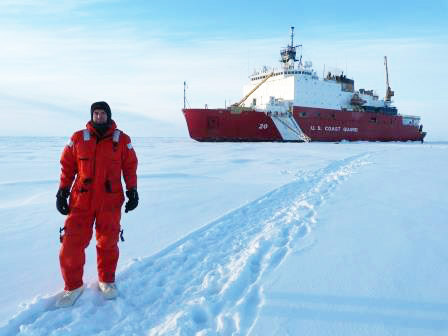
Marsay arrived at the North Pole in early September and took part in the U.S .GEOTRACES Arctic Expedition on board the U.S. Coast Guard Cutter Healy, a polar icebreaker.

Marsay at the North Pole in front of the U.S. Coast Guard Cutter Healy.

Marsay at the North Pole in front of the U.S. Coast Guard Cutter Healy.

The project is part of an international, multiple icebreaker effort to conduct geochemical sampling of the Arctic Ocean. The cruise arrived at 90 degrees north on Sept. 5 in what is the first occupation of the North Pole by an unaccompanied U.S. surface ship—submarines usually follow ships below the ice. While at the pole, the Healy rendezvoused with the German ship conducting the German leg of the GEOTRACES Arctic program.

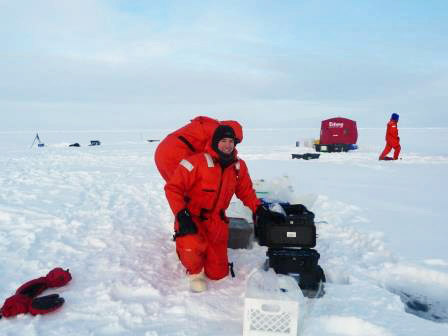
Marsay with his gear at the North Pole.

Marsay with his gear at the North Pole.

Marsay is working with UGA Skidaway Institute professor Cliff Buck and scientists from Florida State University and Rutgers University. The research team was funded by the National Science Foundation to collect samples from the atmosphere, precipitation and surface water from melt ponds during the cruise.

“Our research goals are to describe the chemistry of atmospheric deposition to the region and quantify flux rates,” Buck said. “These data will then be shared with the scientific community to better understand biogeochemical cycling of trace elements and isotopes in the Arctic Ocean.”

Diaz joins UGA Skidaway Institute faculty

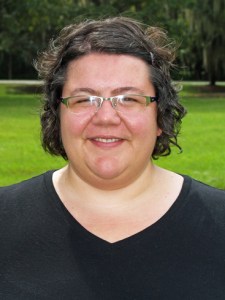
Marine biogeochemist Julia Diaz has joined the faculty of the University of Georgia Skidaway Institute of Oceanography as an assistant professor.

OLYMPUS DIGITAL CAMERAOriginally from Alpharetta, Ga., Diaz was graduated summa cum laude from the University of Georgia with a B.S. in biology and went on to earn her Ph.D. in earth and atmospheric sciences from Georgia Tech. She conducted postdoctoral research at Harvard University and the Woods Hole Oceanographic Institution.

Diaz’s research examines how the chemistry and microbiology of the oceans shape each other and, ultimately, how this interaction affects ecosystem health from local to global scales. She is currently studying the chemical basis of coral bleaching, a devastating consequence of global warming which threatens coral reefs worldwide.

“I also study how microscopic plantlike organisms acquire the chemical nutrients they need to survive in extremely nutrient-poor areas of the ocean and how these processes may affect ecosystem structure and climate,” she said. “My research has taken me all over the world, from Antarctica to the Caribbean, and now I am very excited to explore new scientific questions along our beautiful coast and offshore waters.”

Joint summer course draws notice

The joint summer course taught partially at Skidaway Institute has received some attention.

Taught by Jim Nelson and Dana Savidge at Skidaway, and Mary Ann Moran at Sapelo Island, the new program was the featured, cover story in the most recent issue of the University of Georgia Magazine. (Click the image to access the article.)

GM_Sept15 w

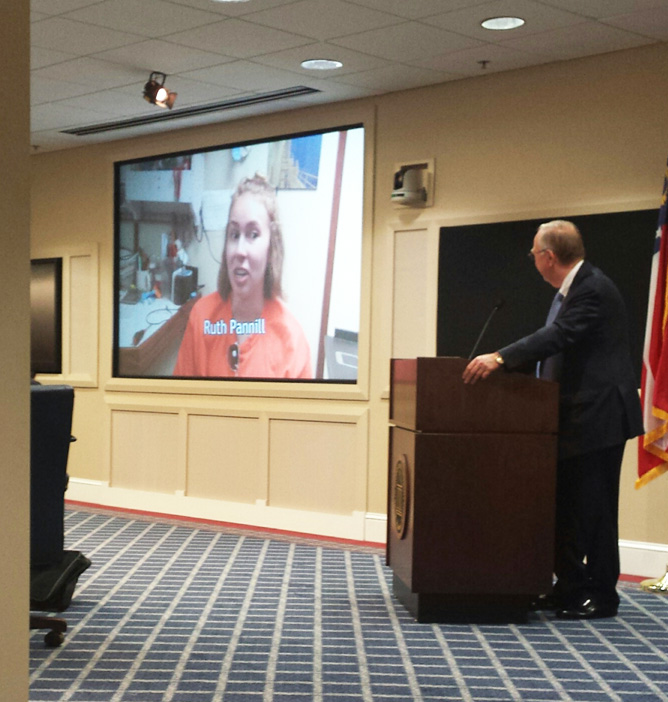
USG Chancellor Hank Huckaby featured a video produced on the project at the August Board of Regents meeting as part of his report to the board.

BOR Video w