Tag Archives: university of georgia

UGA Skidaway Institute launches new website

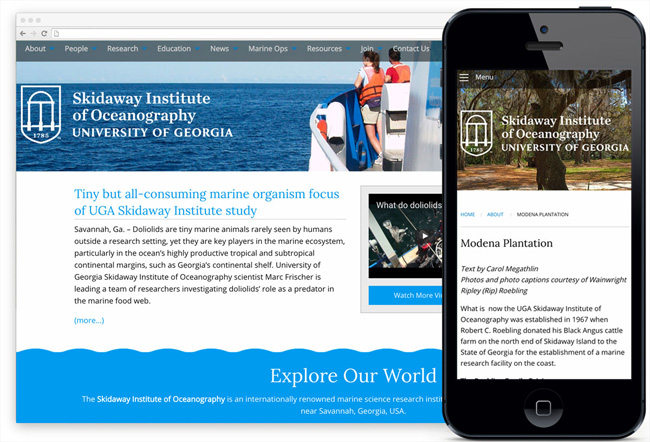
UGA’s Skidaway Institute of Oceanography launched its new website in April. Keeping the old URL, www.skio.uga.edu, the new site is more functional and visually appealing. The site was designed by Heideldesign, a Savannah-based firm, and the content was created by the Skidaway Institute’s staff.The new site is easily navigable and uses photography from the Skidaway Institute campus. It utilizes a blue color pallette and wave graphics to reflect the institute’s focus on the ocean world.

The main site content is divided into the research center’s four disciplinary areas, allowing visitors and prospective and current students to dig in deeper to the study area of their choice. Faculty members have their own profile pages as well as lab pages, and each faculty member can log on to the site and add information, files, videos and photos. In addition, the site provides a wealth of content, including images and videos, on Skidaway Institute research, operations, outreach and resources.

The new site is powered by the content management system WordPress, which means administrators can also easily add news releases, publications and other information, keeping site content fresh and up to date.

Rider helped educate UGA Aquarium visitors, now back in his natural habitat

by Emily Woodward

Rider, a loggerhead sea turtle which spent the last three years at the UGA Marine Education Center and Aquarium, was returned to his natural home in the ocean.

Lisa Olenderski gives Rider a little encouragement to walk to the ocean.

“It went well,” said Devin Dumont, head curator at the aquarium. “Rider seemed a little unsure at first, but after we placed him in the water, his instincts kicked in and he went on his way.”

Prior to the release, Rider was tagged by Joe Pfaller, research director of the Caretta Research Project, so that he can be identified if encountered again. After receiving the tags, the 50-pound sea turtle was loaded onto a skiff and transported to Wassaw Island National Wildlife Refuge.

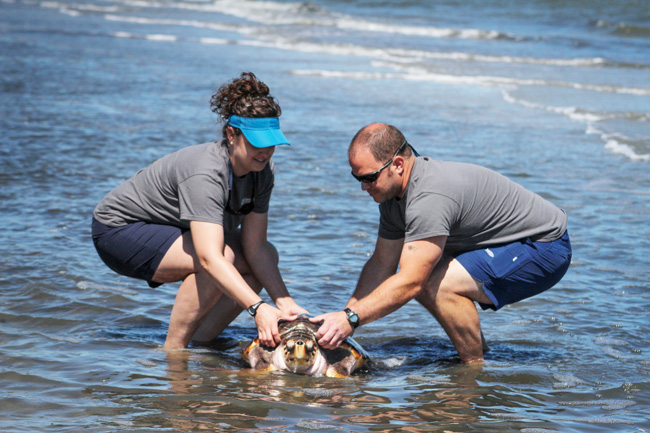
Once at the beach, Dumont and Lisa Olenderski, assistant curator at the aquarium, lifted him from his tub and placed him on the sand. Rider crawled forward a few inches before stopping, as if not quite sure what to do next. With a little help from Dumont and Olenderksi, Rider eventually made it to the surf where he swam in circles a few times, orienting himself to his new surroundings, before disappearing into the waves.

Lisa Olenderski and Devin Dumont help Rider into the surf.

Rider arrived at the UGA Marine Education Center and Aquarium as a straggler discovered during a nest excavation by members of Caretta Research Project who monitor the sea turtle nests on Wassaw Island. Stragglers that don’t make it out of the nest with the rest of the hatchlings typically have a much lower chance of survival. By giving them a temporary home at the aquarium, it increases the likelihood that they’ll make it in the wild.

Rider played an important role educating visitors to the UGA Aquarium. As an ambassador sea turtle, he was featured in multiple marine education classes and outreach programs for all age groups, from pre-K to adult.

“We estimate that Rider saw about 70,000 visitors,” said Olenderski. “If each of those people left knowing just one new fact about sea turtles or gained a new appreciation for them, it’s all worth it.”

In preparation for the release, Rider was fed live food, such as blue crabs and mussels, to practice active foraging and hunting skills. Prior to the release, the aquarium staff also received approval from the Georgia Department of Natural Resources and Terry Norton, a veterinarian, and director and founder of the Georgia Sea Turtle Center on Jekyll Island.

“We’re always appreciative of the opportunity to work with multiple partners on the coast through our ambassador sea turtle program,” said Dumont. “Because of this collaborative effort, Rider has a much stronger chance of making it to adulthood.”

Symposium highlights UGA Marine Extension and Georgia Sea Grant impacts

When Hurricane Matthew hit the Georgia coast last October washing away some of its sandy shoreline, UGA was ready.

With funding from Georgia Sea Grant, the UGA Skidaway Institute of Oceanography already was studying sand resources and creating an inventory of sand deposits along the coast. Researchers are using that inventory to identify areas where sand was available to replenish the coastline that was lost during the storm. Replacing the lost sand is important to protect lives and property, as well as critical habitats, from coastal hazards.

“The sand resources in our state waters are the most poorly known of all the states along the east coast,” said Clark Alexander, interim director of Skidaway Institute. “This research enables us to create maps identifying offshore areas that are suitable for beach nourishment and habitat restoration projects. With these data, we can know where suitable sand exists if we need it in the future after major storms.”

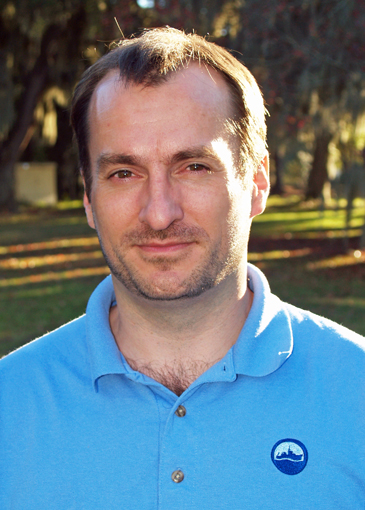
Clark Alexander

Alexander was one of many researchers across Georgia who presented a project during the Marine Extension and Georgia Sea Grant Research Symposium in Athens on June 1. The annual symposium provides an opportunity for researchers to share their Sea Grant-funded work, network with others in the scientific community and look for collaborative ways to tackle the latest issues impacting the coast.

“Case studies presented during the symposium aptly illustrated Georgia Sea Grant’s success in elevating awareness of coastal issues, increasing local communities’ resilience to the effects of a changing climate and developing models that can be replicated to improve conditions on a global scale,” said Paul Wolff, chair of the Marine Extension and Georgia Sea Grant Advisory Board.

Marc Frischer describes research into black gill in shrimp.

From projects that look at how to get local seafood into inland markets to those that measure the productivity of Georgia’s expansive salt marshes, Sea Grant-funded research spans a variety of topics and emphasizes the importance of multidisciplinary, collaborative research and outreach to effectively enhance coastal communities and ecosystems.

Research proposals submitted to Georgia Sea Grant are expected to include an education and outreach component to ensure that results reach beyond the research community and are delivered to a diverse audience.

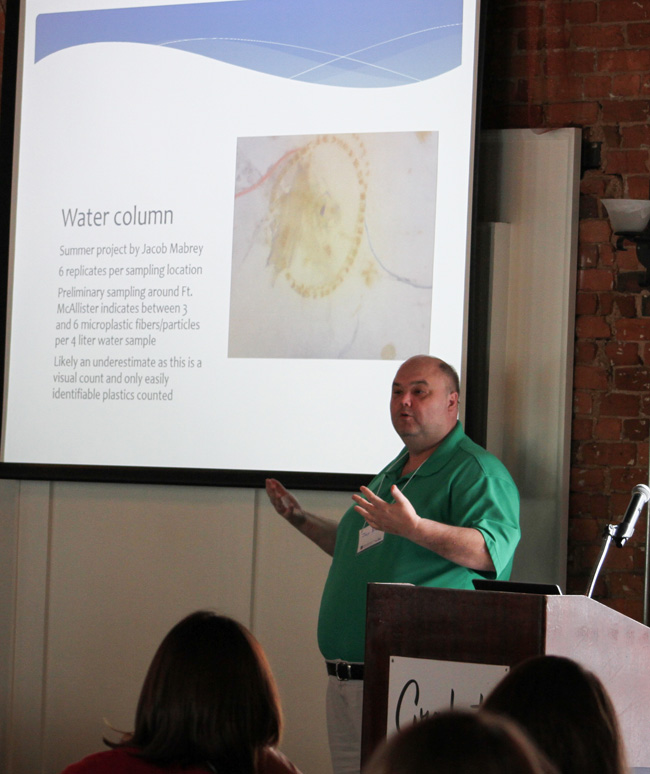
Jay Brandes presents his research into microplastics on the Georgia coast.

Education and extension faculty and staff at Marine Extension and Georgia Sea Grant work to incorporate Sea Grant-funded research into public programs, workshops and curricula targeted to pre-k through college age students, resource managers, decision makers, the seafood industry and beyond.

“We received a record number of research funding preproposals this year and many of those submitting full proposals attended the research symposium,” said Mark Risse, director of Marine Extension and Georgia Sea Grant. “Being able to learn from projects that have proved successful should strengthen research efforts and allow us to support projects that move rapidly to application and impact.”

Kayla Clark describes the Sea Grant intern program.

Other presenters from the Skidaway Marine Science Campus included UGA Skidaway Institute professors Jay Brandes and Marc Frischer, and from Marine Extension, associate director for marine education Anne Lindsay and public programs coordinator Kayla Clark.

Registration is now open for the 2017 Youth Ocean Conservation Summit

UGA Marine Extension and Georgia Sea Grant is hosting Georgia’s third annual Youth Ocean Conservation Summit on Saturday, Jan. 28, at the Marine Education Center and Aquarium on Skidaway Island. This summit, one of several taking place across the country, empowers students with the knowledge, skills and resources necessary to successfully implement ocean conservation projects.

The event will include skill-building workshops, brainstorming sessions, citizen science presentations and panels featuring professionals working on coastal issues in Georgia. At the end of the day, students will work together to develop and present ideas for conservation efforts that they could lead in their local communities. The event is being organized by the 2016-2017 Georgia Sea Grant Marine Education Interns Kira Krall, Hannah Kittler, Hannah Edwards and McKenna Lyons.

Online registration opens Dec. 5 and closes Jan. 18. The summit is limited to 50 students on a first-come, first-served basis. A $10 registration fee includes lunch and all materials. To register, complete the online registration form and payment.

For more information, visit the Marine Extension and Georgia Sea Grant website http://marex.uga.edu/yocs/.


K-12 teachers learn from Rivers to Reefs

by Michelle Riley / Gray’s Reef National Marine Sanctuary

In June, Gray’s Reef National Marine Sanctuary hosted the 13th annual Rivers to Reefs Workshop for Educators in association with the University of Georgia Skidaway Institute of Oceanography, the Georgia Aquarium and Gordon State College. Cathy Sakas, chair of the Gray’s Reef National Marine Sanctuary Foundation, and Kim Morris-Zarneke, manager of education programs at Georgia Aquarium, served as the primary leaders of the workshop, with assistance from Theresa Stanley of Gordon State College.  Michelle Riley from Gray’s Reef National Marine Sanctuary served as communications lead.

Rivers to Reefs is an educational expedition for teachers, focused on Georgia’s Altamaha River watershed. During the six-day trip, 16 Georgia science teachers canoed the Oconee, Ocmulgee and Altamaha rivers into the Sapelo estuary, crawled through salt marshes, traveled to Gray’s Reef and trawled the Wilmington River. They learned and explored the connections between the watershed and the ocean.

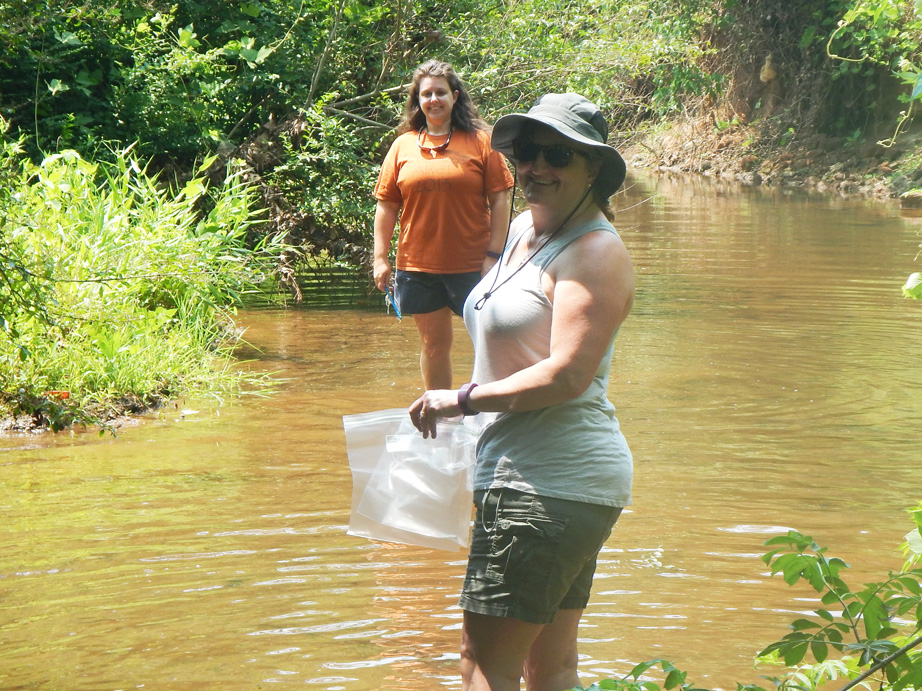
Teachers Marilyn Kinney (foreground) and Candace Bridges collect water samples in Flat Shoals Creek. Photo: Michelle Riley

Teachers Marilyn Kinney (foreground) and Candace Bridges collect water samples in Flat Shoals Creek. Photo: Michelle Riley

The week was packed with activities that most teachers never experience, beginning with a behind-the-scenes orientation at Georgia Aquarium, and it included an offshore trip to Gray’s Reef National Marine Sanctuary aboard the first working research vessel the educators had ever seen close up, Skidaway Institute’s R/V Savannah. In between, the group explored creeks, waterfalls, rivers and estuaries, and saw an abundance of flora and fauna. They frequently stopped to collect water samples, conduct water quality tests and record environmental factors to determine the overall health of the creeks and streams that flow to the river system. As the week progressed, the teachers developed an understanding of the profound influence the waters flowing through the Altamaha River watershed have on the health of Gray’s Reef and were inspired to teach their students about environmental responsibility and ocean literacy.

Always a highlight of the workshop, the marsh crawl on Sapelo Island was a memorable experience. The group sloshed on their bellies through the thick dark mud to learn why marshes are considered some of the most important and productive habitats on Earth. The estuary that encompasses the salt marsh, where the freshwater from the Altamaha River mixes with the saltwater of the Atlantic, is one of the largest estuary systems on the Atlantic coast.

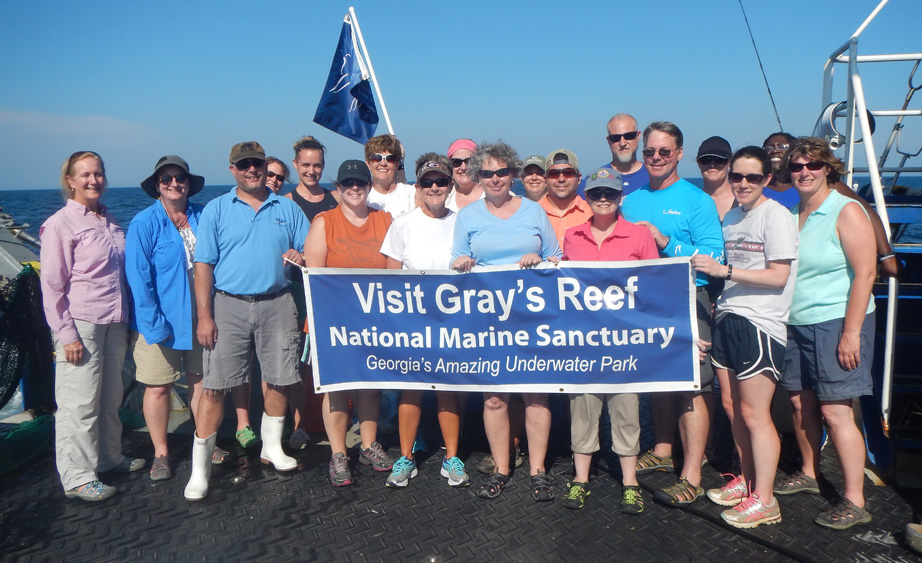
The teachers on board the Research Vessel Savannah.

The teachers on board the Research Vessel Savannah.

Waters were calm for the voyage out to Gray’s Reef National Marine Sanctuary on the R/V Savannah under the command of Capt. John Bichy, marine superintendent at UGA Skidaway Institute. With extensive assistance from the R/V Savannah crew, the teachers conducted water quality tests at three separate points in the ocean. Meanwhile, the ship’s crew pulled a trawl net through the ocean at midwater depth and brought in many interesting fish, a large pile of Georgia shrimp and a handful of sharks, including a hammerhead and a small Atlantic sharpnose shark. During the trip, the teachers were delighted when they were treated to lessons by professor Marc Frischer of Skidaway Institute on black gill in shrimp and on pelagic tunicates called doliolids. While in the sanctuary, the crew deployed an underwater camera to allow the teachers to see the reef and its sea creatures in real time, without getting wet.

On the final day of Rivers to Reefs, the teachers boarded UGA’s R/V Sea Dawg, a smaller vessel used by the UGA Marine Education Center and Aquarium, a unit of the UGA Marine Extension and Georgia Sea Grant. Capt. John “Crawfish” Crawford and Anne Lindsay, associate director for marine education, conducted a field class during the two-hour trawling voyage in the Wilmington River. The teachers recorded the catch for research purposes and ended their trip with a wrap-up by Frischer and the expedition leaders, before scattering across Georgia with great memories and a treasure trove of experiences to pass on to their students this fall.

Skidaway Marine Science Campus weathers Hurricane Matthew

Hurricane Matthew is now a memory, but like most of the coastal area, the Skidaway Marine Science Campus still bears signs of its passage.

The Skidaway Institute docks were heavily damaged by wave action at both at the main campus and the Priest Landing sites. While most of the campus buildings remained above the water line, the storm surge inundated some of the facilities shops at the north end of the campus with up to 24 inches of water. Due to the water damage, extensive internal repairs were needed.

One of Skidaway Institute's shop buildings at the height of the storm.

One of Skidaway Institute’s shop buildings at the height of the storm.

The UGA Aquarium was able to reopen the weekend following the storm, but parts of the Jay Wolfe Nature Trail remain closed due to downed trees and debris.

It also became necessary to cancel the campus’s annual open house event, Skidaway Marine Science Day. Both Clark Alexander, interim director of UGA Skidaway Institute of Oceanography, and Mark Risse, director of UGA Marine Extension and Georgia Sea Grant, had hoped to reschedule the event, but no other date was available this fall.

Downed trees and storm debris near Gray's Reef National Marine Sanctuary's building.

Downed trees and storm debris near Gray’s Reef National Marine Sanctuary’s building.

“We are upset we are not able to offer this great event this year,” Alexander said. “However, we will be back bigger and stronger in 2017.”

Skidaway Marine Science Day has been an annual event on the Skidaway campus since 2001. The free, family-oriented program is presented jointly by the UGA Skidaway Institute, UGA Marine Extension and Georgia Sea Grant, and Gray’s Reef National Marine Sanctuary.

Fall black gill cruise rolls out new smartphone app for better data collection

The University of Georgia Skidaway Institute of Oceanography entered the fourth year of its black gill research program with a daylong cruise on board the Research Vessel Savannah and the introduction of a new smartphone app that will allow shrimpers to help scientists collect data on the problem.

Led by UGA scientists Marc Frischer, Richard Lee, Kyle Johnsen and Jeb Byers, the black gill study is being conducted in partnership with UGA Marine Extension and Georgia Sea Grant, and is funded by Georgia Sea Grant.

Black gill is a condition Georgia shrimpers first noticed in the mid-1990s. Many shrimpers have blamed black gill for poor shrimp harvests in recent years, but until Frischer began his study, almost nothing was known about the condition. Now the researchers know black gill is caused by a parasite—a single-cell animal called a ciliate—although the exact type of ciliate is still a mystery.

The October cruise had three goals. The first was simply to collect data and live shrimp for additional experiments.

“We were able to collect enough live shrimp in good shape to set up our next experiment,” Frischer said. “We are planning on running another direct mortality study to investigate the relationship between temperature and black gill mortality. This time, instead of comparing ambient temperature to cooler temperatures as we did last spring and summer, we will investigate the effects of warming.”
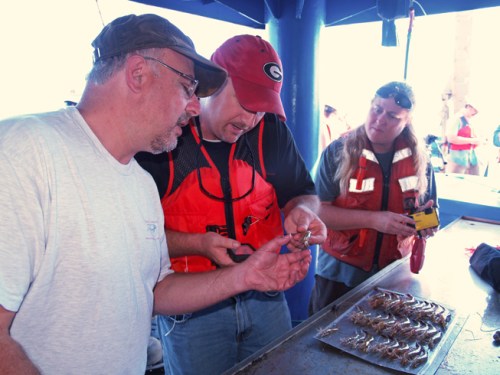
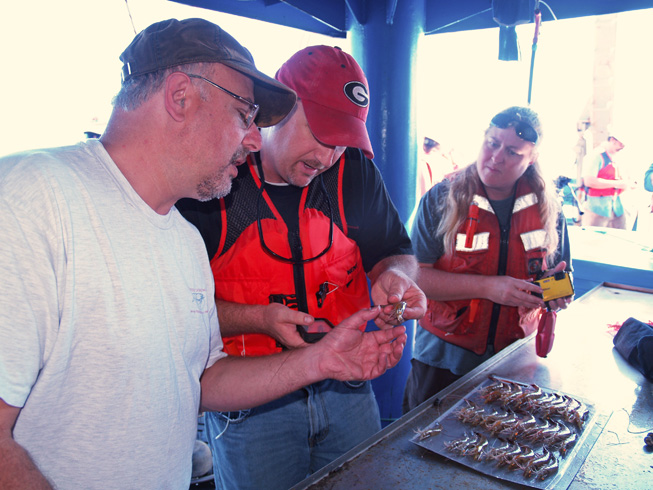
Researchers Marc Frischer (UGA Skidaway Institute), Brian Fluech and Lisa Gentit (both UGA Marine Extension and Georgia Sea Grant) examine shrimp for signs of black gill.

Researchers Marc Frischer (UGA Skidaway Institute), Brian Fluech and Lisa Gentit (both UGA Marine Extension and Georgia Sea Grant) examine shrimp for signs of black gill.

If his hypothesis is correct, Frischer believes researchers would expect that raising fall water temperatures to warmer summer levels in a laboratory setting will induce black gill associated mortality in the shrimp caught in the fall.

Those studies will be compared to those that are being conducted in South Carolina in a slightly different manner. Frischer expects the results should be similar.

“However, as it goes with research, we are expecting surprises,” Frischer continued. “We also collected a good set of samples that will contribute to our understanding of the distribution and impact of black gill.”

A second goal was to introduce and begin field testing a new smartphone application developed by Johnsen. The app is intended to be a tool that will allow shrimp boat captains and recreational shrimpers to assist the researchers by filling some of the holes in the data by documenting the extent of black gill throughout the shrimp season. The Georgia Department of Natural Resources conducts surveys of the shrimp population up and down the coast throughout the year. However, those surveys do not provide the researchers with the rich data set they need to really get an accurate assessment of the black gill problem.
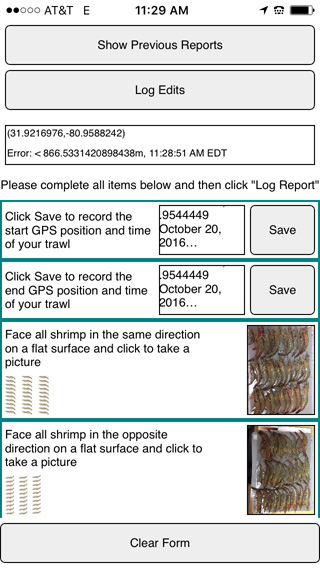
A screenshot of the smartphone app for tracking black gill.

A screenshot of the smartphone app for tracking black gill.

“Instead of having just one boat surveying the prevalence of black gill, imagine if we had a dozen, or 50 or a hundred boats all working with us,” Frischer said. “That’s the idea behind this app.”

The fishermen will use the app to document their trawls and report their data to a central database. Using GPS and the camera on their smartphone, they will record the location and images of the shrimp catch, allowing the researchers to see what the shrimpers see. If repeated by many shrimpers throughout the shrimping season, the information would give scientists a much more detailed picture of the prevalence and distribution of black gill.

“The app is complete and available on the app store, but we are still in the testing stages,” Johnsen said. “We want to make sure that it will be robust and as easy to use on a ship as possible before widely deploying it.”

Recruiting, training and coordinating the shrimpers will be the responsibility of UGA Marine Extension and Georgia Sea Grant.

“I think it should be entirely possible to at least have a small group of captains comfortable and ready to start using it when the 2017 season begins,” Frischer said.

Johnsen is excited about the app for what it can provide to the shrimping and research community, but also the implications it has for using apps to involve communities in general.

“There is still work to be done to improve the usability of these systems,” he said. “But I’m confident that we are going to see an increasing number of these ‘citizen science’ applications going forward.”

The final aim of the cruise was to bring together diverse stakeholders, including fishery managers, shrimpers and scientists, to spend the day together and share ideas.

“This was a good venue for promoting cross-talk among the stakeholder groups,” Frischer said. “I had many good conversations and appreciated the opportunity to provide a few more research updates.”

Frischer says he thinks the communication and cooperation among the various stakeholder groups has improved dramatically since the beginning of the study. He recalled that when the study began in 2013, tensions were high. Shrimpers were angry and demanded that something be done to address the problem of black gill. Meanwhile, fishery managers were unclear if black gill was even causing a problem and frustrated that no one could provide them any reliable scientific advice. The research community had not been engaged and given the resources to pursue valid investigations.

“In 2016, we still have black gill. The fishery is still in trouble, but it does feel like we are at least understanding a bit more about the issue,” Frischer said. “Most importantly, it is clear that all of us are now working together.

“My feeling is that the opportunity for us to spend a day like that together helps promote understanding, communication and trust among the shrimpers, managers and researchers.”

Sanders steps down as Skidaway Institute head

UGA Skidaway Institute of Oceanography Executive Director Jim Sanders will step down from his post effective July 1 and will remain on the faculty as a full professor. Skidaway Institute Professor Clark Alexander has been appointed interim executive director until a permanent executive director is named.

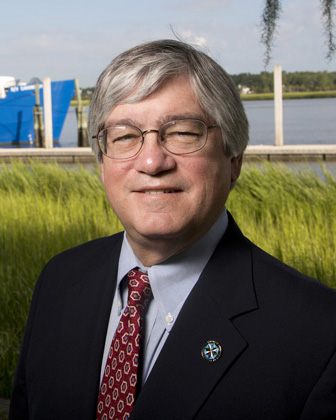
Jim Sanders

Dr. Jim Sanders

Before joining Skidaway Institute in 2001, Sanders already had an extensive career as a research scientist and administrator. He received his bachelor’s degree in zoology from Duke University and his doctorate in marine sciences from the University of North Carolina. Prior to his arrival in Savannah, Sanders was on the faculty and served as director of the Academy of Natural Sciences’ Estuarine Research Center in Maryland, and then was chairman of the Department of Ocean, Earth and Atmospheric Sciences at Old Dominion University in Virginia.

Sanders led the development of plans that secured funding to improve existing research and campus infrastructure, including new housing, research instrumentation, a new electrical grid, new marine docking facilities, a new research laboratory, and still to come in the next year, renovation of the Roebling’s cattle show barn.

Skidaway Institute was an autonomous unit of the University System of Georgia when Sanders was first appointed. In 2012-13, he worked with University of Georgia administration to develop plans for the merger of Skidaway Institute within UGA, and then with the Board of Regents to implement those plans. Sanders has served as UGA Skidaway Institute’s executive director since the 2013 merger, helping to smooth the transition.

Sanders has represented Skidaway Institute to the national and international science community, serving as president of the National Association of Marine Laboratories; as a board member and treasurer of the Consortium for Ocean Leadership; and as a member of the Science Advisory Board for the Environmental Protection Agency.

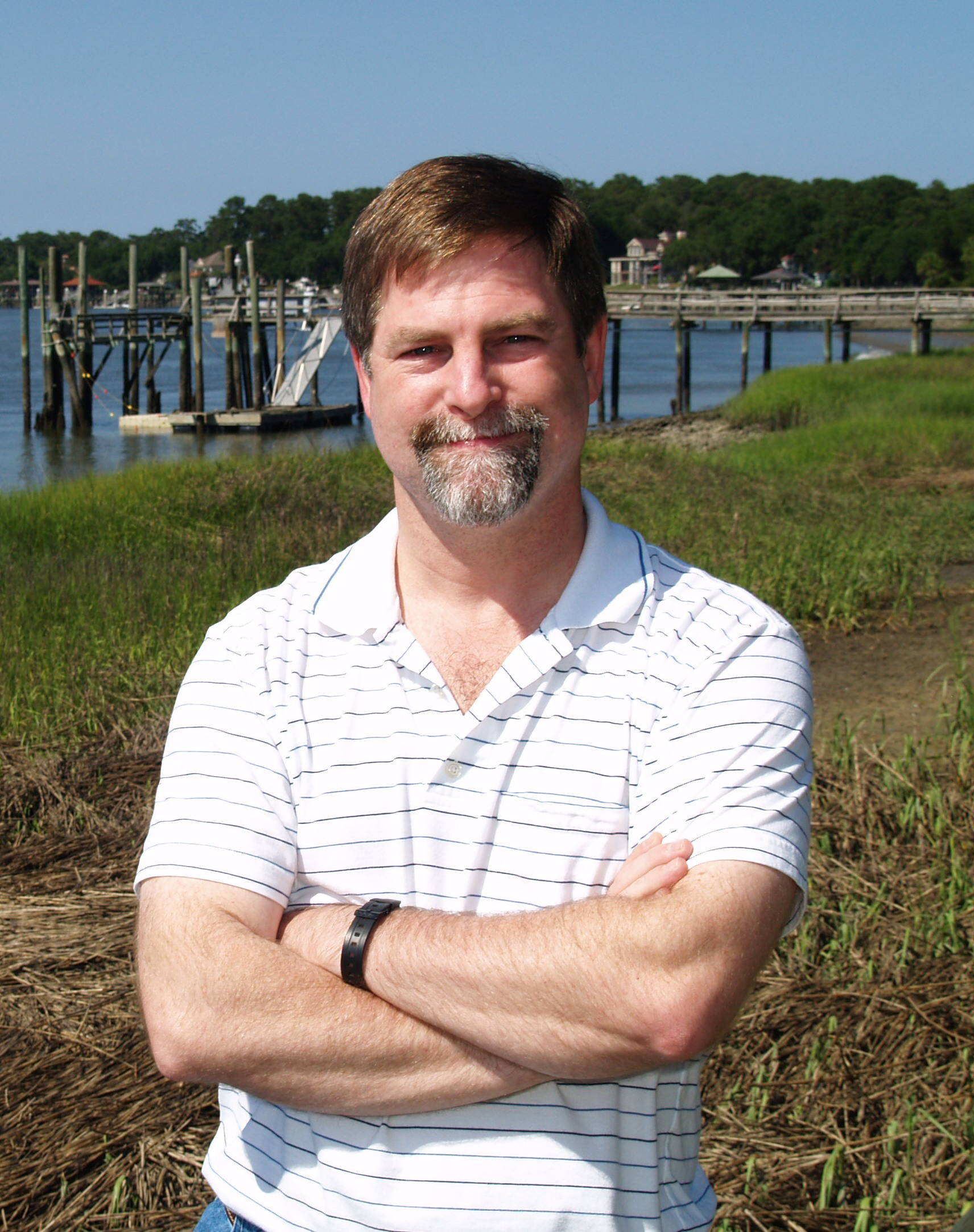
Clark Alexander

Clark Alexander

Alexander is a marine geologist who joined the Skidaway Institute as a post-doctoral scientist in 1989 and rose to the rank of full professor in 2003. He earned bachelor’s degrees in oceanography and geology from Humboldt State University in California. He went on to earn his master’s and doctoral degrees in marine geology from North Carolina State University.

As a researcher, Alexander has participated in 63 field programs from New Zealand to Siberia and has been the chief scientist on 29 oceanographic cruises with a total of more than two years at sea.  He has published 82 papers in scientific journals, and, in the past decade, has received more than $5 million in direct research funding. In addition, he is the director of the Georgia Southern University Applied Coastal Research Laboratory on Skidaway Island.

Alexander has been very active on state and regional advisory boards and works closely with the Georgia Department of Natural Resources to identify and address pressing coastal management needs. He served on the Georgia Coastal Marshlands Protection Committee and the Georgia Shore Protection Committee from 1998 to 2006. A few of the committees he currently serves on include the Technical Advisory Committee to the Chatham County Resource Protection Committee, the Sapelo Island National Estuarine Research Reserve Advisory Committee and the Habitat Protection and Ecosystem-Based Management Advisory Panel to the South Atlantic Fisheries Management Council.

Alexander and his wife, Debbie, have been married for 30 years and have two grown daughters.

Roebling barn renovation approved

The Georgia General Assembly and Gov. Nathan Deal have approved a $3 million bond package in the FY17 state budget to renovate and repurpose UGA Skidaway Institute’s old Roebling cattle barn.

The circa-1947 building is in poor condition and not currently functional as laboratory, teaching or meeting space. Renovations will allow UGA Skidaway Institute to repurpose the 14,000-square-foot facility to include research laboratories, a teaching laboratory and lecture space for students and community groups.

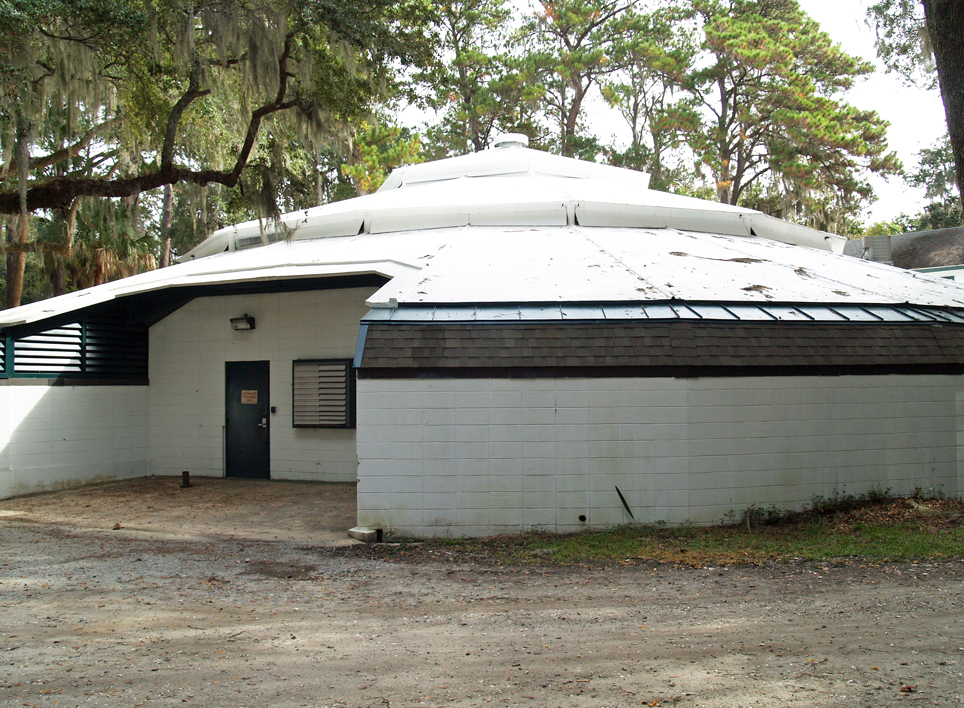
The barn exterior

The barn exterior

The renovated facility will become home to the Center for Coastal Hydrology and Marine Processes, or CHAMP, with a focus on research and education directed toward understanding influences on coastal systems and the wise stewardship of coastal resources.

The interior today

The interior today

“We want to thank Gov. Deal and the General Assembly, especially Rep. Jesse Petrea, Sen. Ben Watson and the rest of our local delegation, for their support for this project,” said UGA Skidaway Institute Executive Director Jim Sanders. “This support will allow us to put a wonderful, historic structure to work for the benefit of coastal Georgia.”

Beginning in the mid-1930s, Robert Roebling and his family operated a cattle plantation, known as Modena Plantation, on the north end of Skidaway Island. In 1968, the Roeblings donated their land to the state of Georgia, a move that spurred the establishment of Skidaway Institute of Oceanography. The Roeblings constructed the barn from steel and concrete after World War II. It was the site of the plantation’s annual cattle auctions. Roebling’s daughter, Ellin Cochran Roebling, was married there in 1950.

Elin Roebling's 1950 wedding

Elin Roebling’s 1950 wedding

Over the past 47 years, the barn has served a variety of purposes. Currently, it is used primarily for storage.

Molecular-level relationships key to deciphering ocean carbon

by Alan Flurry

From beach shallows to the ocean depths, vast numbers of chemical compounds work together to reduce and store atmospheric carbon in the world’s oceans.

In the past, studying the connections between ocean-borne compounds and microbes has been impractical because of the sheer complexity of each. Three University of Georgia faculty members—along with an international team of scientists—bring to the forefront technological developments that are providing scientists with the analytical tools needed to understand these molecular-level relationships.

Their perspective article appears March 7 in the Proceedings of the National Academy of Sciences. It focuses on dissolved organic matter, or DOM, in the world’s oceans as a central carbon reservoir in the current and future global carbon cycle.

“Dissolved organic carbon is an amazing and confounding molecular soup,” said Aron Stubbins, co-author and associate professor of marine sciences at UGA housed at the Skidaway Institute of Oceanography in Savannah. “It sits at the center of the ocean carbon cycle, directing the energy flow from the tiny plants of the sea, phytoplankton, to ocean bacteria. Though around a quarter of all the sunlight trapped by plants each year passes through dissolved organic carbon, we know very little about the chemistry of the molecules or the biology of the bacterial players involved.”

The carbon the microbes process is stored in seawater in the form of tens of thousands of different dissolved organic compounds.

Researchers thought they had a handle on how some aspects of the process works, but “a number of new studies have now fundamentally changed our understanding of the ocean carbon cycle,” said the paper’s lead author Mary Ann Moran, Distinguished Research Professor at UGA.

In the context of methodological and technological innovations, the researchers examine several questions that illustrate how new tools—particularly innovations in analytical chemistry, microbiology and informatics—are transforming the field.

From how different major elements have cycles linked though marine dissolved organic matter to how and why refractory organic matter persists for thousands of years in the deep ocean to the number of metabolic pathways necessary for microbial transformation, the article infers a scale of enhanced and expanded understanding of complex processes that was previously impractical.

The perspective article, “Deciphering Ocean Carbon in a Changing World,” was shaped in discussions at a 2014 workshop supported by the Gordon and Betty Moore Foundation and Microsoft Research Corporation. Moran’s research has been supported by the Gordon and Betty Moore Foundation’s Marine Microbiology Initiative.

Co-authors on the paper include UGA’s Patricia Medeiros, assistant professor in the department of marine sciences. Others involved are with the Woods Hole Oceanographic Institute; the Scripps Institute of Oceanography and the Skaggs School of Pharmacy and Pharmaceutical Sciences, University of California, San Diego; University of Tennessee, Knoxville; Oregon State University; Columbia University; The Pacific Northwest National Laboratory, Richland Washington; the University of Washington; University of Oldenburg, Germany; Sorbonne Universités; and the University of Chicago.