Category Archives: skidaway institute

UGA Skidaway Institute grad student receives master’s degree

Former UGA Skidaway Institute and Savannah State University graduate student Ashleigh Price successfully defended her master’s thesis before her committee and a public audience on November 8.

She officially received her degree on Dec. 10.

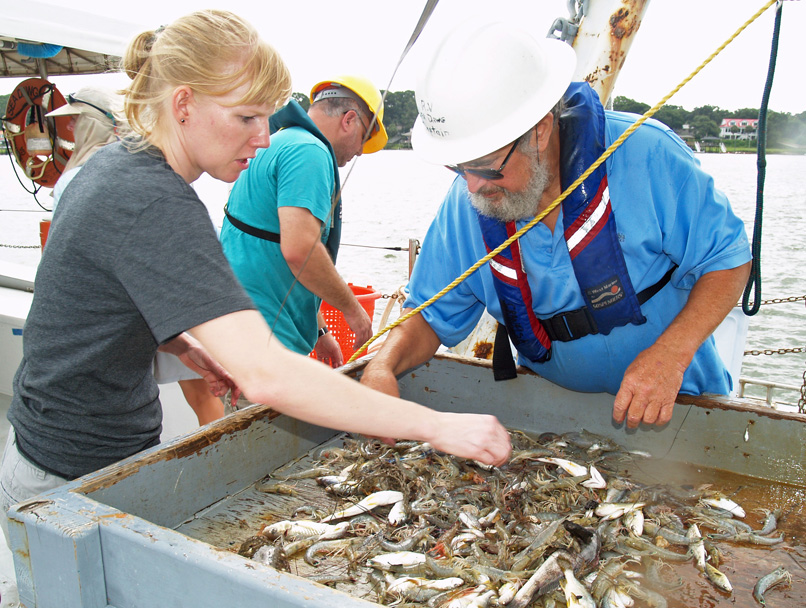
Ashley Price sorts the product of a trawl with John "Crawfish" Crawford on board the UGA Research Vessel Sea Dawg.

Ashley Price sorts the product of a trawl with John “Crawfish” Crawford on board the UGA Research Vessel Sea Dawg.

Ashleigh did most of her research as part of Marc Frischer’s lab at Skidaway Institute. The title of her thesis is “Environmental Reservoirs and Mortality Associated with Shrimp Black Gill.”

The Roebling barn in perspective

by Debbie Jahnke

Editor’s notes: Debbie and Rick Jahnke were longtime members of the Skidaway Institute family. Rick was a faculty scientist and, for several months, interim director of the institute. Debbie was his research coordinator. They both retired in 2008 and moved to Port Townsend, Washington.

 In March of this year, the Georgia General Assembly approved a $3 million bond issue to renovate and repurpose the old Roebling cattle show barn at UGA Skidaway Institute into usable laboratory and meeting space.

In 1986, Rick Jahnke interviewed for a faculty position at Skidaway Institute of Oceanography. At the time, he was a research scientist at Scripps Institution of Oceanography. Rick returned home to San Diego with the impression that he wouldn’t be hired because Stuart Wakeham had also interviewed for the position and would undoubtedly be selected. Instead, Skidaway Institute came up with the funds for two positions and hired both Rick and Stuart.

Rick’s start-up requests to Skidaway Institute were modest: a germanium detector and a desktop computer. He also requested lab and office space in the Roebling building and a staging lab in the barn for maintenance, repair and modification of his various seagoing autonomous vehicles. The barn was nearly perfect for that purpose, with plenty of storage space and a central open area that allowed loading and offloading of equipment with a hand-winched pulley system.OLYMPUS DIGITAL CAMERA

Rick didn’t need any extra space for me and, instead, split his office with a wall so there was a spot just big enough for my desk and a “labradog” named Daisy. I was the analytical tech for his research and he hired an equipment tech for the seagoing operations. The barn lab operations expanded to the second floor of the barn when it became clear that anyone interested in measuring natural levels of C-14 wasn’t going to be able to do it in many existing Skidaway Institute labs. In the free-form early days of productivity measurements, enough C-14 made it into the ambient spaces of many Skidaway Institute labs that C-14 dating indicated that our labs existed about 50,000 years in the future. The levels of so-called contamination were in no way concerning for health or safety, but they made natural abundance measurements impossible without a “clean” space for sample storage. The bright yellow room with the pink and green interior and cold room on the second floor of the barn were the result.

The interior today

The interior today

From those barn labs, autonomous vehicles were staged, packed and deployed for oceanographic research off western Africa, Peru, Panama, New Guinea, deep shelves off Cape Hatteras, California, Oregon and other locations, as well as the Georgia shelf. Samples were returned and stored in the yellow lab upstairs.

The barn provided another opportunity for me when I was drafted in a weak moment to try to improve what was quite dismal visitor housing at Skidaway Institute in the 1980s. The first housing we made habitable was the barn apartment. As we worked through the process of getting three NSF grants for housing, we also were able to set up a small laundry room in the barn so that volunteers could keep clean linens in the housing we did have. The first successful grant built the quadraplex (Menzel, Zeigler, Carpenter and Knight apartments). The second grant rehabilitated the housing that existed since the plantation days (the barn apartment, now renamed Baggett, Rice House, Thomas and Martin apartments). The third grant built the Commons. I spent many hours in that barn laundry room while most of my weekends and holidays were spent cleaning housing units before the institute finally figured out how to pay someone to do that as a real job.

Rick and I retired in 2008 and headed west with our five cats. All I know of the modern Skidaway Institute is what I read on the website and Facebook pages and occasional emails from friends still there. Skidaway was wonderful to us and the barn was a big part of the ease with which our research was facilitated. It was with considerable pleasure that we learned of the grand and useful future being planned for the good old barn.

Skidaway Institute research team participates in GIS Day

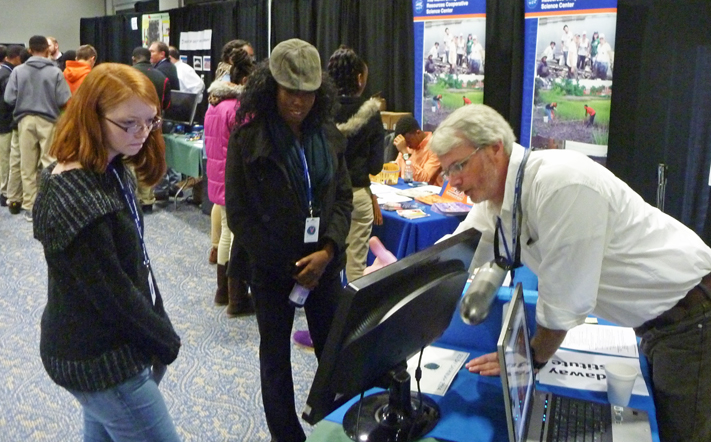
UGA Skidaway Institute’s Clark Alexander’s lab participated again as a sponsor of the GIS Day event hosted by Savannah Area Geographic Information System on the Savannah State University campus.

Mike Robinson demonstrates GIS to two attendees.

Mike Robinson demonstrates GIS to two attendees.

This year marked the 10th year for the event which introduced 450 eighth-grade students along with area business owners, staff, GIS users and citizens from the local community to demonstrations of real-world applications that are making a difference in our society.

GIS Day is celebrated internationally as part of National Geographic’s International Geography Week. The National Geographic Society has sponsored Geography Awareness Week since 1987 to promote geographic literacy in schools, communities and organizations, with a focus on the education of children.

K-12 teachers learn from Rivers to Reefs

by Michelle Riley / Gray’s Reef National Marine Sanctuary

In June, Gray’s Reef National Marine Sanctuary hosted the 13th annual Rivers to Reefs Workshop for Educators in association with the University of Georgia Skidaway Institute of Oceanography, the Georgia Aquarium and Gordon State College. Cathy Sakas, chair of the Gray’s Reef National Marine Sanctuary Foundation, and Kim Morris-Zarneke, manager of education programs at Georgia Aquarium, served as the primary leaders of the workshop, with assistance from Theresa Stanley of Gordon State College.  Michelle Riley from Gray’s Reef National Marine Sanctuary served as communications lead.

Rivers to Reefs is an educational expedition for teachers, focused on Georgia’s Altamaha River watershed. During the six-day trip, 16 Georgia science teachers canoed the Oconee, Ocmulgee and Altamaha rivers into the Sapelo estuary, crawled through salt marshes, traveled to Gray’s Reef and trawled the Wilmington River. They learned and explored the connections between the watershed and the ocean.

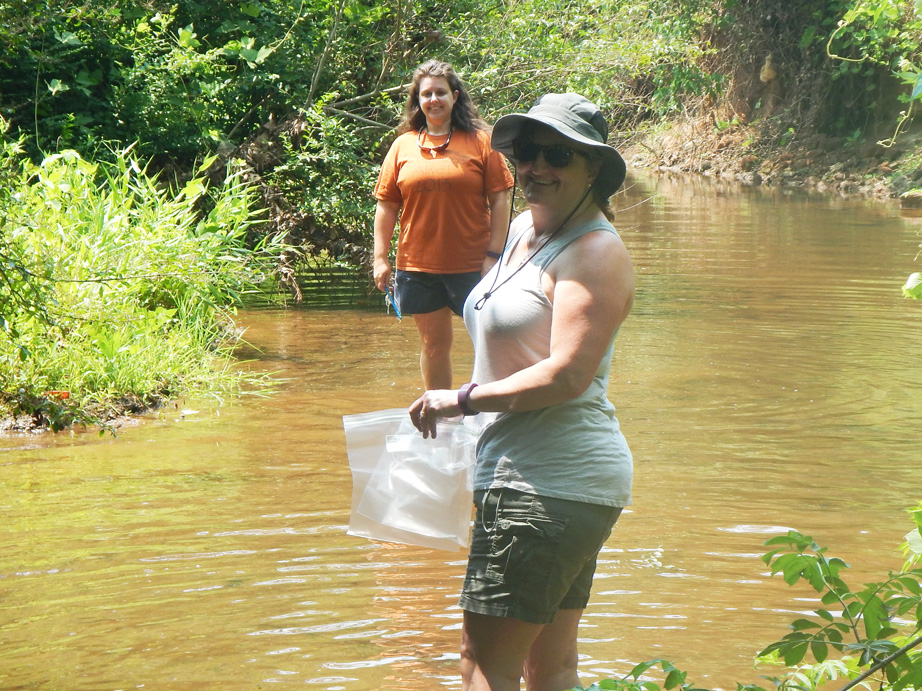
Teachers Marilyn Kinney (foreground) and Candace Bridges collect water samples in Flat Shoals Creek. Photo: Michelle Riley

Teachers Marilyn Kinney (foreground) and Candace Bridges collect water samples in Flat Shoals Creek. Photo: Michelle Riley

The week was packed with activities that most teachers never experience, beginning with a behind-the-scenes orientation at Georgia Aquarium, and it included an offshore trip to Gray’s Reef National Marine Sanctuary aboard the first working research vessel the educators had ever seen close up, Skidaway Institute’s R/V Savannah. In between, the group explored creeks, waterfalls, rivers and estuaries, and saw an abundance of flora and fauna. They frequently stopped to collect water samples, conduct water quality tests and record environmental factors to determine the overall health of the creeks and streams that flow to the river system. As the week progressed, the teachers developed an understanding of the profound influence the waters flowing through the Altamaha River watershed have on the health of Gray’s Reef and were inspired to teach their students about environmental responsibility and ocean literacy.

Always a highlight of the workshop, the marsh crawl on Sapelo Island was a memorable experience. The group sloshed on their bellies through the thick dark mud to learn why marshes are considered some of the most important and productive habitats on Earth. The estuary that encompasses the salt marsh, where the freshwater from the Altamaha River mixes with the saltwater of the Atlantic, is one of the largest estuary systems on the Atlantic coast.

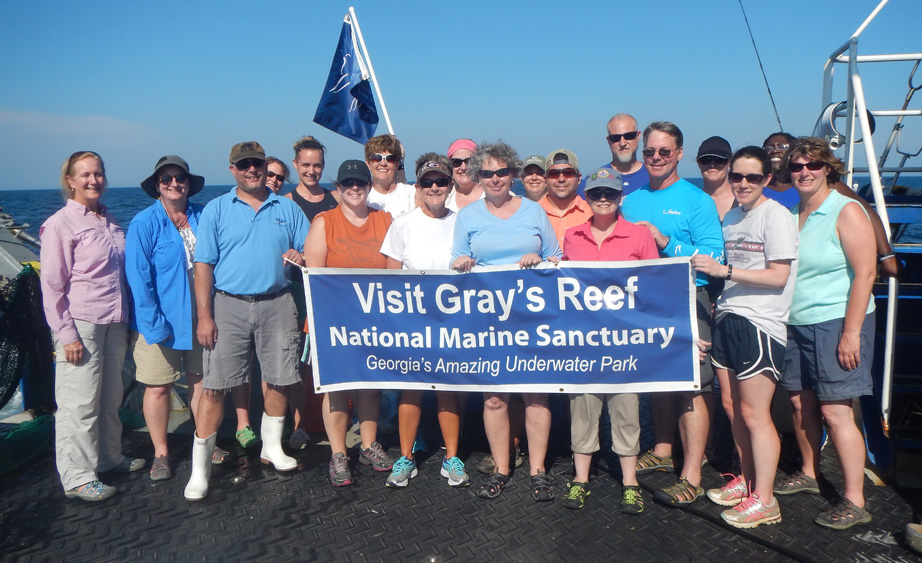
The teachers on board the Research Vessel Savannah.

The teachers on board the Research Vessel Savannah.

Waters were calm for the voyage out to Gray’s Reef National Marine Sanctuary on the R/V Savannah under the command of Capt. John Bichy, marine superintendent at UGA Skidaway Institute. With extensive assistance from the R/V Savannah crew, the teachers conducted water quality tests at three separate points in the ocean. Meanwhile, the ship’s crew pulled a trawl net through the ocean at midwater depth and brought in many interesting fish, a large pile of Georgia shrimp and a handful of sharks, including a hammerhead and a small Atlantic sharpnose shark. During the trip, the teachers were delighted when they were treated to lessons by professor Marc Frischer of Skidaway Institute on black gill in shrimp and on pelagic tunicates called doliolids. While in the sanctuary, the crew deployed an underwater camera to allow the teachers to see the reef and its sea creatures in real time, without getting wet.

On the final day of Rivers to Reefs, the teachers boarded UGA’s R/V Sea Dawg, a smaller vessel used by the UGA Marine Education Center and Aquarium, a unit of the UGA Marine Extension and Georgia Sea Grant. Capt. John “Crawfish” Crawford and Anne Lindsay, associate director for marine education, conducted a field class during the two-hour trawling voyage in the Wilmington River. The teachers recorded the catch for research purposes and ended their trip with a wrap-up by Frischer and the expedition leaders, before scattering across Georgia with great memories and a treasure trove of experiences to pass on to their students this fall.

Skidaway Institute adds to fleet

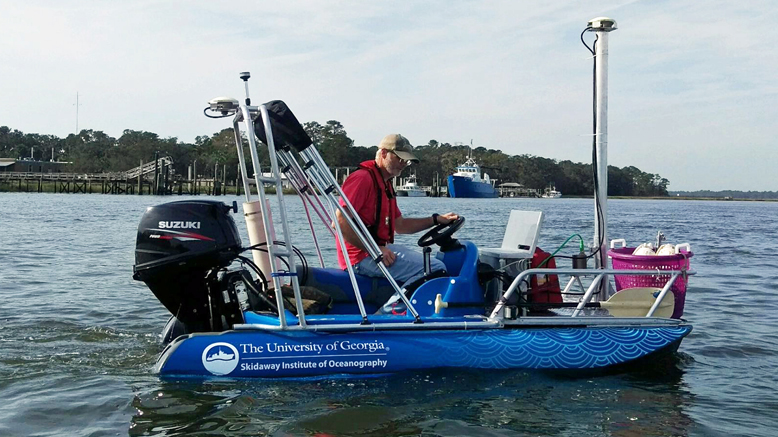
UGA Skidaway Institute has added its newest and smallest research vessel to its fleet. Researcher Clark Alexander’s team is in the process of configuring a new shallow water survey boat to enhance its capabilities for collecting high-resolution bathymetric data. new-boat-1-w

Hydrographic surveys in shallow environments present challenging logistical situations.  The new Hydrographic Survey Launch will greatly extend the range of tides and conditions available for survey missions. The launch is 10 feet long and will be equipped with a Knudsen Mini-Sounder single-beam sonar, a dual head GNSS GPS system, an inertial motion sensor  and a waterproof touchscreen computer.

UGA Skidaway Institute develops cutting-edge microbial imaging laboratory

A team of researchers from the University of Georgia Skidaway Institute of Oceanography has received a $226,557 grant from the National Science Foundation to acquire state-of-the-art imaging equipment to investigate microorganisms from the tiniest viruses to larger zooplankton. The equipment will be housed in UGA Skidaway Institute’s new Laboratory for Imaging Microbial Ecology, or LIME.

Researcher Elizabeth Harvey leads the research team that also includes UGA Skidaway Institute scientists Julia Diaz, Marc Frischer, James Nelson and James Sanders.

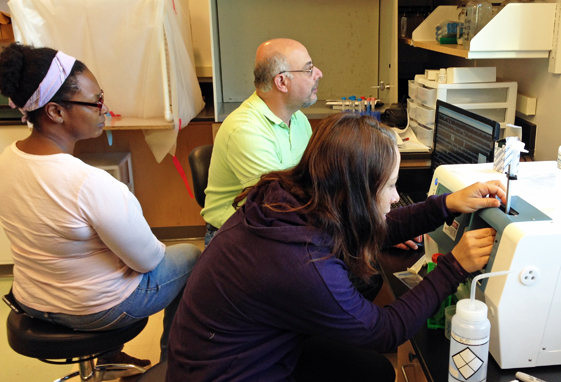
UGA Skidaway Institute researchers Tina Walters, Marc Frischer and Karrie Bulski practice running zooplankton samples on the FlowCam, a new instrument that is part of LIME

UGA Skidaway Institute researchers Tina Walters, Marc Frischer and Karrie Bulski practice running zooplankton samples on the FlowCam, a new instrument that is part of LIME

The equipment will improve Skidaway Institute’s capability to conduct field and laboratory experiments by automating many viewing methods.

“Anyone who uses a microscope will tell you that it is both tedious and time consuming,” Harvey said. “This equipment will allow us to enumerate and analyze microbes and other planktonic organisms much faster, and will allow us to do more large-scale projects than we could in the past.”

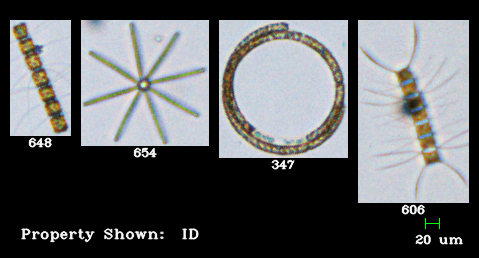
Microscopic phytoplankton photogaphed in the LIME.

Microscopic phytoplankton photogaphed in the LIME.

Much of the equipment will also have imaging capability so researchers will be able to do more detailed measurements on the size and shape of the tiny organisms and how that might relate to the health of an ecosystem.

Marine microbes are an essential component of all marine ecosystems and they play central roles in mediating biogeochemical cycling and food web structure.

“They are the things that drive all other processes in the ocean,” Harvey said. “They play a really important role in the way nutrients, oxygen and carbon are cycled through the ocean. We care a lot about those processes because they impact our climate, fisheries and the ocean’s overall health.”

The benefits of LIME will be shared beyond Skidaway Institute’s science team. Harvey envisions it as a regional center for microbial imaging, available to any other researchers who need the capability.

“Anyone is welcome to come here and get trained to use them,” she said. “They just need to contact me and we can make arrangements.”

Some of the equipment is already in place, while other pieces have not been delivered. Harvey anticipates all the equipment being functional by mid-2017.

Skidaway Marine Science Campus weathers Hurricane Matthew

Hurricane Matthew is now a memory, but like most of the coastal area, the Skidaway Marine Science Campus still bears signs of its passage.

The Skidaway Institute docks were heavily damaged by wave action at both at the main campus and the Priest Landing sites. While most of the campus buildings remained above the water line, the storm surge inundated some of the facilities shops at the north end of the campus with up to 24 inches of water. Due to the water damage, extensive internal repairs were needed.

One of Skidaway Institute's shop buildings at the height of the storm.

One of Skidaway Institute’s shop buildings at the height of the storm.

The UGA Aquarium was able to reopen the weekend following the storm, but parts of the Jay Wolfe Nature Trail remain closed due to downed trees and debris.

It also became necessary to cancel the campus’s annual open house event, Skidaway Marine Science Day. Both Clark Alexander, interim director of UGA Skidaway Institute of Oceanography, and Mark Risse, director of UGA Marine Extension and Georgia Sea Grant, had hoped to reschedule the event, but no other date was available this fall.

Downed trees and storm debris near Gray's Reef National Marine Sanctuary's building.

Downed trees and storm debris near Gray’s Reef National Marine Sanctuary’s building.

“We are upset we are not able to offer this great event this year,” Alexander said. “However, we will be back bigger and stronger in 2017.”

Skidaway Marine Science Day has been an annual event on the Skidaway campus since 2001. The free, family-oriented program is presented jointly by the UGA Skidaway Institute, UGA Marine Extension and Georgia Sea Grant, and Gray’s Reef National Marine Sanctuary.

UGA Skidaway Institute associate professor cited for top research articles

University of Georgia Skidaway Institute of Oceanography associate professor Aron Stubbins is one of just a handful of researchers cited in the journal Limnology and Oceanography for authoring two of the journal’s top scientific papers over the past 60 years.OLYMPUS DIGITAL CAMERA

Limnology and Oceanography is an official publication of the Association for the Sciences of Limnology and Oceanography and is considered a premier scientific journal. In its recently published 60th anniversary issue, the journal collected and republished the 10 most cited research papers for each of the last six decades. Stubbins authored or co-authored two of those papers, one in 2008 and the other in 2010.

“It came as quite a surprise to see two articles show up on the list,” Stubbins said. “I was at a conference and wasn’t really checking my email when one of my colleagues let me know.”

The journal used the number of times a paper was cited in future studies as the yardstick to determine which papers should be included on the list. It is one commonly used method for measuring the impact of a scientist’s work.

“The list isn’t really about popularity,” Stubbins said. “It’s about usefulness. That people have found some of my work useful over the years is rewarding.”

The 2008 paper was titled “Absorption spectral slopes and slope ratios as indicators of molecular weight, source, and photobleaching of chromophoric dissolved organic matter.” The lead author was John Helms. Stubbins was a co-author along with four other scientists. The research team developed a new method for extracting new information from a relatively common and simple test of the color of dissolved organic matter.

Stubbins was the lead author, along with nine co-authors, of the second paper, “Illuminated darkness: Molecular signatures of Congo River dissolved organic matter and its photochemical alteration as revealed by ultrahigh precision mass spectrometry.” The study examined organic carbon carried to the ocean by the Congo River — after the Amazon, the second largest river in the world in terms of carbon and water flow. The research team studied how sunlight degrades organic material, including which compounds are degraded, which are not and what new compounds are created when sunlight shines on river water.

“His inclusion in this seminal volume is quite an honor for Dr. Stubbins,” UGA Skidaway Institute Interim Director Clark Alexander said. “This recognition validates what we have always known, that he is conducting groundbreaking and meaningful research that is recognized around the world.”

All 60 papers can be found at http://aslopubs.onlinelibrary.wiley.com/.


Fall black gill cruise rolls out new smartphone app for better data collection

The University of Georgia Skidaway Institute of Oceanography entered the fourth year of its black gill research program with a daylong cruise on board the Research Vessel Savannah and the introduction of a new smartphone app that will allow shrimpers to help scientists collect data on the problem.

Led by UGA scientists Marc Frischer, Richard Lee, Kyle Johnsen and Jeb Byers, the black gill study is being conducted in partnership with UGA Marine Extension and Georgia Sea Grant, and is funded by Georgia Sea Grant.

Black gill is a condition Georgia shrimpers first noticed in the mid-1990s. Many shrimpers have blamed black gill for poor shrimp harvests in recent years, but until Frischer began his study, almost nothing was known about the condition. Now the researchers know black gill is caused by a parasite—a single-cell animal called a ciliate—although the exact type of ciliate is still a mystery.

The October cruise had three goals. The first was simply to collect data and live shrimp for additional experiments.

“We were able to collect enough live shrimp in good shape to set up our next experiment,” Frischer said. “We are planning on running another direct mortality study to investigate the relationship between temperature and black gill mortality. This time, instead of comparing ambient temperature to cooler temperatures as we did last spring and summer, we will investigate the effects of warming.”
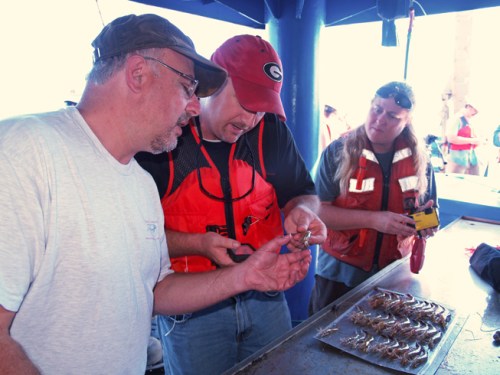
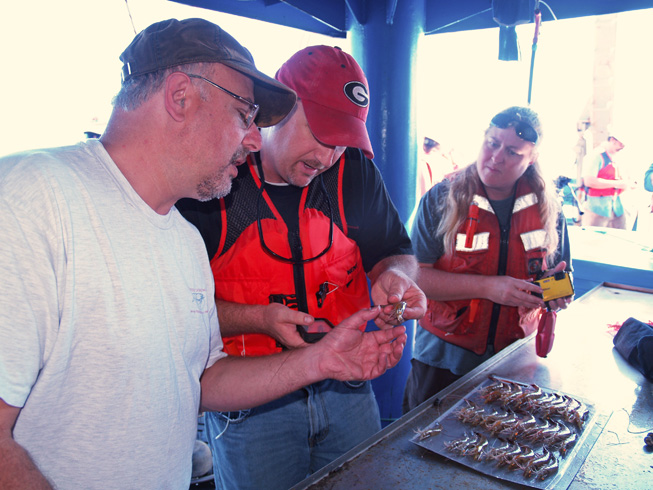
Researchers Marc Frischer (UGA Skidaway Institute), Brian Fluech and Lisa Gentit (both UGA Marine Extension and Georgia Sea Grant) examine shrimp for signs of black gill.

Researchers Marc Frischer (UGA Skidaway Institute), Brian Fluech and Lisa Gentit (both UGA Marine Extension and Georgia Sea Grant) examine shrimp for signs of black gill.

If his hypothesis is correct, Frischer believes researchers would expect that raising fall water temperatures to warmer summer levels in a laboratory setting will induce black gill associated mortality in the shrimp caught in the fall.

Those studies will be compared to those that are being conducted in South Carolina in a slightly different manner. Frischer expects the results should be similar.

“However, as it goes with research, we are expecting surprises,” Frischer continued. “We also collected a good set of samples that will contribute to our understanding of the distribution and impact of black gill.”

A second goal was to introduce and begin field testing a new smartphone application developed by Johnsen. The app is intended to be a tool that will allow shrimp boat captains and recreational shrimpers to assist the researchers by filling some of the holes in the data by documenting the extent of black gill throughout the shrimp season. The Georgia Department of Natural Resources conducts surveys of the shrimp population up and down the coast throughout the year. However, those surveys do not provide the researchers with the rich data set they need to really get an accurate assessment of the black gill problem.
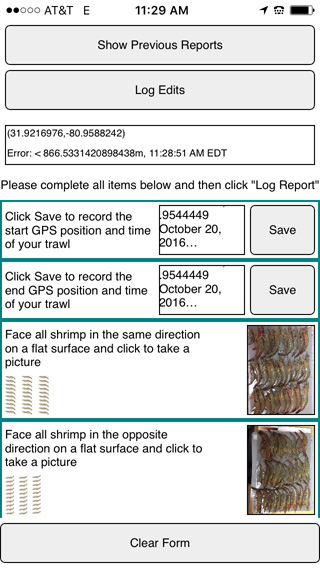
A screenshot of the smartphone app for tracking black gill.

A screenshot of the smartphone app for tracking black gill.

“Instead of having just one boat surveying the prevalence of black gill, imagine if we had a dozen, or 50 or a hundred boats all working with us,” Frischer said. “That’s the idea behind this app.”

The fishermen will use the app to document their trawls and report their data to a central database. Using GPS and the camera on their smartphone, they will record the location and images of the shrimp catch, allowing the researchers to see what the shrimpers see. If repeated by many shrimpers throughout the shrimping season, the information would give scientists a much more detailed picture of the prevalence and distribution of black gill.

“The app is complete and available on the app store, but we are still in the testing stages,” Johnsen said. “We want to make sure that it will be robust and as easy to use on a ship as possible before widely deploying it.”

Recruiting, training and coordinating the shrimpers will be the responsibility of UGA Marine Extension and Georgia Sea Grant.

“I think it should be entirely possible to at least have a small group of captains comfortable and ready to start using it when the 2017 season begins,” Frischer said.

Johnsen is excited about the app for what it can provide to the shrimping and research community, but also the implications it has for using apps to involve communities in general.

“There is still work to be done to improve the usability of these systems,” he said. “But I’m confident that we are going to see an increasing number of these ‘citizen science’ applications going forward.”

The final aim of the cruise was to bring together diverse stakeholders, including fishery managers, shrimpers and scientists, to spend the day together and share ideas.

“This was a good venue for promoting cross-talk among the stakeholder groups,” Frischer said. “I had many good conversations and appreciated the opportunity to provide a few more research updates.”

Frischer says he thinks the communication and cooperation among the various stakeholder groups has improved dramatically since the beginning of the study. He recalled that when the study began in 2013, tensions were high. Shrimpers were angry and demanded that something be done to address the problem of black gill. Meanwhile, fishery managers were unclear if black gill was even causing a problem and frustrated that no one could provide them any reliable scientific advice. The research community had not been engaged and given the resources to pursue valid investigations.

“In 2016, we still have black gill. The fishery is still in trouble, but it does feel like we are at least understanding a bit more about the issue,” Frischer said. “Most importantly, it is clear that all of us are now working together.

“My feeling is that the opportunity for us to spend a day like that together helps promote understanding, communication and trust among the shrimpers, managers and researchers.”

UGA Skidaway Institute receives $79,000 gift to support marine research

Savannah residents Michelle and Barry Vine presented a gift of $79,000 to the University of Georgia Skidaway Institute of Oceanography to support the institute’s cutting-edge oceanographic research. In recognition of the gift, UGA Skidaway Institute plans to name an observation laboratory in honor of Michelle Vine’s father, Albert Dewitt Smith Jr. The Vines’ gift is the largest monetary donation ever given to UGA Skidaway Institute.

“We are pleased to support the UGA Skidaway Institute of Oceanography in its continuous effort to conduct research and protect our coastal environment,” said Michelle Vine. “Every day we enjoy the benefits of living on the coast, and as a community, we should never forget how important Skidaway Institute is to us.”

Michelle Vine presents a check to Skidaway Institute interim executive director Clark Alexander in front of the Roebling cattle barn.

Michelle Vine presents a check to Skidaway Institute interim executive director Clark Alexander in front of the Roebling cattle barn.

Vine’s father, Al Smith, was a World War II Marine Corps veteran, and, like his daughter, a UGA graduate.  He worked in industrial relations for General Motors in Doraville, Lockheed in Marietta and Union Camp Corp. in Atlanta and Savannah. For the last 12 years before his death in 1998, he owned Complete Security Systems.

The Albert Dewitt Smith Jr. Observational Laboratory will be located in the soon-to-be-created Center for Hydrology and Marine Processes. Earlier this year, the Georgia General Assembly approved a $3 million appropriation to renovate and repurpose a circa-1947 concrete cattle show barn for laboratory and meeting spaces and as a home for the center. Innovative for its time, the cattle barn was constructed by the Roebling family. The Roeblings established the Modena Plantation in the mid-1930s, and raised black angus cattle and Hampshire hogs before they donated their land to the state in 1967 to create Skidaway Institute.

“We are very grateful to the Vines for their generous gift,” said UGA Skidaway Institute Interim Director Clark Alexander. “This will help support our education and research activities, both here on the coast and around the world.”

“The UGA Skidaway Institute is a division of the University of Georgia, but it also relies heavily on local support,” Vine said. “Please join us by donating online at http://www.skio.uga.edu, and becoming a member of ASI, the Associates of Skidaway Institute.”