Category Archives: skidaway campus notes

Black gill stakeholders meeting set for June 22

As the 2016 Georgia shrimping season gets underway, the University of Georgia Marine Extension and Georgia Sea Grant, and the UGA Skidaway Institute of Oceanography will host a meeting to present the latest research and other information on black gill in Georgia and South Carolina shrimp. The meeting will be held at the UGA Marine Extension Aquarium at the north end of Skidaway Island in Savannah, Ga. on Wednesday, June 22, from 1-4 p.m.

Black gill is a condition affecting the coastal shrimp population. It is caused by a microscopic parasite. Many shrimpers believe black gill may be largely responsible for reduced shrimp harvests in recent years. UGA Skidaway Institute scientist Marc Frischer is leading a research project, now in its third year, into the causes and effects of black gill on the Georgia and South Carolina shrimp population.

A shrimp with the Black Gill condition clearly evident.

A shrimp with the Black Gill condition clearly evident.

The purpose of the meeting is to provide stakeholders, such as shrimpers, fish house owners, wholesalers or anyone else interested in black gill, with an update on black gill research efforts.  Frischer and South Carolina Department of Natural Resources scientist Amy Fowler and will present their latest research findings. UGA Marine Extension and the Georgia Department of Natural Resources will also provide updates. The meeting will be open to the public.

The meeting is for information purposes only. No management decisions will be made.

For additional information, contact Bryan Fluech, UGA Marine Extension, at (912) 264-7269.

What: Black Gill Stakeholders Meeting

When: Wednesday, June 22, 1-4: p.m.

Where: UGA  Aquarium, 30 Ocean Science Circle, Savannah, Ga., 31411

Directions: http://marex.uga.edu/visit_aquarium/

Gray’s Reef sponsors ‘A Fishy Affair’ to combat lionfish

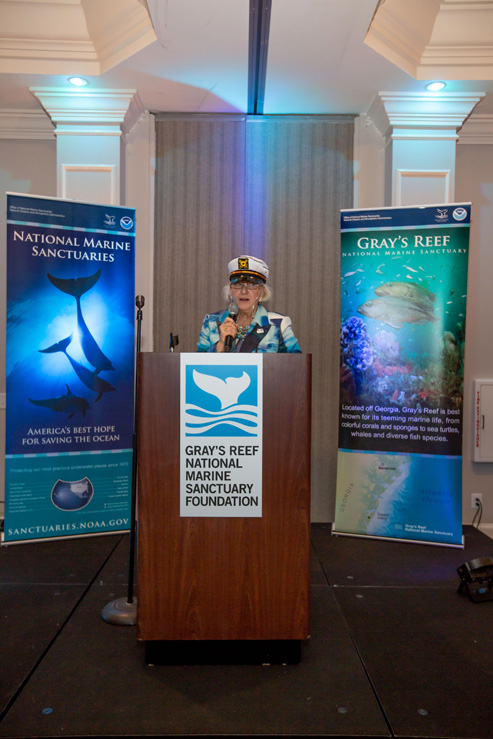
The Gray’s Reef National Marine Sanctuary Foundation hosted its first major fundraiser on Sept. 24 – “A Fishy Affair: Malicious but Delicious.” Four of Savannah’s prominent chefs cooked up their best lionfish dishes in an effort to encourage restaurants to put lionfish on their menus because they are invasive — but tasty – creatures. The event was sold out, and almost 250 people enjoyed the evening.

A Fishy Affair board member Kathryn Levitt.

A Fishy Affair board member Kathryn Levitt.

The lionfish is native to the tropical waters of the South Pacific and Indian Oceans. They are popular in home aquariums but are now invading ecosystems throughout the Atlantic coast and Caribbean. Lionfish damage the ocean by eating up to 20 small fish per day. With a very quick reproduction rate and no natural predators in Atlantic waters, they have multiplied quickly and threaten the natural biodiversity that provides economic and recreational opportunities. While completely removing lionfish from Atlantic and Caribbean waters is unlikely, reducing their numbers is critical to the ocean and for Gray’s Reef.

A Fishy Affair featured a full dinner, a short award-winning lionfish film, “Ocean Invaders,” by Mandee Malonee, a live Lionfish for viewing and a small live auction.  All proceeds benefit Gray’s Reef National Marine Sanctuary Foundation.

‘Modena’ strikes oil

The UGA Skidaway Institute Autonomous Underwater Vehicle “Modena” found oil last summer, but not in the way anyone expected.

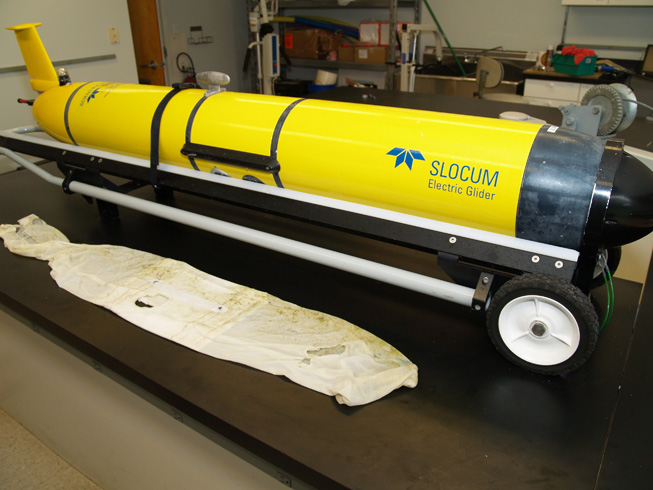
Modena was dispatched into the Gulf of Mexico as part of the ECOGIG (Ecosystem Impacts of Oil & Gas Inputs to the Gulf) research project to study the long-term effects of the Deepwater Horizon oil spill on the Gulf ecosystem. When the researchers, including Skidaway Institute scientist Catherine Edwards, recovered Modena, they discovered her fabric skin was covered with dark blotches. At first the team thought it was some sort of algae. Closer examination revealed the spots were created by oil droplets in the water.

Modena and  her oil-stained skin.

Modena and her oil-stained skin.

Oil stains on Modena's skin.

Oil stains on Modena’s skin.

Edwards and the team believe the oil stains were caused by droplets from the spill that have remained suspended in the water column.

Gray’s Reef conducts drifter and dye studies


In September, Gray’s Reef and its partner, Georgia Southern University, completed the last in a series of dye and drifter releases to track the outflow of the Altamaha River. The Altamaha is the third largest river basin on the Atlantic seaboard, and its watershed drains almost 25 percent of Georgia’s land mass.  It is also the closest freshwater source to Gray’s Reef, found 16 miles offshore.

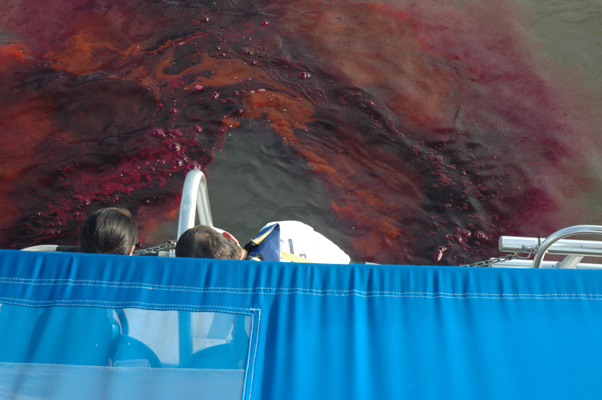
Dye being released from the stern of the research boat.

Dye being released from the stern of the research boat.

By tracking the path of the dye and drifters, researchers can provide estimates of the extent to which the Altamaha River outflow delivers various contaminants, nutrients, freshwater and solid material to hard-bottom reefs such as Gray’s Reef and to Georgia’s coastline.

Georgia Southern University invites educators to replicate the drifter study and has developed an instructional video and guide for future drifter deployments.

UGA Skidaway Institute scientist stands atop the globe


UGA Skidaway Institute of Oceanography researcher Chris Marsay has stood on top of the world—literally.

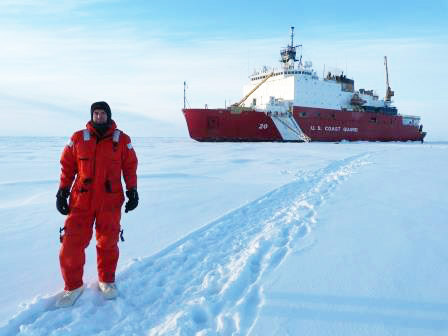
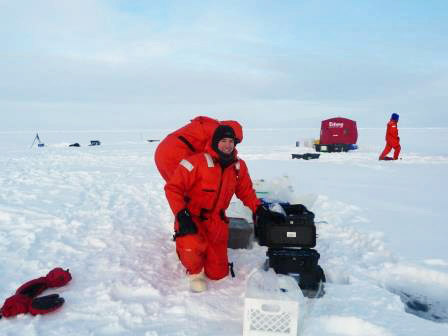
Marsay arrived at the North Pole in early September and took part in the U.S .GEOTRACES Arctic Expedition on board the U.S. Coast Guard Cutter Healy, a polar icebreaker.

Marsay at the North Pole in front of the U.S. Coast Guard Cutter Healy.

Marsay at the North Pole in front of the U.S. Coast Guard Cutter Healy.

The project is part of an international, multiple icebreaker effort to conduct geochemical sampling of the Arctic Ocean. The cruise arrived at 90 degrees north on Sept. 5 in what is the first occupation of the North Pole by an unaccompanied U.S. surface ship—submarines usually follow ships below the ice. While at the pole, the Healy rendezvoused with the German ship conducting the German leg of the GEOTRACES Arctic program.

Marsay with his gear at the North Pole.

Marsay with his gear at the North Pole.

Marsay is working with UGA Skidaway Institute professor Cliff Buck and scientists from Florida State University and Rutgers University. The research team was funded by the National Science Foundation to collect samples from the atmosphere, precipitation and surface water from melt ponds during the cruise.

“Our research goals are to describe the chemistry of atmospheric deposition to the region and quantify flux rates,” Buck said. “These data will then be shared with the scientific community to better understand biogeochemical cycling of trace elements and isotopes in the Arctic Ocean.”

Diaz joins UGA Skidaway Institute faculty

Marine biogeochemist Julia Diaz has joined the faculty of the University of Georgia Skidaway Institute of Oceanography as an assistant professor.

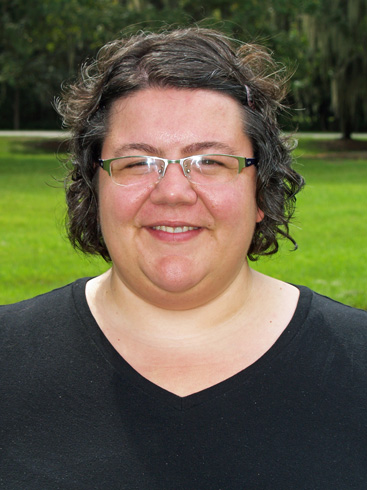
OLYMPUS DIGITAL CAMERAOriginally from Alpharetta, Ga., Diaz was graduated summa cum laude from the University of Georgia with a B.S. in biology and went on to earn her Ph.D. in earth and atmospheric sciences from Georgia Tech. She conducted postdoctoral research at Harvard University and the Woods Hole Oceanographic Institution.

Diaz’s research examines how the chemistry and microbiology of the oceans shape each other and, ultimately, how this interaction affects ecosystem health from local to global scales. She is currently studying the chemical basis of coral bleaching, a devastating consequence of global warming which threatens coral reefs worldwide.

“I also study how microscopic plantlike organisms acquire the chemical nutrients they need to survive in extremely nutrient-poor areas of the ocean and how these processes may affect ecosystem structure and climate,” she said. “My research has taken me all over the world, from Antarctica to the Caribbean, and now I am very excited to explore new scientific questions along our beautiful coast and offshore waters.”

Joint summer course draws notice

The joint summer course taught partially at Skidaway Institute has received some attention.

Taught by Jim Nelson and Dana Savidge at Skidaway, and Mary Ann Moran at Sapelo Island, the new program was the featured, cover story in the most recent issue of the University of Georgia Magazine. (Click the image to access the article.)

GM_Sept15 w

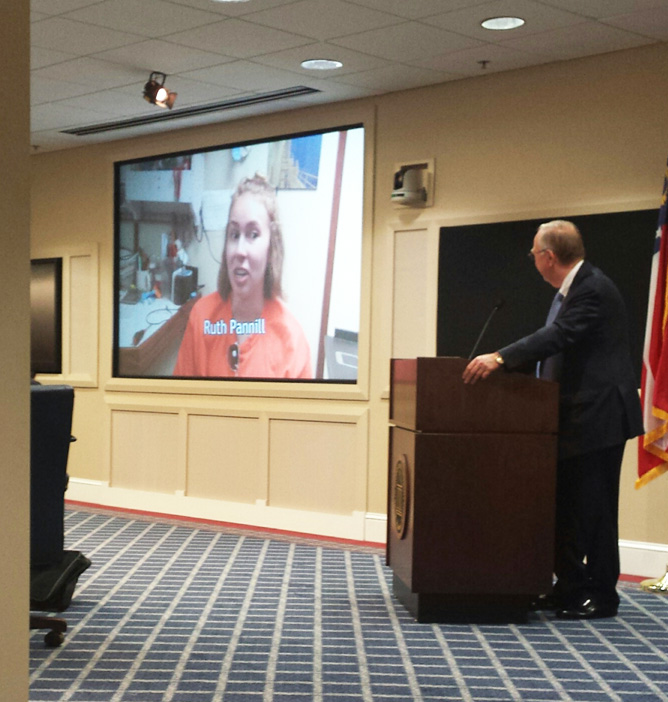
USG Chancellor Hank Huckaby featured a video produced on the project at the August Board of Regents meeting as part of his report to the board.

BOR Video w


Skidaway Institute participates in worldwide ocean snapshot

Scientists at the University of Georgia Skidaway Institute of Oceanography joined researchers around the globe in a worldwide Ocean Sampling Day on Sunday, June 21, the summer solstice.

This was the second year Skidaway researchers have participated in the Ocean Sampling Day event. The first was conducted last year, also on the summer solstice. The event focuses on simultaneous sampling of microbes in ocean, coastal and Great Lakes waters.

This year, 191 marine research locations—from the Rothera Research Station in Antarctica to Göteborg University in Sweden—participated. The sampling program supports international missions to provide

“It’s a global effort to take a snapshot of microbes across the world’s oceans at the same time, on the same day, in this case, the summer solstice,” said Skidaway Institute professor Marc Frischer.

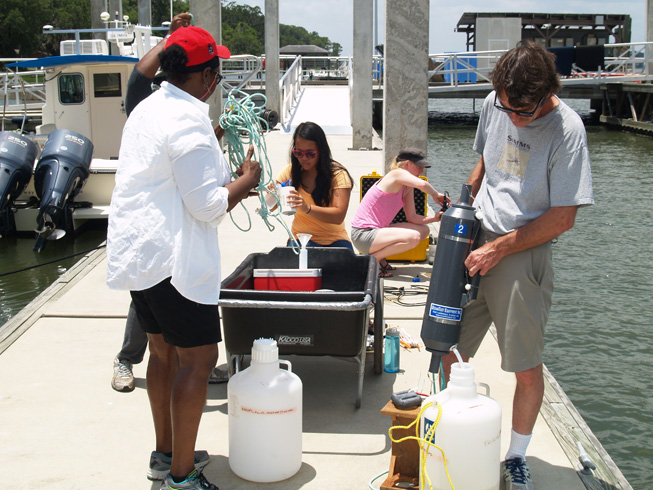
The Skidaway Institute team transfers a water sample from the Skidaway River during Ocean Sampling Day

The Skidaway Institute team transfers a water sample from the Skidaway River during Ocean Sampling Day

Frischer cited the significance of the project by describing microbes as the “engines of our planet” and said half the oxygen in the atmosphere is produced by microbes in the ocean.

Skidaway Institute scientists collected samples at two locations. One team collected and processed samples from the Skidaway River estuary immediately adjacent to the Skidaway Institute campus. That also served as part of an ongoing water-quality monitoring program Skidaway Institute has supported for more than 25 years. A second group teamed up with scientists from the National Oceanic and Atmospheric Administration Gray’s Reef National Marine Sanctuary and collected samples from Gray’s Reef. The 14,000-acre marine sanctuary is located about 17 miles off the Sapelo Island coast.

“We helped Gray’s Reef by collecting and processing their samples in the way they needed to be done,” Frischer said. “You really need a laboratory for that, and we were able to provide that.”

One goal of the global project is to note the commonalities and the differences among the microbial communities around the globe. Some of those differences were seen just in the samples collected at Gray’s Reef and at the Skidaway campus, two sites only 40 miles apart.

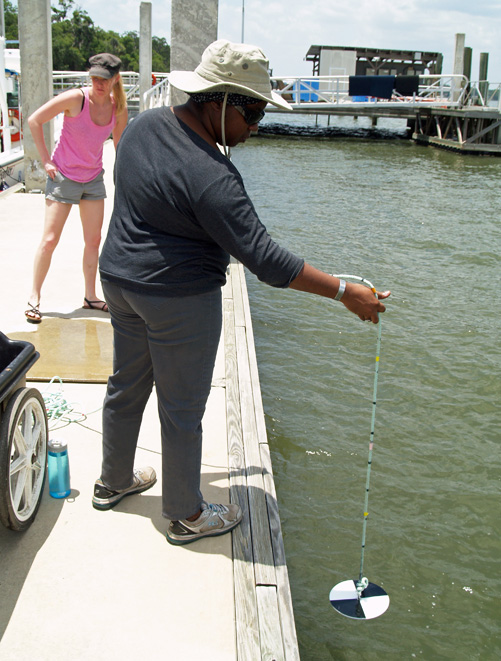
Grad student LaGina Frazier lowers a disc used to measure turbidity into the water off the UGA Skidaway Institute dock.

Grad student LaGina Frazier lowers a sensor into the water off the UGA Skidaway Institute dock.

“We generally observe a larger number of smaller organisms out in the ocean, which makes sense because they are adapting to a system with lower nutrients,” Frischer said. “We also saw a different kind of photosynthetic organisms since there is much more light available in the ocean compared to rather turbid waters in our estuary.”

Much of the fieldwork at both Skidaway Institute and Gray’s Reef was handled by undergraduate college students gaining research experience at Skidaway Institute this summer. These included students from UGA and Savannah State University’s Research Experience for Undergraduates program.

All samples and data were sent to Bremen, Germany, for DNA extraction and sequencing to ensure maximum comparability. The resulting data will be made publicly available as soon as quality checks are finished. These cumulative samples, related in time, space and environmental parameters, will provide insights into fundamental rules describing microbial diversity and function and contribute to the blue, or oceanic, economy through the identification of novel, ocean-derived biotechnologies.

Ocean Sampling Day was jointly coordinated by Jacobs University in Bremen, Germany, and the University of Oxford in the U.K. and is part of the European Union-funded Ocean of Tomorrow research project Micro B3.

“It is really important to have a global perspective,” Frischer said. “We are glad we can participate in what they are now calling “gigascience” where we are collecting a snapshot from all over the world. It is amazing!”

Additional information on the global Ocean Sampling Day project is available at www.microb3.eu/osd.

A video of Ocean Sampling Day is available on the Skidaway Institute YouTube Channel at:

https://www.youtube.com/watch?v=5c8JuzvLUH8

Harvey joins Skidaway Institute faculty

OLYMPUS DIGITAL CAMERA

Biological oceanographer Elizabeth Harvey has joined the faculty of the UGA Skidaway Institute of Oceanography as an assistant professor.

Harvey received her bachelor’s degree in marine science from the University of Maine and a master’s in environmental science from Western Washington University. She earned her doctorate in oceanography from the University of Rhode Island. Immediately prior to joining Skidaway Institute, she completed a post-doctoral fellowship at Woods Hole Oceanographic Institution.

Harvey’s research focus is on the mechanisms of mortality in the planktonic environment in the ocean and how that influences food web structure and biogeochemical cycling.

UGA Skidaway Institute produces informational video on black gill in Georgia shrimp

The UGA Skidaway Institute of Oceanography has produced an informational video to educate the public about black gill, a condition affecting Georgia shrimp, and the institute’s research into the problem.

Black gill is a mysterious condition affecting shrimp from Florida to North Carolina. A number of shrimpers have blamed black gill for their reduced harvests.

Almost nothing was known of the condition until the UGA Skidaway Institute began looking into the issue in early 2014. Since then, researchers have learned much about the condition, but much is still unknown. This video provides background on the condition and the results of the investigation thus far.

The video can be viewed below or accessed through the UGA Skidaway Institute Web site at http://www.skio.uga.edu.

The black gill research is funded by Georgia Sea Grant. The video was produced in cooperation with UGA Marine Extension, the university’s Office of Public Service and Outreach, Georgia Sea Grant and the Georgia Department of Natural Resources.