Tag Archives: university of georgia

UGA Skidaway Institute scientists study dynamic Cape Hatteras waters

Sometimes called the “graveyard of the Atlantic” because of the large number of shipwrecks there, the waters off of Cape Hatteras on the North Carolina coast are some of the least understood on the U.S. eastern seaboard. University of Georgia Skidaway Institute of Oceanography scientist Dana Savidge is leading a team, which also includes UGA Skidaway Institute scientist Catherine Edwards, to investigate the dynamic forces that characterize those waters.

The four-year project, informally called PEACH: Processes driving Exchange at Cape Hatteras, is funded by $5 million grant from the National Science Foundation. Skidaway Institute will receive $1.2 million for its part.
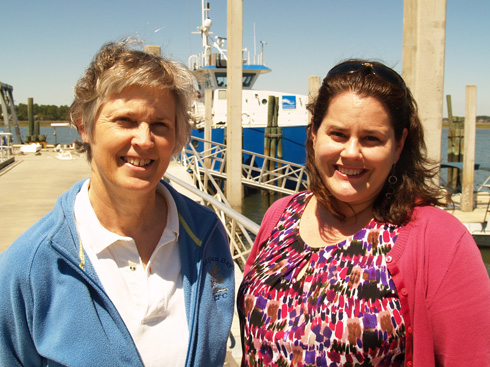
Researchers Dana Savidge (left) and Catherine Edwards

Researchers Dana Savidge (left) and Catherine Edwards

Two opposing deep ocean currents collide at Cape Hatteras, making the Atlantic Ocean near there highly dynamic. The warm Gulf Stream hugs the edge of the continental shelf as it flows north from the tip of Florida.  At Cape Hatteras, it opposes a colder current, the Slope Sea Gyre current, that moves southward along the mid-Atlantic coast and breaks away from the coast toward northern Europe. As in the deep ocean, the cool shelf waters of the mid-Atlantic continental shelf meet the warm salty shelf waters from the south at Cape Hatteras.

The convergence of all of these currents at one place means that, after long lifetimes in the sunlit shallow shelves, these waters may export large quantities of organic carbon—small plants and animals that have grown up on the shelf—to the open ocean. Scientists have little understanding of the details of how that happens and how it is controlled by the high-energy winds, waves and interaction the between the constantly changing Gulf Stream and Slope Sea Gyre currents.

According to Savidge, the area is very difficult to observe because the water is shallow, the sea-state can be challenging and the convergence of strong currents at one place make it hard to capture features of interest.

“It’s difficult to get enough instruments in the water because conditions change rapidly over short distances, and it’s hard to keep them there because conditions are rough,” she said. “Ships work nicely for many of these measurements, but frequently, the ships get chased to shore because of bad weather.”

To overcome the limitations of ship-based work, the research team will use a combination of both shore- and ocean-based instruments to record the movement and characteristics of the streams of water. A system of high-frequency radar stations will monitor surface currents on the continental shelf all the way out to the shoreward edge of the Gulf Stream, providing real-time maps of surface currents.

“Measuring surface currents remotely with the radars is a real advantage here,” Savidge said. “They cover regions that are too shallow for mobile vehicles like ships to operate while providing detailed information over areas where circulation can change quite dramatically over short times and distances.”

Edwards will lead a robotic observational component in which pairs of autonomous underwater vehicles called gliders will patrol the shelf to the north and south of Cape Hatteras.  Packed with instruments to measure temperature, salinity, dissolved oxygen and bio-optical properties of the ocean, both shelf- and deep-water gliders fly untethered through the submarine environment, sending their data to shore at regular intervals via satellite.

To compensate for the notoriously difficult conditions, Edwards will take advantage of a novel glider navigation system she developed with students and collaborators at Georgia Tech that automatically adjusts the glider mission based on ocean forecasts as well as data collected in real time.

“Our experiments show that we can keep the gliders where they need to be to collect the data we need,” she said. “The best part is that we get to put the maps of surface currents together with the subsurface information from the gliders, and we can make all of this information available in real time to scientists, fishermen and the general public.”

The researchers will also place a number of moorings and upward-pointing echo sounders on the sea floor. These acoustic units will track the water movement while also recording temperature and density.  PEACH will focus primarily on the physics of the ocean, but the information the researchers gather will also help scientists more fully understand the chemistry and biology, and may cast light on issues like carbon cycling and global climate change.

“Everyone is interested in the global carbon budget, and the effect of the coastal seas on that budget is not well understood,” Savidge said. “For example, many scientists consider the continental shelf to be a sink for carbon, because there is a lot of biology going on and it draws in carbon.

“However, there are indications that the shelf south of Hatteras is both a sink and a source of carbon. This project may help clarify that picture.”

The project will run through March 2020. The remaining members of the research team are Harvey Seim and John Bane of the University of North Carolina; Ruoying He of North Carolina State University; and Robert Todd, Magdalena Andres and Glen Gawarkiewicz from Woods Hole Oceanographic Institute.

Skidaway Institute’s Diaz studies the tiny organisms with a big impact

Like many oceanographers, Julia Diaz is difficult to categorize. Is she a biologist, or is she a chemist? The answer is — a little of both. Diaz’s research interests lie where biology and chemistry meet.

“My absolute favorite thing in the world is looking at phytoplankton under the microscope,” she said. “And I am also very passionate about chemistry.

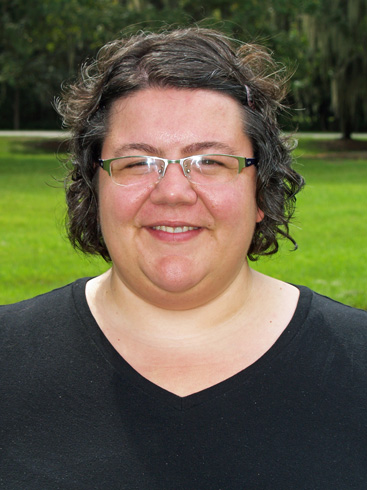
OLYMPUS DIGITAL CAMERA“Our chemical environment really shapes our health and impacts our climate and all kinds of natural resources. So I am interested in the intersection of those two parts of nature — how tiny microscopic life interacts with the invisible chemistry out there to shape the environment in some pretty big ways.”

Diaz joined the faculty of UGA Skidaway Institute of Oceanography in fall 2015 as a homecoming of sorts. She was raised in Alpharetta just outside Atlanta. She graduated summa cum laude from the University of Georgia with a degree in biology and then went on to earn a Ph.D. in earth and atmospheric sciences from Georgia Tech. Her postdoctoral work took her to Harvard University and Woods Hole Oceanographic Institution.

Diaz targeted science as her future from an early age. Her father is a retired Georgia State University professor, and her entire family was involved in education. Her brother is an astrophysicist, and she jokes that they study opposite ends of the universe—with her specializing in the very small while he studies the very large.

“I grew up talking about science with my dad, my brother and my mom,” she said. “It was always on my mind, and I was pretty good at it. It felt good to learn and to always be exploring new things.”

As an undergrad at UGA, her interest in science grew into a passion.

“I got into some really cool classes, where we basically spent two days out of the week staring down a microscope at pond water and it was just the coolest thing,” she said. “All these creatures that you would never imagine are there. It’s amazing — this whole other world that really drew me in.”

In graduate school, Diaz focused more on chemistry to complement her background in biology.

“I originally got interested in marine chemistry and biology because I was inspired by the fact that, billions of years ago, marine microbes created oxygen and other life-giving chemicals to make this planet the habitable place that it is,” she said.

Diaz’s work has taken her from the Caribbean to Antarctica.

“One of the best parts about this job is that it lets you see the world. Antarctica was the most amazing experience — you never get tired of seeing penguins,” she said.

Diaz with her penguin friends

Diaz with her penguin friends

“Personally, I never got tired of looking at Antarctic phytoplankton, either. They can attach to the underside of sea ice, making it look like it’s been dipped in coffee, but under the microscope, it’s like peering inside a jewelry box of gorgeous single cells, so many ornate shapes and vibrant colors. It’s just magical.”

Many of Diaz’s projects focus on phytoplankton — microscopic plantlike organisms that drift with the ocean’s currents. They form the base of the marine food chain and produce half of the oxygen in the atmosphere. Among other projects, she studies how starving phytoplankton obtain the chemical nutrients they need from seawater, and she attempts to identify the enzymes that drive those biogeochemical processes.

Diaz is also interested in how phytoplankton convert chemical elements into forms that can be harmful or beneficial to life, such as reactive oxygen species, or ROS, types of oxygen with additional electrons. They are produced in all living things as a byproduct of metabolism.

“ROS can be toxic, but they can also be very beneficial to life,” Diaz said. “They can serve as cell signals that promote growth and immune defense. Our own white blood cells produce ROS as a defense mechanism against invading pathogens.”

An important facet her work seeks to understand is how phytoplankton may use ROS to survive stressful situations, such as attack by predators. These ROS-driven processes may play a role in the formation and decline of giant phytoplankton blooms so large they can be seen by satellites.

She admits her work can be challenging to communicate outside of her field, because much of the research cannot be seen by the naked eye. However, she said, those invisible chemical processes are occurring in the ocean over sizeable areas and long time periods, and they produce large visible effects that shape our daily lives.

“From starvation to cell defense, a lot of the work I do relates to stress in the oceans — how marine life copes with stressful conditions, how stress changes the chemistry of the oceans and ultimately how that changes the environment on a global scale. The oceans are under increasing amounts of stress due to climate change, pollution and other human impacts, so I think this kind of research has an important place in the understanding of our changing planet.”

###

UGA Skidaway Institute scientist stands atop the globe


UGA Skidaway Institute of Oceanography researcher Chris Marsay has stood on top of the world—literally.

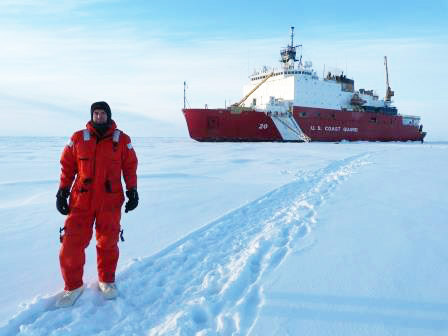
Marsay arrived at the North Pole in early September and took part in the U.S .GEOTRACES Arctic Expedition on board the U.S. Coast Guard Cutter Healy, a polar icebreaker.

Marsay at the North Pole in front of the U.S. Coast Guard Cutter Healy.

Marsay at the North Pole in front of the U.S. Coast Guard Cutter Healy.

The project is part of an international, multiple icebreaker effort to conduct geochemical sampling of the Arctic Ocean. The cruise arrived at 90 degrees north on Sept. 5 in what is the first occupation of the North Pole by an unaccompanied U.S. surface ship—submarines usually follow ships below the ice. While at the pole, the Healy rendezvoused with the German ship conducting the German leg of the GEOTRACES Arctic program.

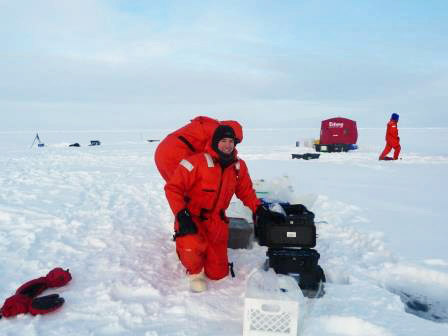
Marsay with his gear at the North Pole.

Marsay with his gear at the North Pole.

Marsay is working with UGA Skidaway Institute professor Cliff Buck and scientists from Florida State University and Rutgers University. The research team was funded by the National Science Foundation to collect samples from the atmosphere, precipitation and surface water from melt ponds during the cruise.

“Our research goals are to describe the chemistry of atmospheric deposition to the region and quantify flux rates,” Buck said. “These data will then be shared with the scientific community to better understand biogeochemical cycling of trace elements and isotopes in the Arctic Ocean.”

Diaz joins UGA Skidaway Institute faculty

Marine biogeochemist Julia Diaz has joined the faculty of the University of Georgia Skidaway Institute of Oceanography as an assistant professor.

OLYMPUS DIGITAL CAMERAOriginally from Alpharetta, Ga., Diaz was graduated summa cum laude from the University of Georgia with a B.S. in biology and went on to earn her Ph.D. in earth and atmospheric sciences from Georgia Tech. She conducted postdoctoral research at Harvard University and the Woods Hole Oceanographic Institution.

Diaz’s research examines how the chemistry and microbiology of the oceans shape each other and, ultimately, how this interaction affects ecosystem health from local to global scales. She is currently studying the chemical basis of coral bleaching, a devastating consequence of global warming which threatens coral reefs worldwide.

“I also study how microscopic plantlike organisms acquire the chemical nutrients they need to survive in extremely nutrient-poor areas of the ocean and how these processes may affect ecosystem structure and climate,” she said. “My research has taken me all over the world, from Antarctica to the Caribbean, and now I am very excited to explore new scientific questions along our beautiful coast and offshore waters.”

Joint summer course draws notice

The joint summer course taught partially at Skidaway Institute has received some attention.

Taught by Jim Nelson and Dana Savidge at Skidaway, and Mary Ann Moran at Sapelo Island, the new program was the featured, cover story in the most recent issue of the University of Georgia Magazine. (Click the image to access the article.)

GM_Sept15 w

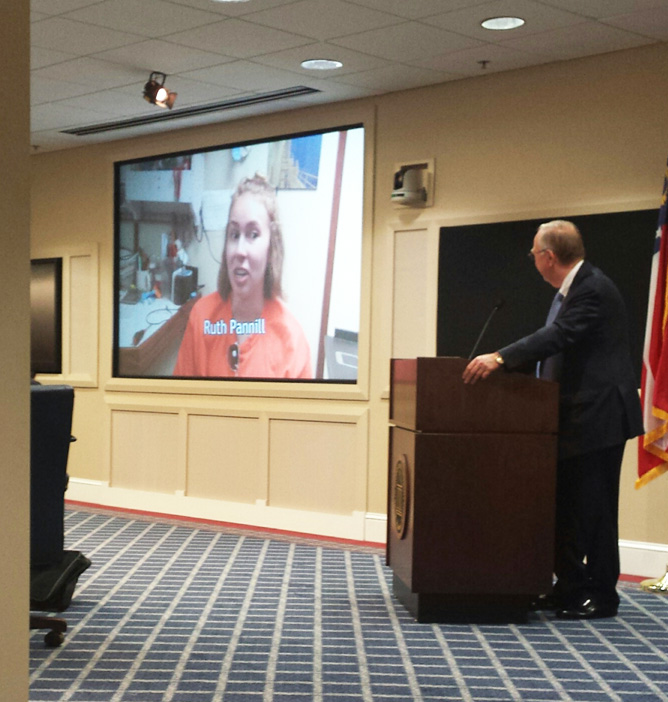
USG Chancellor Hank Huckaby featured a video produced on the project at the August Board of Regents meeting as part of his report to the board.

BOR Video w


Marine Extension pilots program to grow individual oysters off Georgia coast

By Kelly Simmons

UGA Marine Extension is poised to launch the state’s first oyster hatchery, bringing the popular shellfish back to the Georgia coast after more than 50 years, and diversifying the state’s aquaculture industry.

The shellfish research lab on Skidaway Island began piloting oyster growth last year, using funding from the Georgia Department of Natural Resources (DNR) to give wild spat—oyster seed—and advice to aquaculturists in the area who have DNR approval to farm and harvest in specific areas along the coastal rivers and tributaries. DNR funding also paid to outfit part of the shellfish laboratory to be used as a hatchery to hire a hatchery manager.hatchery_flyer-fpo-678x394

“We hope eventually to attract a commercial hatchery to supply large amounts of seed,” said Thomas Bliss, director of the Marine Extension Shellfish Research Laboratory on Skidaway Island. “We can focus here on research.”

So far, 10 growers have cultivated the seedlings, protected in mesh bags on racks in shallow water. The first full size single shell oysters are expected to be ready for harvest this fall.

By summer, some were already 1.75 inches long, about a quarter inch smaller than the legal size for commercial harvesting in Georgia, said Bliss. The survival rate was high—about 99 percent had survived so far.

John Pelli, who owns the Savannah Clam Co., was among the local aquaculturists who agreed to try raising oysters. On a windy but sunny day in March, he was on his skiff, moving his mesh bags of shells from one location to another. He hopes to produce about 300,000 oysters a year to supply retailers locally and across the state.

In the early 1900s, Georgia was the largest wild oyster producer in the country, harvesting more than eight million pounds of oyster meat in 1908. By the 1940s and 1950s, however, production declined significantly. In the 1960s, canneries built to process the native oysters had closed.

In the 1980s, marine extension again began to explore opportunities in aquaculture. Clams, which are easier to grow, were first. In 2013, Georgia clammers harvested more than 105,000 tons of clams, up from 54,000 tons just five years earlier and 4.2 tons in 1993.

Clams are much easier to grow because you can buy seed from other states. Georgia doesn’t allow oyster spat from outside the state because it could contain disease.

To grow the spat, Bliss and hatchery manager Justin Manley have to recreate the natural spawning process of oysters inside tanks of water. Once the larvae is formed it attaches to a small piece of shell in the tank. The baby oysters, called spat, can be transplanted to other areas to grow into adults. They may be harvested when they are two inches long.

This year, Bliss says they’ll produce about 100,000 to 200,000 seeds, or spat. By 2020, he hopes that will increase to five to eight million.

The payoff would be worth it. The 100,000-500,00 oysters grown in 2015 have an estimated dock value of $75,000. Five to eight million would bring in about $1.6 million.

“Everybody’s crazy about single oysters,” Pelli said. “People are willing to pay good money for them.”

UGA Marine Extension pilots new education programs that investigate sustainable oyster aquaculture

The University of Georgia Marine Extension is piloting a new program for visiting school groups in the fall of 2015. The overall project, funded by the Landings Landlovers Inc., will provide hands-on educational experiences for approximately 190 students and the general public in a unique setting.

The UGA MAREX Shellfish Research Laboratory has developed an oyster hatchery, the first in the state of Georgia, to support a growing oyster aquaculture industry. They have created a program that will expose participants to sustainable aquaculture practices and provide enrichment activities that emphasize the ecological and economic importance of oyster reef communities and the important role that oyster hatcheries play in the sustainability of this important shellfish species.

Skidaway Institute participates in worldwide ocean snapshot

Scientists at the University of Georgia Skidaway Institute of Oceanography joined researchers around the globe in a worldwide Ocean Sampling Day on Sunday, June 21, the summer solstice.

This was the second year Skidaway researchers have participated in the Ocean Sampling Day event. The first was conducted last year, also on the summer solstice. The event focuses on simultaneous sampling of microbes in ocean, coastal and Great Lakes waters.

This year, 191 marine research locations—from the Rothera Research Station in Antarctica to Göteborg University in Sweden—participated. The sampling program supports international missions to provide

“It’s a global effort to take a snapshot of microbes across the world’s oceans at the same time, on the same day, in this case, the summer solstice,” said Skidaway Institute professor Marc Frischer.

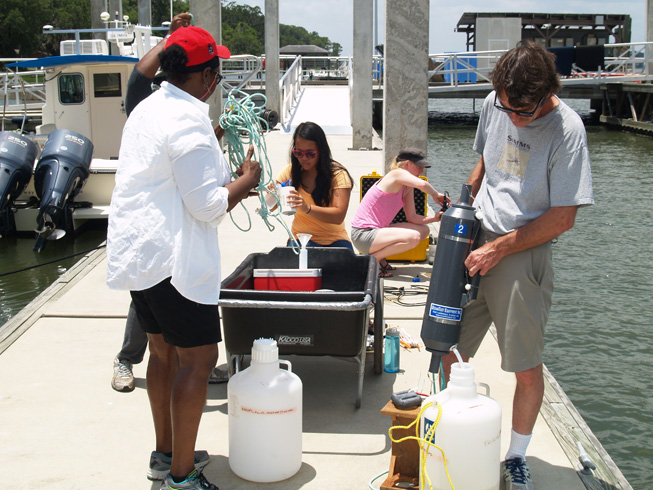
The Skidaway Institute team transfers a water sample from the Skidaway River during Ocean Sampling Day

The Skidaway Institute team transfers a water sample from the Skidaway River during Ocean Sampling Day

Frischer cited the significance of the project by describing microbes as the “engines of our planet” and said half the oxygen in the atmosphere is produced by microbes in the ocean.

Skidaway Institute scientists collected samples at two locations. One team collected and processed samples from the Skidaway River estuary immediately adjacent to the Skidaway Institute campus. That also served as part of an ongoing water-quality monitoring program Skidaway Institute has supported for more than 25 years. A second group teamed up with scientists from the National Oceanic and Atmospheric Administration Gray’s Reef National Marine Sanctuary and collected samples from Gray’s Reef. The 14,000-acre marine sanctuary is located about 17 miles off the Sapelo Island coast.

“We helped Gray’s Reef by collecting and processing their samples in the way they needed to be done,” Frischer said. “You really need a laboratory for that, and we were able to provide that.”

One goal of the global project is to note the commonalities and the differences among the microbial communities around the globe. Some of those differences were seen just in the samples collected at Gray’s Reef and at the Skidaway campus, two sites only 40 miles apart.

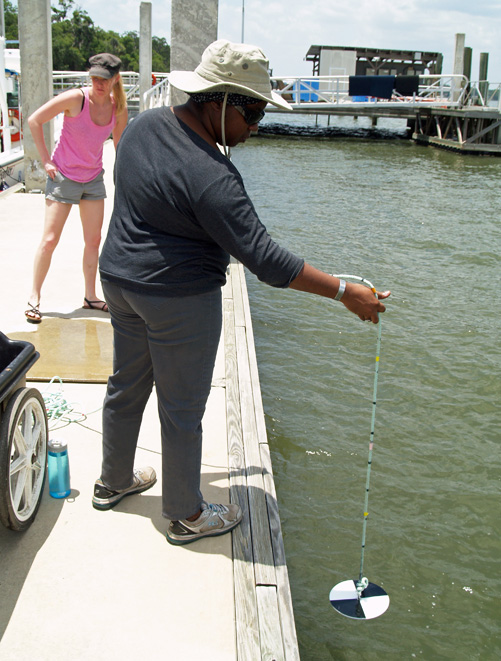
Grad student LaGina Frazier lowers a disc used to measure turbidity into the water off the UGA Skidaway Institute dock.

Grad student LaGina Frazier lowers a sensor into the water off the UGA Skidaway Institute dock.

“We generally observe a larger number of smaller organisms out in the ocean, which makes sense because they are adapting to a system with lower nutrients,” Frischer said. “We also saw a different kind of photosynthetic organisms since there is much more light available in the ocean compared to rather turbid waters in our estuary.”

Much of the fieldwork at both Skidaway Institute and Gray’s Reef was handled by undergraduate college students gaining research experience at Skidaway Institute this summer. These included students from UGA and Savannah State University’s Research Experience for Undergraduates program.

All samples and data were sent to Bremen, Germany, for DNA extraction and sequencing to ensure maximum comparability. The resulting data will be made publicly available as soon as quality checks are finished. These cumulative samples, related in time, space and environmental parameters, will provide insights into fundamental rules describing microbial diversity and function and contribute to the blue, or oceanic, economy through the identification of novel, ocean-derived biotechnologies.

Ocean Sampling Day was jointly coordinated by Jacobs University in Bremen, Germany, and the University of Oxford in the U.K. and is part of the European Union-funded Ocean of Tomorrow research project Micro B3.

“It is really important to have a global perspective,” Frischer said. “We are glad we can participate in what they are now calling “gigascience” where we are collecting a snapshot from all over the world. It is amazing!”

Additional information on the global Ocean Sampling Day project is available at www.microb3.eu/osd.

A video of Ocean Sampling Day is available on the Skidaway Institute YouTube Channel at:

https://www.youtube.com/watch?v=5c8JuzvLUH8

Harvey joins Skidaway Institute faculty

OLYMPUS DIGITAL CAMERA

Biological oceanographer Elizabeth Harvey has joined the faculty of the UGA Skidaway Institute of Oceanography as an assistant professor.

Harvey received her bachelor’s degree in marine science from the University of Maine and a master’s in environmental science from Western Washington University. She earned her doctorate in oceanography from the University of Rhode Island. Immediately prior to joining Skidaway Institute, she completed a post-doctoral fellowship at Woods Hole Oceanographic Institution.

Harvey’s research focus is on the mechanisms of mortality in the planktonic environment in the ocean and how that influences food web structure and biogeochemical cycling.

UGA Skidaway Institute produces informational video on black gill in Georgia shrimp

The UGA Skidaway Institute of Oceanography has produced an informational video to educate the public about black gill, a condition affecting Georgia shrimp, and the institute’s research into the problem.

Black gill is a mysterious condition affecting shrimp from Florida to North Carolina. A number of shrimpers have blamed black gill for their reduced harvests.

Almost nothing was known of the condition until the UGA Skidaway Institute began looking into the issue in early 2014. Since then, researchers have learned much about the condition, but much is still unknown. This video provides background on the condition and the results of the investigation thus far.

The video can be viewed below or accessed through the UGA Skidaway Institute Web site at http://www.skio.uga.edu.

The black gill research is funded by Georgia Sea Grant. The video was produced in cooperation with UGA Marine Extension, the university’s Office of Public Service and Outreach, Georgia Sea Grant and the Georgia Department of Natural Resources.