Category Archives: Uncategorized

Connecting Georgia seafood producers to consumers during the coronavirus pandemic

by Emily Kenworthy

As farmers and food distributors struggle to get their products into the hands of consumers, UGA Marine Extension and Georgia Sea Grant has teamed up with UGA Cooperative Extension and the Georgia Department of Agriculture to generate business for the seafood industry.
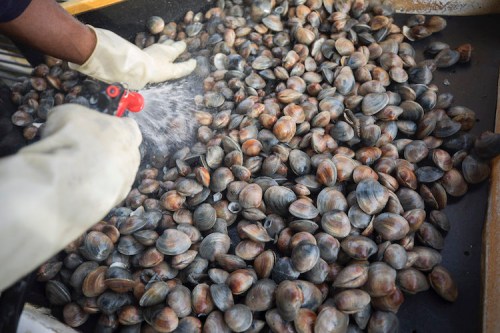
Clams are cleaned before being sorted by size.

Photo credit: Pete Frey

The Ag Products Connection, a partnership between UGA Extension and the state agriculture department’s Georgia Grown program, is designed to connect farmers and seafood producers with customers around the state looking to source local food products. Businesses can sign up to have their companies promoted through the online platform, which lists local businesses by county.

MAREX Seafood 3

Photo Credit: Peter Frey

“The resource was developed for producers who had a glut of product. Some were selling to school systems or restaurants, but now they don’t have those avenues of customers,” said Tori Stivers, seafood and marketing specialist for Marine Extension and Georgia Sea Grant. “With this program, they can market directly to consumers who can serve as new source of revenue for them.”

Stivers is working with fisheries specialists in UGA Marine Extension and Georgia Sea Grant to promote the resource to seafood professionals, many based on the coast, who are dealing with a surplus of product during the pandemic. She recently shared the resource with a list of more than 150 seafood wholesalers in Georgia, encouraging them to sign up.

“My hope is that it provides some income to those who have seen their business drop during this time so they can keep as many employees on the payroll as possible,” Stivers said. “If they can supplement their business by going directly to consumers, it might help them stay open.”

Some seafood businesses, like Southside Shellfish in Savannah, have already signed up for the program.

“We’ve seen a decline in clientele, but we’re still here and we’re still operating,” said Hope Meeks, owner of Southside Shellfish. “That’s why I think this resource will be so good because people keep calling and asking if we’re open, which we are.”

Meeks’ business has been involved in commercial crabbing since 1991. The retail business began in 2007, with the opening of a market in south Savannah. In addition to local blue crabs, they sell black sea bass, snapper, flounder and other seafood native to the east coast.

MAREX Seafood 2

Photo Credit: Peter Frey

“I’m hoping that this will bring in our regular customers as maybe new customers that don’t already know we’re here,” she said. “We have raw and cooked seafood, so for those who are skeptical about eating out, this is great way for people to source shellfish and fish products you can catch in our area.”

Georgia’s seafood producers and wholesalers who are keeping regular hours, providing curbside pickup, home delivery or e-commerce sales during the COVID-19 crisis can join the program by visiting the Georgia Grown Ag-Products Industry Promotion  or Georgia Grown E-Commerce Promotion pages and filling out forms that will add their information to the statewide database of producers that is being shared with consumers and buyers.

Consumers can find seafood resources listed by county HERE.

Georgia Grown — a state membership program designed to help agribusinesses thrive by bringing producers, processors, suppliers, distributors, retailers, agritourism and consumers together — is waiving all membership fees for the service until July to help producers affected by the crisis.
UGA Skidaway Institute’s Edwards granted tenure

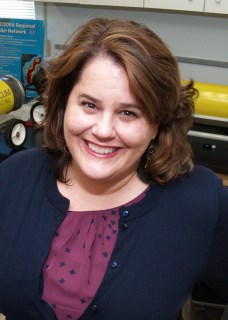
The University of Georgia has granted tenure to UGA Skidaway Institute of Oceanography / Department of Marine Sciences scientist Catherine Edwards. Edwards was also promoted from assistant professor to associate professor, effective Aug. 1.

OLYMPUS DIGITAL CAMERAEdwards is a physical oceanographer, with broad interdisciplinary interests in marine sciences and engineering. She earned a B.S. in physics with highest honors from the University of North Carolina at Chapel Hill, and worked as an ocean modeler at the U.S. Naval Research Laboratory before earning her Ph.D. in physical oceanography from the University of North Carolina at Chapel Hill. She joined Skidaway Institute in 2010.
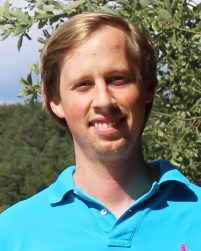
Edwards’ research focuses on answering fundamental questions in coastal oceanography and fisheries sciences with autonomous underwater vehicles (AUVs). Using AUVs, also called gliders, she and her team are developing novel ways to optimize their use with engineering principles and real-time data streams from models and observations.

While at UGA Skidaway Institute, Edwards has been awarded more than $2 million dollars on 12 projects totaling more than $12 million from NOAA/Navy sources, the Gulf of Mexico Research Initiative and four different programs within the National Science Foundation. As the founder of a regional glider observatory, she serves as the lead scientist in a new project that places gliders in the paths of hurricanes to better predict their intensity at landfall. Edwards is a co-primary investigator in a large $5 million observational program studying exchange between the coastal and deep ocean at Cape Hatteras. In an effort funded by NSF’s Smart and Autonomous Systems program, Edwards is also working with researchers from Georgia Tech and Gray’s Reef National Marine Sanctuary to utilize gliders and acoustic tagging to track fish migrations.

Scientific serendipity: Researchers make surprising finding on ocean’s ‘thin layers’

Sometimes scientists start out researching one subject, but along the way, they come across something else even more interesting. This is what happened to University of Georgia Skidaway Institute of Oceanography researcher Adam Greer in the summer of 2016 when Greer was a post-doctoral associate at the University of Southern Mississippi. That fortuitous event resulted in a paper recently published in the journal Limnology and Oceanography with Greer as the lead author.

Adam Greer 1 650pGreer and his fellow researchers were on a cruise in the northern Gulf of Mexico to study the effects of river input on biological processes. They came across a natural phenomenon called a thin layer. These are oceanographic features found all over the world where biomass collects into a narrow portion of the water column–less than five meters thick vertically–and can extend for several kilometers horizontally. They tend to occur in stratified shelf systems.
“Surprisingly, there are few published studies on thin layers in the northern Gulf of Mexico, which is heavily influenced by rivers and highly stratified during the summer,” Greer said. “Thin layers are important because they are trophic hot spots, where life tends to congregate, and predators and prey interact.”

However, Greer said, thin layers are very difficult to analyze because they occur within a restricted portion of the water column, and most conventional ocean sampling equipment will not detect their influence on different organisms.

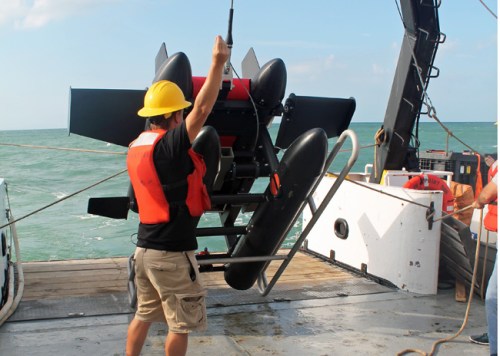
Greer and his colleagues were better equipped than most to study the thin layer. Rather than laying out a grid and taking a series of water samples, they were equipped with an In Situ Ichthyoplankton Imaging System (ISIIS). This imaging system was towed behind their research vessel and undulated through the water column, producing a live feed of plankton images and oceanographic data. By studying the video, they were able to map the distributions of many different types of organisms in great detail. The thin layer was composed of large chains of phytoplankton called diatoms and gelatinous zooplankton called doliolids.

Thin Layer 2

A crewman launches the ISIIS.

“Although we expected many different organisms to aggregate within the layer, this was not the case,” Greer said. “The only organisms that were concentrated within the layer were gelatinous organisms called doliolids. Other organisms that we expected to see, such as copepods, chaetognaths and shrimp, tended to congregate near the surface just south of the thin layer.”

The researchers determined that the area south of the thin layer was influenced by a surface convergence – two water masses colliding and pushing water downward at a slow rate. They believe that many organisms with active swimming ability, such as shrimps and copepods, could stay within the surface convergence, while more passive swimmers, such as doliolids would follow the trajectory of the thin layer and diatoms.

Thin Layer 1

An image from the In Situ Ichthyoplankton Imaging System passing through the thin layer. The long, slender filaments are chains of diatoms. The larger, oval plankton are doliolids

Greer and his colleagues discovered several other characteristics of the thin layer they had not anticipated. There was a higher concentration of live phytoplankton than expected. As a result, the thin layer also had a high concentration of dissolved oxygen due to the photosynthetic activity. The zooplankton were also aggregated into distinct microhabitats with different oceanographic properties — such as temperature, salinity and light. The microhabitats also contained different types and abundances of food.

“For a lot of these organisms, if you took the average abundance of food it wouldn’t be enough to survive,” Greer said. “So whatever mechanisms there are to create higher abundances of food, they are potentially really important for a number of different organisms.”

The other members of the research team were Adam Boyette, Valerie Cruz, Kemal Cambazoglu, Luciano Chiaverano and Jerry Wiggert, all from the University of Southern Mississippi; Brian Dzwonkowski and Steven Dykstra, from the University of South Alabama; and Christian Briseño‐Avena and Bob Cowen, from Oregon State University.
The paper can be viewed HERE.

UGA Skidaway Institute scientists participate in 2020 Ocean Sciences Meeting

The UGA Skidaway Institute of Oceanography was well represented at the 2020 Ocean Sciences Meeting in San Diego in February. The Ocean Sciences Meeting is the flagship conference for the ocean sciences and the larger ocean-connected community. The Ocean Sciences Meeting was co-sponsored by American Geophysical Union, the Association for the Sciences of Limnology and Oceanography, and The Oceanography Society.

Professor Marc Frischer said he was impressed by the efforts of the ocean science community to evolve the climate change dialog and narrative.

“As Margaret Leinen said in her closing plenary address, we started at ‘the ocean is too big to be affected’, to ‘the ocean is too big to fix,’ to where we are today, ‘the ocean is too important not to fix,’” Frischer said. “The call is for the ocean science community to become engaged in searching for solutions, and we have a lot to offer.” Leinen is the director of Scripps Institution of Oceanography.

Frischer presented some of his most recent work investigating the ecological significance of doliolids in continental shelf systems. In addition to that presentation, a student from Savannah State University, who worked in Frischer’s lab last summer, presented the results of work she conducted. Frischer mentored Ashly Rivera as part of Savannah State’s Research Experiences for Undergraduates program. At the end of each summer the REU students present their research and vote on who they think did the best job. The winner is awarded an all-expense paid trip to a science meeting of their choice. This past summer Rivera won that honor and chose to attend the Ocean Sciences Meeting. Ashly presented a poster titled “The Re-Acquisition of Shrimp Black Gill Infections by Penaeid Shrimp; Oceanic or Estuarine Sources?”

Ocean Sciences 650p

Ashly Rivera (r) at her poster presentation.

Assistant professor Catherine Edwards co-chaired a session on western boundary current-shelf interaction. The session was inspired by her and fellow Skidaway Institute scientist Dana Savidge’s ongoing research into ocean currents around Cape Hatteras, “Processes driving Exchange at Cape Hatteras,” also known as PEACH. Edwards also presented a poster on the vertical structure of Hatteras and Gulf Stream fronts as part of a large group of PEACH researchers. She was a co-author on four other posters and two talks, including posters by Savidge and UGA Skidaway Institute research technician Ben Hefner. Hefner’s poster explored data from the multiple nested high frequency radars at PEACH, using different combinations of radials to get realistic data over Diamond Shoals at Cape Hatteras.

“With their high wave energy and treacherous conditions for sampling, the shallow waters of shoals are a very difficult places to get good data,” Edwards said.

Edwards’ poster looked at the vertical layering at the boundaries of Mid Atlantic Bight, South Atlantic Bight, and Gulf Stream water. “You see interleaving of up to five layers in just 20-30 meters water depth, which is important for exchange of heat and salt between the deep and shallow ocean,” Edwards said.

Assistant professor Adam Greer was the lead author and presented a poster titled “High-resolution sampling of a broad marine life size spectrum to examine shelf biophysical coupling.” He was also a co-author for three other posters and one oral presentation.

Associate professor Clifton Buck presented a poster titled “Aerosol trace element concentrations and fractional solubility in the North Pacific Ocean: US GEOTRACES GP-15 Pacific Meridional Transect.” He was also the co-author on an additional poster and two talks.

Professor Jay Brandes lead an oral presentation on “Variability of microplastics in estuarine systems and consequences for organism studies.”

“Studies of microplastic pollution have really taken off in the last couple of years,” Brandes said. “There were two solid days of talks and posters on the subject from around the world, from basic studies to community cleanup efforts. This level of interest would have been unheard of in past meetings.”

He was also a co-author for three poster presentations. Graduate student Kun Ma was the lead author on one of those poster presentations, “Constraining photochemical production rates of dissolved inorganic carbon in the open ocean using the moderate dissolved inorganic carbon (DI13C) isotope enrichment (MoDIE) method.”

Gray’s Reef explores sounds of the ocean with virtual learning

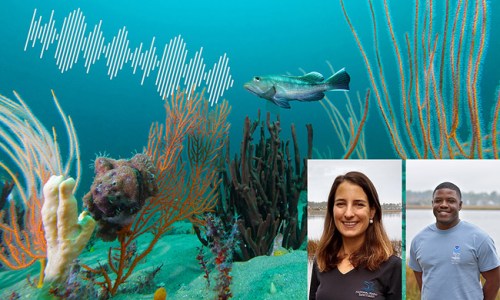
NOAA Gray’s Reef National Marine Sanctuary is working to continue to provide virtual learning opportunities while working from home. An ongoing collaboration between Exploring by the Seat of Your Pants and the Office of National Marine Sanctuaries hosted an hour-long webinar, Exploring the Sounds of Gray’s Reef, with Gray’s Reef scientists.

GRNMS Explore 650p

Alison Soss and Kris Howard study the sounds of Gray’s Reef to track fish movements and species diversity. Monitoring sounds and movements of commercially important species like black sea bass helps guide management decisions in the region’s waters.

Kris Howard, Alison Soss, and Ben Prueitt provided an overview of the NOAA Sanctuary System and Gray’s Reef, including a virtual live aboard experience on the NOAA Ship Nancy Foster. Webinar participants could also hear audio from hydrophones listening for fish noises and acoustic receivers to track movement of black sea bass. The webinar concluded with a question and answer session from the at-home audience of students, teachers and the general public. The full webinar can be found at the YouTube channel for Exploring by the Seat of Your Pants

UGA Skidaway Institute scientists use high-tech tools to track fish migrations

UGA Skidaway Institute of Oceanography scientist Catherine Edwards is participating in a collaborative project that will track the migration patterns of important fish species using artificial intelligence and a fleet of underwater robots. The project is a joint effort among UGA Skidaway Institute, Georgia Tech, Michigan State University, Wright State University and Gray’s Reef National Marine Sanctuary.

Fish Migration 1 650p

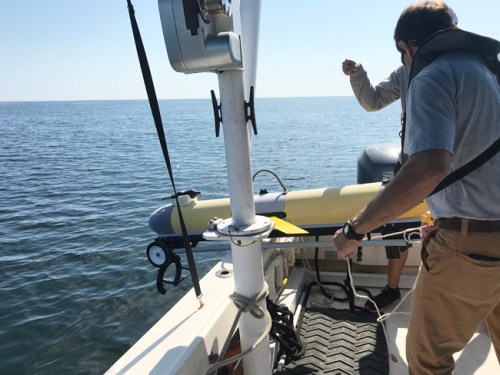
Technicians prepare to deploy a glider. Photo credit: Kim Donoghue

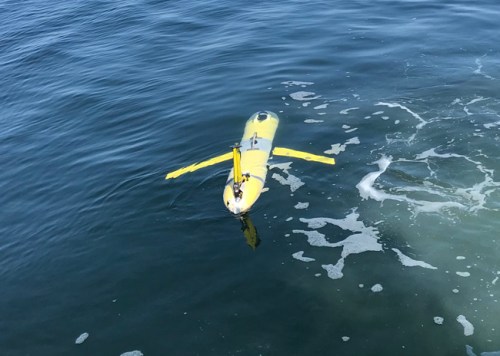
The researchers use a combination of two different types of autonomous underwater vehicles equipped with acoustic receivers. Edwards specializes in gliders — torpedo-shaped crafts that can be packed with sensors and sent on underwater missions lasting weeks. The gliders will join a group of six robotic fish designed by collaborators at Michigan State. Both types of robots will use their “underwater ears” to listen for the sound signals from fish that had previously been tagged with acoustic transmitters. The tags on each fish transmit a different sound signal, allowing the researchers identify fish movements over time and distance.

The gliders will monitor the density of the water which controls the speed of sound through it. Using that data, Edwards and her colleagues will be able to better locate the tagged animals as well as to identify the location of the gliders themselves — a problem that has been a significant challenge in underwater navigation.

Fish Migration 2 650p

A Skidaway Institute glider named “Angus” begins a mission. Photo credit: Kim Donoghue

“Marine robots can be used to accurately map and track marine animals, which will lead to a better interpretation of their migration patterns,” Edwards said. “But because fisheries managers, oceanographers and roboticists have different perspectives and knowledge bases, it can be difficult to take advantage of cutting edge research in each field without a significant effort to translate among the groups.”

The overall goal of the project is to develop an interface that will translate the missions and needs of fisheries managers into multi-level planning for a fleet of marine robots to monitor fish populations in a dynamic coastal ocean environment. While preparing for the first field season, the team is developing an interface that uses artificial intelligence as a powerful tool to plan out the actions of the robots to identify hotspots based on these insights, helping their human pilots, and ultimately fulfilling the goals of fisheries managers.

“An important component of our work at NOAA’s Gray’s Reef National Marine Sanctuary is to study marine organisms’ use of the sanctuary, whether as a migration route, foraging location or other function,” said Stan Rogers, superintendent of the sanctuary. “The glider and robotic technology Dr. Edwards and her team will deploy in Gray’s Reef can help us track the movement patterns of animals that use the sanctuary and identify specific features of Gray’s Reef that are highly attractive to fish.”

The researchers hope to begin preliminary field testing this summer, depending on COVID-19-related restrictions.

The other members of the research team are Fumin Zhang from Georgia Tech, Xiaobo Tan from Michigan State University and Mike Cox from Wright State University.

The project is funded by a three year, $1 million National Science Foundation grant.

Marine scientists map fish habitats

by Alan Flurry

Beyond the barrier islands of coastal Georgia, the continental shelf extends gradually eastward for almost 80 miles to the Gulf Stream. This broad, sandy shelf largely does not provide the firm foundation needed for the development of reef communities to support recreational and commercial fish species including grouper, snapper, black sea bass and amberjack.

“Natural and artificial reef habitats are important to Georgia fisheries because they provide hard, permanent structure on the Georgia shelf, which is dominantly a vast underwater desert of shifting sands,” said Clark Alexander, professor and director of the University of Georgia Skidaway Institute of Oceanography. “The Georgia Department of Natural Resources has invested significantly over the past several years in developing the capacity to map these areas to enhance the management of these reef communities.“

To increase the availability of high-quality hard bottom areas off Georgia, the DNR began an artificial reef-building program in 1971 to deploy materials at various locations across the continental shelf, from 2 to 30 miles offshore. Reef materials include concrete slabs and culverts from road, bridge and building demolition, subway cars, ships, barges, and U.S. Army tanks. Because some of these reefs are far offshore and DNR resources are limited, the status of some of that material has not been examined for decades.

Ossabaw sound 650p sq

A bathymetric survey of Ossabaw Sound.

For the past five years, Alexander has been leading an effort to improve understanding of marine, coastal and estuarine habitats and functions using high-resolution sonar to map state water bottoms, with funding from the DNR Coastal Incentive Grant program. Alexander’s team has amassed critical depth and habitat information for five of Georgia’s sounds (Wassaw, Ossabaw, St. Catherine’s, Doboy and Sapelo), revealing deeply scoured areas where underwater cliffs have formed to create hard substrate where complex ecosystems and biological communities have developed.

“These inshore, hardbottom habitats should enhance biodiversity in the areas near these structures and enhance ecosystems supporting both commercial and recreational species across the continental shelf,” Alexander said.

Alexander is currently leading a new, three-year project mapping important fish habitats in state waters — the newly discovered estuarine habitats, and artificial reef structures within 10 nautical miles of shore – those areas most accessible to recreational anglers, boaters and divers. In addition, his research group is mapping previously unmapped portions of the sounds and tidal rivers deeper than 15 meters to discover the extent of these newly identified estuarine hardbottom habitats.

Skidaway Institute researchers will work with DNR to update the online “Boater’s Guide to Artificial Reefs” with accurate locations and imagery of deployed materials for these reefs. These new, more accurate artificial reef surveys will also document recent changes in the locations and integrity of placed materials and verify the low-tide water depths over all features in the artificial reefs to enhance navigational safety.

New high-tech microscope to bolster UGA Skidaway Institute’s microplastics research

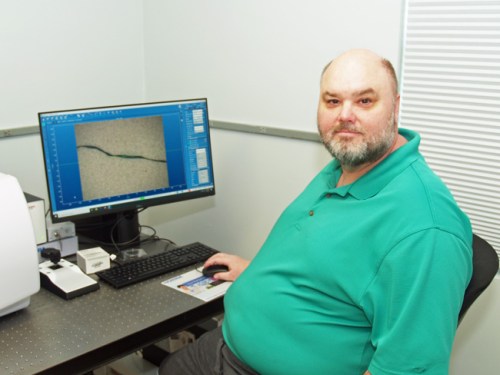
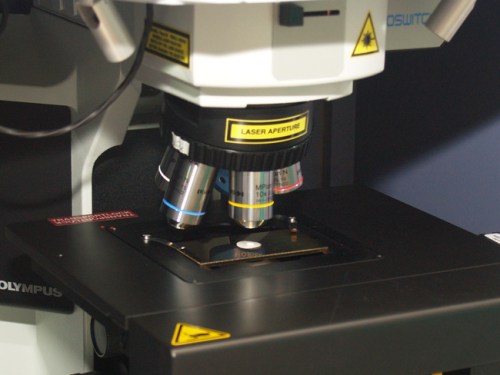
A new, high-tech microscope is giving scientists at the University of Georgia Skidaway Institute of Oceanography a tool to study the tiniest particles and organisms in our environment in a whole new light. The Horiba Jobin Yvon XplorRA Plus Confocal Raman microscope uses lasers, rather than conventional light or a stream of electrons, to examine objects measuring smaller than a millionth of a meter or .04 thousandths of an inch.

“The way a Raman microscope works is fundamentally different from how conventional microscopes, such as those found in the classroom, operate,” UGA Skidaway Institute scientist Jay Brandes said. “With this instrument, a high energy laser beam is directed at the sample, and the instrument measures the light scattered back from it.”
OLYMPUS DIGITAL CAMERA

UGA Skidaway Institute researcher Jay Brandes with the Raman microscope.

What distinguishes it even more from traditional microscopes is a phenomenon called the Raman effect. This was discovered in the 1930s by Indian physicist Chandrasekhara Venkata Raman. With the Raman microscope, some of the scattered light comes from interactions with the molecules in the sample, and these interactions leave a spectral “fingerprint” that can be isolated from the laser light and measured. Those “fingerprints” can tell scientists what the material is made of, whether it is natural organics like bacteria or detritus, inorganic minerals or plastics.

“Because it uses a high tech, automated microscope to perform these measurements, maps of sample composition and even three-dimensional maps are possible,” Brandes said.

OLYMPUS DIGITAL CAMERA

The Raman microscope uses a laser to illuminate and analyze an object.

One immediate use for this instrument will be to study microplastic pollution in Georgia’s coastal environment. Brandes and a group of educators, students and volunteers, have been researching the microplastic pollution issue in coastal Georgia for several years. He says that locating and identifying microplastics in the environment or in an organism is difficult because of their tiny size.

“It’s not like it is a water bottle where you can look it and say ‘That’s plastic,’” Brandes said. “We see all kinds of microscopic particles, and, because they are so small and not always distinctively colored or shaped, it is difficult to distinguish microplastics from other substances.

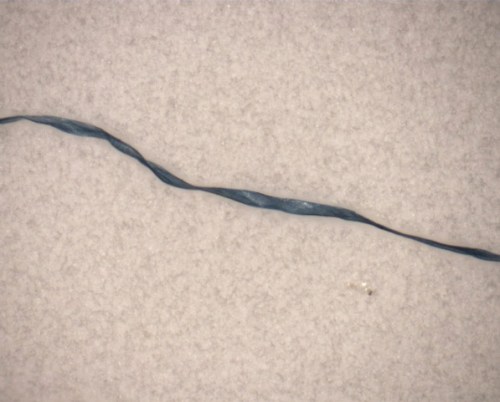
“With this microscope, we will be able to look at a fiber and tell whether it is made of polyester, nylon, kevlar or whatever.”

Laser Microscope 3

A microfiber as seen by the Raman microscope.

Brandes and his team have been looking at the microplastics problem from several angles. They have taken hundreds of water samples along the Georgia coast, filtered the samples and analyzed the captured particles and fibers. The researchers also examine marine organisms, like fish and oysters, to see what organisms are consuming the microplastics and to what extent.

The instrument will allow sub-micron analysis of complex samples from a wide variety of other projects. It will be available to UGA Skidaway Institute scientists as well as other scientists from throughout the Southeast. In addition to benefitting researchers, the Raman microscope will enhance educational programs conducted at Skidaway Institute and the through the UGA Department of Marine Sciences. Once a set of standard methods and protocols have been established, it will also be available to support scientific research from institutions and organizations from around the Southeast.

The instrument was purchased with a $207,000 grant from the National Science Foundation.

Despite COVID-19 delays, UGA Skidaway Institute scientist heading home from the Arctic

After four months at sea, including two and a half months on board a German ice breaker locked in the Arctic ice cap, University of Georgia Skidaway Institute of Oceanography scientist Chris Marsay is on his way home. His return trip comes six weeks later than planned due to travel restrictions imposed by the COVID-19 crisis.

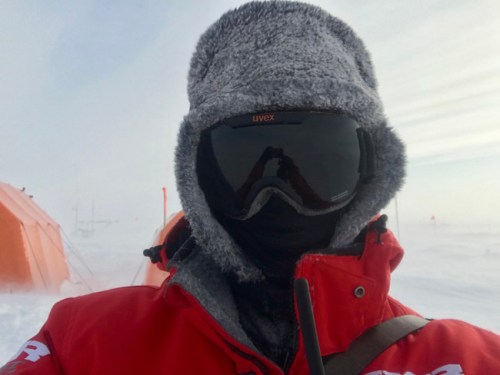
Chris Bundled

Chris Marsay, all wrapped up for working out on the ice during windy conditions.

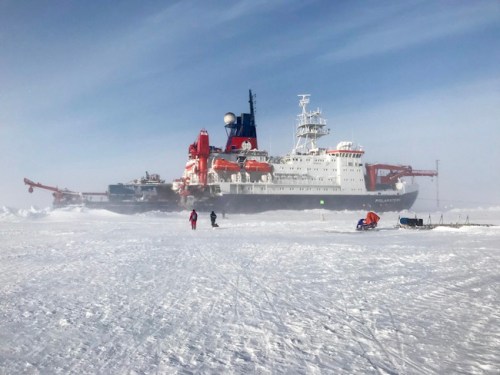
Marsay has been on board the research vessel Polarstern as part of a major international research project to study climate change in the Arctic named Multidisciplinary drifting Observatory for the Study of Arctic Climate, or “MOSAiC.” Last fall the Polarstern sailed into the Arctic Ocean until it became locked in the ice. The plan was for the ship to drift with the ice for a year all the while serving as a headquarters for scientists to study Arctic climate change. Scientists were scheduled in shifts or “legs” to work for two to three months at a time. However, unable to exchange the science teams by either air or with another ice breaker, MOSAiC organizers decided to pull the Polarstern out of the ice pack and leave the research station for an estimated three weeks while the changeover takes place.

“My time working at the MOSAiC ice floe has come to an end, and I am currently traveling south on the Polarstern towards Svalbard where the exchange between personnel from legs three and four of the project will take place,” Marsay said. “Due to the travel restrictions in place because of COVID-19, it was not possible to carry out the exchange at the ice floe itself as originally planned.”

The replacement team is already at Svalbard aboard two other German vessels. They completed a two-week quarantine and multiple coronavirus tests before departure. The teams will exchange ship-to-ship in a fiord since Svalbard, a Norwegian archipelago, is closed to outside visitors because of COVID-19.

According to Marsay, his time at the MOSAiC ice floe has been eventful. “The ice was much more dynamic than it had been during the first months of the MOSAiC project,” he said. “Cracks and leads frequently opened up in the area around the ship, and the ice movement also formed ridges of ice blocks several feet high.”

Ice Crack 650p

A crack that opened up next to the ship in mid-March meant that some equipment had to be hurriedly moved to safety.

All of these events restricted access to some research sites, but the work continued, providing new sampling opportunities for the researchers.

This was not Marsay’s first trip to the Arctic. A 2015 research cruise took him to the North Pole, but this trip was a new experience. “It’s been unique to witness the transition from winter to spring in the central Arctic Ocean,” he said. “During our time at the floe we experienced a minimum temperature of negative 40 degrees Celsius, not accounting for wind chill, and a maximum of zero degrees Celsius. The sun did not rise until two weeks after we arrived at the floe, and has not set since late March.”

Marsay also experienced windy days with storm-force winds and whiteout conditions due to blowing snow, and days with beautiful clear skies when the sun reflecting off the snow was dazzling, he said.

Ship Blown Snow 650p

As calm conditions gradually return after a couple of days of windy conditions, Polarstern is visible through some blowing snow at ground level.

During his participation in MOSAiC, Marsay collected snow, ice cores, sea water and aerosol samples as part of our project studying the atmospheric deposition of trace elements in the central Arctic.

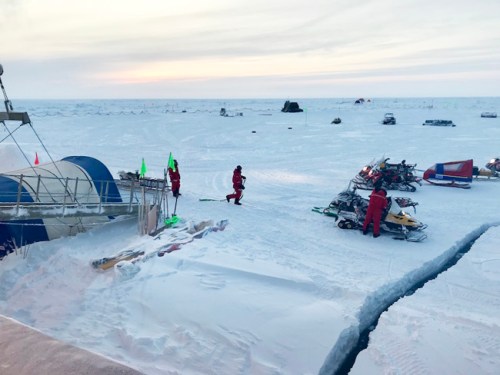
SkiDoo 600p

Each Monday, Marsay was part of a team that collected multiple ice cores at a site far enough away from the ship that a Ski-Doo and sledges were needed.

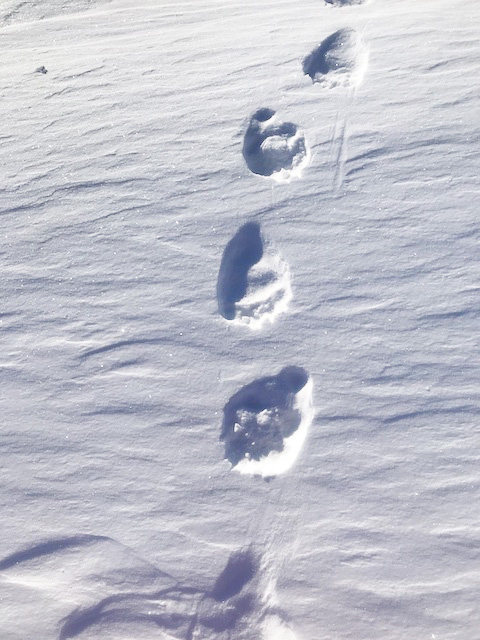
He also learned some new skills, including driving a Ski-Doo, and on several occasions he carried a rifle and served as a polar bear guard for colleagues.

Bear Tracks 480p

The researches had one polar bear visit (that they know of) during leg 3. These footprints within a couple of hundred yards of Polarstern.

“We on board will have been at sea for over four months by the time we get to Germany,” Marsay said. “When we started, the COVID 19 virus was not widespread outside of China.

“We have all been following the news from back home, and although we’re looking forward to getting home, everyone is expecting some initial difficulties getting used to the way that public life has changed while we’ve been away.”

Become part of Skidaway Institute’s mission!

Dear Friends of Skidaway Institute,

In these days of coronavirus restrictions and an economic downturn, the UGA Skidaway Institute of Oceanography needs your support more than ever. You have probably heard that the governor has asked for 14% budget cuts from all state agencies for the fiscal year beginning July 1, and we are preparing for some serious belt tightening. I ask you to help us by making or increasing your membership donation to our non-profit fundraising arm, the Associates of Skidaway Institute.

Your financial support is very important in helping us to continue to achieve our research and education mission in service to the state of Georgia and the nation. Your membership donation will support a variety of expenses not covered by state funds, particularly associated with providing research opportunities for undergraduates, supporting graduate students and outfitting the labs of newly hired scientists. With the Institute faculty gaining a formal educational mission in our 2013 merger with UGA, on-going student support has become critical for us, as we seek to train the next-generation of scientists while continuing our research mission. I cannot overstate the value of your financial support and the flexibility that it gives us to provide support for students to train under Skidaway scientists.

Current membership provides benefits including our quarterly Skidaway Campus Notes newsletter, invitations to on-campus events like the Evening @ Skidaway seminar series, and in-lab visits with Skidaway faculty. Along with the tangible benefits of an Associates membership, you will know that you are supporting leading-edge research and education addressing some of the most pressing questions in ocean and environmental sciences.

For your convenience, you may begin or renew your membership online with a credit card. Simply click HERE. Or you can mail your donation to:

Associates of Skidaway Institute
10 Ocean Science Circle
Savannah, GA 31411

The Associates of Skidaway Institute is a unit of the University of Georgia Foundation, a 501(c)3 tax-exempt organization. All contributions are fully tax deductible.

Thank you in advance for your continuing interest and support.

Clark Alexander
Director
UGA Skidaway Institute of Oceanography