Category Archives: Oceanography

Gray’s Reef NMS organizes FareWhale Festival

Gray’s Reef National Marine Sanctuary will present the second annual FareWhale Festival on Saturday, March 21, from noon to 4 p.m. at the Tybee Island Pier and Pavilion.

Parade Mag Ad 2015 BIG

“We want people to come out and celebrate the end of the calving season for the critically endangered North Atlantic right whale as they leave our coastal waters and make their way north off the coast of New England near Stellwagen Bank National Marine Sanctuary,” said Gray’s Reef’s Abbigail Murphy.

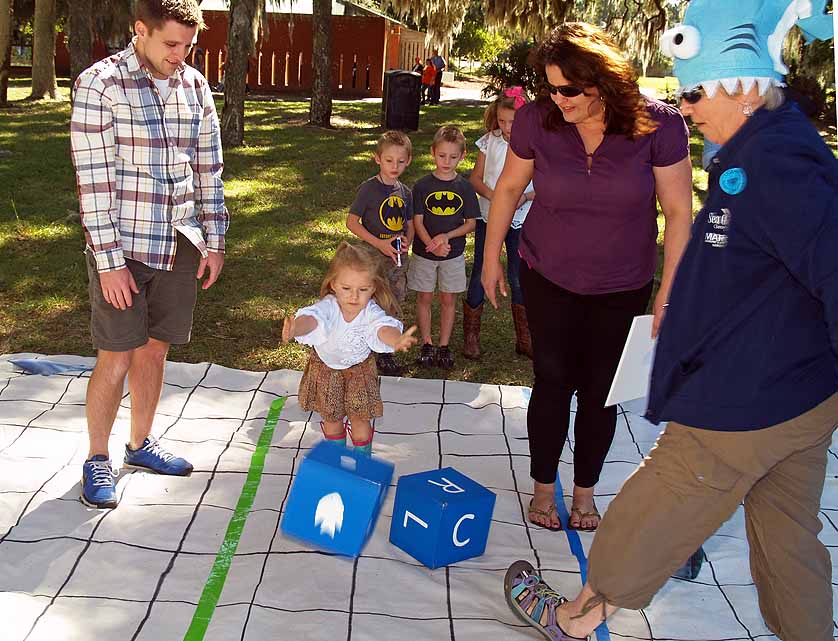
Visitors can experience the trials and tribulations these whales encounter in the right whale obstacle course; learn more about whales from experts and educators in the field; and enjoy live music and artwork from local artists. Other activities will include a guided beach walk on the shores of Tybee and a beach cleanup held from 10 a.m.-12 p.m.

More information is available at:
http://graysreef.noaa.gov
Contact: abbigail.murphy@noaa.gov


Shrimpers, others join UGA Skidaway Institute Black Gill research cruise

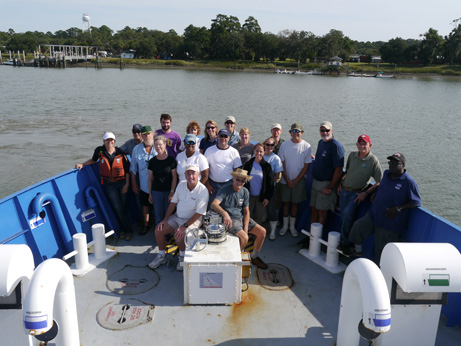
UGA Skidaway Institute of Oceanography scientists are studying a condition in shrimp found along the Southeast Coast known as Black Gill. As part of this effort, a group that included UGA Skidaway Institute scientists and representatives from Georgia Sea Grant, UGA Marine Extension, Georgia DNR, the shrimping industry and researchers from North and South Carolina joined a one-day research cruise on board the R/V Savannah on October 9. The focus of the cruise was to collect shrimp for the Black Gill research project, and also to give the various groups the opportunity to exchange ideas. This account of the project comes from UGA Skidaway Institute scientist and cruise-organizer Marc Frischer.

We had 20 people on board (not including the ship’s crew), representing three states (Ga. S.C. and N.C.) and interests from the industry, management, research, and education/outreach communities. Although sometimes the conversations were outside of my comfort zone, I found the discussions and interactions that I had interesting, significant and useful. I found particularly interesting the perspectives from some of the professional shrimpers who were onboard made it clear to me that a research priority should be investigating the relationship between shrimp mortality in the field and the incidence of Black Gill. Discussions with the management community also provided me new insights into the difficulties we are facing with management and regulation. Conversations with those charged with communicating with the broader public remind me to choose words carefully to avoid misunderstanding.

A shrimp with the Black Gill condition clearly evident.

A shrimp with the Black Gill condition clearly evident.

In terms of the science, the day was largely successful despite the very low shrimp catches. Our priority was to collect enough live shrimp to conduct experiments to investigate black gill transmission and to explore the effect of ciliate infection on molting frequency. Although there were not many shrimp caught, we caught enough to conduct our planned experiments, and we were able to bring live shrimp into our facilities with almost no mortality. Utilizing the relatively large R/V Savannah and being able to dock within feet of our labs made this possible.

Skidaway Institute professor Marc Frischer examining a shrimp.

Skidaway Institute professor Marc Frischer examining a shrimp.

Thanks goes to the director of the Skidaway Institute of Oceanography (Jim Sanders) for making the vessel available to us. Cost for the ship is not covered by funding provided by Georgia Sea Grant and was provided as matching funds by the Institute.

Experiments got underway immediately upon our return and will continue for the next several weeks. If anyone is interested and wants to visit the lab for an update you are welcome to do so.

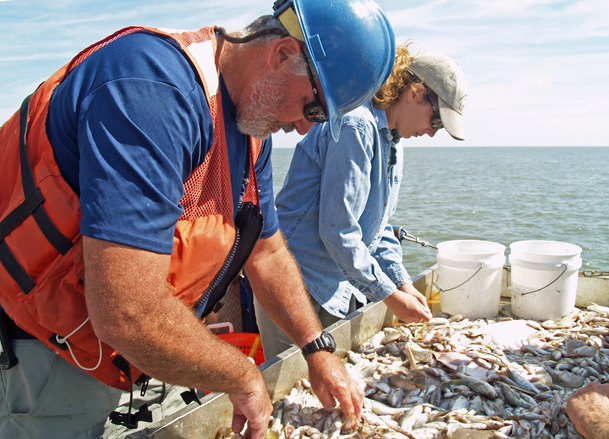
DNR's Pat Geer and Sea Grant's Jill Gambill sort through the marine life caught in a trawl.

DNR’s Pat Geer and Sea Grant’s Jill Gambill sort through the marine life caught in a trawl.

In addition to collecting live specimens, we were able to collect and preserve samples for a large variety of other analyses that will contribute to our identification of the Black Gill agent and to understanding its impact on shrimp. Several of the samples we collected are now on their way to various labs around the world where researchers with expertise beyond ours will study them.

Also, for the first time, we, collected water and sediments to be examined using our novel molecular-based diagnostic tools that are just now coming online. These studies will form the basis of a student project and thus generate both new information and new talent.

The team from the October Black Gill cruise.

The team from the October Black Gill cruise.

Unfortunately, because we were not able to catch more shrimp, we were not able to quantify the prevalence of Black Gill along the transect we sampled (offshore Wassaw Island, Wassaw Sound, and the Wilmington and Skidaway Rivers). However, this is a task valiantly undertaken by the GA DNR who had just visited the area in September and will be at it again. However, in addition to observing that catches were low everywhere, we were able to estimate a prevalence in the neighborhood of 50 percent. Except for offshore where we only caught one shrimp and it had black gill (so 100 percent). Two insights from this experience — first, our observations agree very well with DNR’s estimates and it is clear that we are probably not sampling sufficiently. Second — engaging the fishing community in this effort, if we can do so in a scientifically sound manner, will be truly helpful.

UGA Skidaway Institute scientists conduct winter 26-hour sampling program

On the weekend of January 24th, a team lead by UGA Skidaway Institute scientist Aron Stubbins conducted the latest “26 Hours on the Marsh” sampling program on the bluff at Groves Creek on the Skidaway Institute campus. The project was designed to investigate how salt marshes function and interact with their surrounding environment—specifically how bacteria consume and process carbon in the marsh. The team collected water samples throughout two complete tidal cycles, during both the day and night.

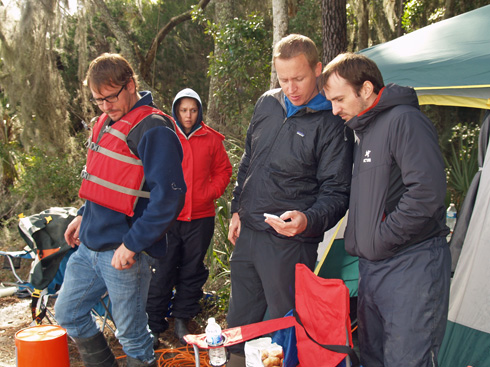
The outdoor laboratory on the bluff at Groves Creek.

The outdoor laboratory on the bluff at Groves Creek.

Skidaway Institute's Zac Tait, Thais Bittar, Rob Spencer (FSU) and Aron Stubbins prepare for a sample collection.

Skidaway Institute’s Zac Tait, Thais Bittar, Rob Spencer (FSU) and Aron Stubbins prepare for a sample collection.

Zac Tait collects a water sample from a skiff tied to the bank.

Zac Tait collects a water sample from a skiff tied to the bank.

Thais Bittar and Zac Tait begin to process the water sample.

Thais Bittar and Zac Tait begin to process the water sample.

About a dozen scientists and students were involved in the project. “26 Hours on the Marsh” is supported by two grants from the National Science Foundation. The grants total $1.7 million that represent larger, three-year, multi-institutional and multi-disciplinary research projects into salt marsh activity. These projects bring together faculty, students and staff from UGA’s Skidaway Institute, the University of Tennessee, Florida State University and Woods Hole Research Center. UGA Skidaway Institute scientists include principal investigator Jay Brandes; chemical oceanographers Aron Stubbins and Bill Savidge; physical oceanographers Dana Savidge, Catherine Edwards and Jack Blanton; and geologist Clark Alexander.

Evening @ Skidaway examines black gill in shrimp

Digital StillCameraUGA Skidaway Institute of Oceanography professor Marc Frischer will discuss his ongoing research into black gill in shrimp in an Evening @ Skidaway program on March 12th. The program will be in the McGowan Library at the UGA Skidaway Institute, beginning with a reception at 6:30 p.m. to be followed by the lecture program at 7:15 p.m.

In recent years, Georgia shrimpers have been very concerned about black gill, a mysterious condition affecting the coastal shrimp population. While the condition does not affect the edibility of the shrimp, many shrimpers believe that black gill may be largely responsible for reduced shrimp harvests. Frischer is leading a research project involving scientists, regulators and shrimpers from three states in an effort to determine the cause, effects and possible solutions to the black gill problem.

An “Evening @ Skidaway” is sponsored by the UGA Skidaway Institute of Oceanography and the Associates of Skidaway Institute.

The free program is open to the public.

For additional information, call 912-598-2325.

Intern Sean Russell receives Brower Youth Award

OLYMPUS DIGITAL CAMERAGeorgia Sea Grant Intern, Sean Russell, has been selected as a recipient of one of six prestigious Brower Youth Awards, a national prize awarded to exceptional environmental leaders, ages 13-22, in North America.

Sean is received this award for his work on the Stow It-Don’t Throw It Project, a youth-driven fishing line recycling and marine debris prevention initiative he launched in high school. Since then, the project has grown into an international program. He was also credited for his work directing the Youth Ocean Conservation Summit, an annual event designed to train students from across the country how to launch their own ocean conservation projects.

Russell is an intern at UGA Marine Extension’s Marine Education Center and Aquarium on Skidaway Island. Both UGA Marine Extension and Georgia Sea Grant are units of the UGA Office of Public Service and Outreach.

For more information on the 2014 Brower Youth Awards, visit: http://www.broweryouthawards.org/awardees/

UGA Skidaway Institute scientists map Wassaw Sound

A research team from the University of Georgia Skidaway Institute of Oceanography has completed the first high-resolution, bathymetric (bottom-depth) survey of Wassaw Sound in Chatham County.

Led by UGA Skidaway Institute scientist Clark Alexander, the team produced a detailed picture of the bottom of Wassaw Sound, the Wilmington River and other connected waterways. The yearlong project was developed in conjunction with the Georgia Department of Natural Resources.

This shows a wide view of the Wassaw Sound survey map. Shallow areas are shown in orange and yellow, deeper areas in green and blue.

This shows a wide view of the Wassaw Sound survey map. Shallow areas are shown in orange and yellow, deeper areas in green and blue.

The survey provides detailed information about the depth and character of the sound’s bottom. This information will be useful to boaters, but boating safety was not the primary aim of the project. The primary objective was to map bottom habitats for fisheries managers. DNR conducts fish surveys in Georgia sounds, but, according to Alexander, they have limited knowledge of what the bottom is like. “One of the products we developed is an extrapolated bottom character map,” Alexander said. “This describes what the bottom grain size is like throughout the sound. Is it coarse, or shelly or muddy? This is very important in terms of what kind of habitat there is for marine life.”

A second goal was to provide detailed bathymetric data to incorporate into computer models that predict storm surge flooding caused by hurricanes and other major storms. Agencies like the United States Army Corps of Engineers, the Federal Emergency Management Agency and the National Oceanographic and Atmospheric Administration use mathematical models to predict anticipated storm inundation and flooding for specific coastal areas. A key factor in an accurate modeling exercise is the bathymetry of the coastal waters.

“You need to know how the water will pile up, how it will be diverted and how it will be affected by the bottom morphology,” Alexander said. “Since we have a gently dipping coastal plain, storm inundation can reach far inland. It is important to get it as right as we can so the models will provide us with a better estimate of where storm inundation and flooding will occur.”

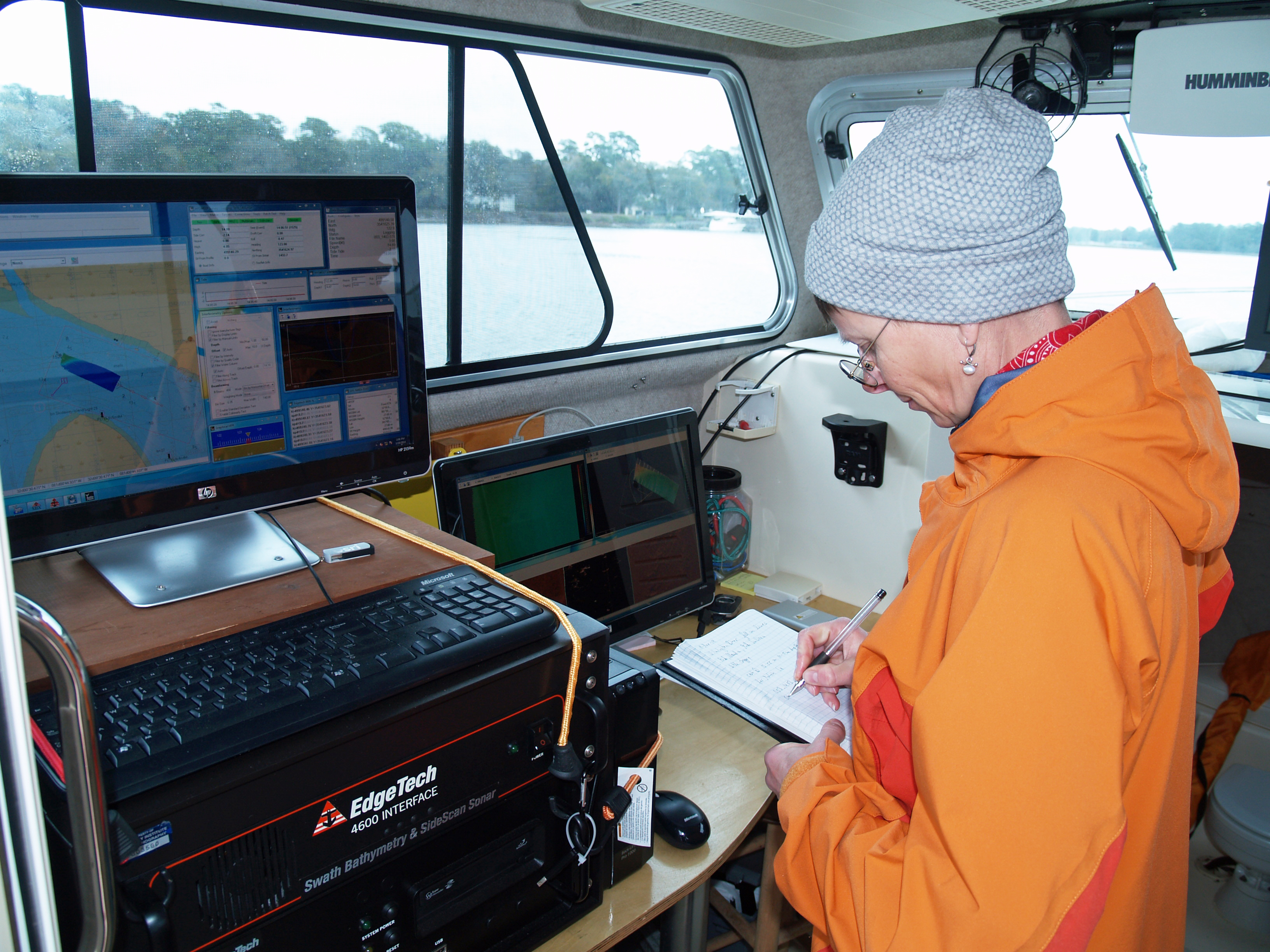
Funded by an $80,000 Coastal Incentive Grant from DNR, Alexander and his research team, consisting of Mike Robinson and Claudia Venherm, used a cutting-edge interferometric side-scan sonar system to collect bathymetry data. The sonar transmitter/receiver was attached to a pole and lowered into the water from Skidaway Institute’s 28-foot Research Vessel Jack Blanton. Unlike a conventional fishfinder, which uses a single pinger to measure depth under a boat, the Edgetech 4600 sonar array uses fan-shaped sonar beams to both determine water depth and bottom reflectivity, which identifies sediment type, rocky outcroppings and bedforms, in a swath across the boat’s direction of travel.

The actual process of surveying the sound involved long hours of slowly driving the boat back and forth on long parallel tracks. On each leg, the sonar produced a long, narrow strip indicating the depth and character of the sound bottom. Using high-resolution Global Positioning System data that pinpointed the boat’s exact location, the system assembled the digital strips of data into a complete picture of the survey area.

Skidaway Institute of Oceanography research coordinator Claudia Venherm logs survey activity on board the R/V Jack Blanton.

Skidaway Institute of Oceanography research coordinator Claudia Venherm logs survey activity on board the R/V Jack Blanton.

All the other sounds on the Georgia coast were mapped in 1933, but for some reason data from that time period for Wassaw Sound was unavailable. When the team began this project, they believed they were conducting the first survey of the sound. However, just as the researchers were finishing the project, NOAA released data from a 1994 single-beam survey that had been conducted in advance of the 1996 Olympic yachting races that were held in and near Wassaw Sound.

“This worked out very well for our project, because we are able to compare the differences between the two surveys conducted 20 years apart,” Alexander said. “We see areas that have accumulated sediment by more than 2 meters, and we also see areas that have eroded more than 2 meters since 1994. Channels have shifted and bars have grown or been destroyed.”

Because of advances in technology, the current survey is significantly richer in detail than the one conducted in 1994. “We can zoom down to a square 25 centimeters (less than a foot) on a side and know the bottom depth,” Alexander said.

The survey produced a number of findings that were surprising. The intersection of Turner Creek and the Wilmington River is a deep, busy waterway. Although most of the area is deep, the survey revealed several pinnacles sticking up 20 feet off the bottom. “They are round and somewhat flat, almost like underwater mesas,” Alexander said.

The researchers determined that the deepest place mapped in the study area was a very steep-sided hole, 23 meters deep, in the Half Moon River where it is joined by a smaller tidal creek. They also found several sunken barges and other vessels.

The survey data set is available to the public on the Georgia Coastal Hazards Portal at http://gchp.skio.usg.edu/. Alexander warns that while boaters should find the survey interesting, the information is intended for habitat research and storm surge modeling, not for navigation. “Because the bottom of Wassaw Sound is always shifting and changing, as our survey showed, don’t rely on the data for safe navigation,” he cautioned.

Alexander has already received a grant for an additional survey, this time of Ossabaw Sound, the next sound south of Wassaw Sound. He expects work to begin on that survey in early 2015.

A new Ph.D. from UGA Skidaway Institute

Former Skidaway Institute graduate student Miguel Leal graduated with his Ph.D. from the University of Aveiro in Portugal in October 2014.

Miguel Leal (2nd from right) after his defense, with (l-r) Marc Frischer (Skidaway Inst.) , Jens Nejstgaard (formerly Skidaway Inst.) and Miguel’s primary Portuguese supervisor, Ricardo Caldo

Miguel Leal (2nd from right) after his defense, with (l-r) Marc Frischer (Skidaway Inst.) , Jens Nejstgaard (formerly Skidaway Inst.) and Miguel’s primary Portuguese supervisor, Ricardo Caldo

Leal conducted much of his research at Skidaway Institute. He successfully defended his dissertation on September 4th. The title of the Ph.D. was: Trophic plasticity in the cnidarian-algal symbiosis. This work resulted from the collaboration that Leal began with Skidaway Institute professors Marc Frischer and Jens Nejstgaard four years ago. It focused on using molecular microbiology techniques to study the diet of the organisms that make up coral reefs. A total of four papers were published from Miguel’s work at Skidaway.

Campus open house attracts more than 2,000

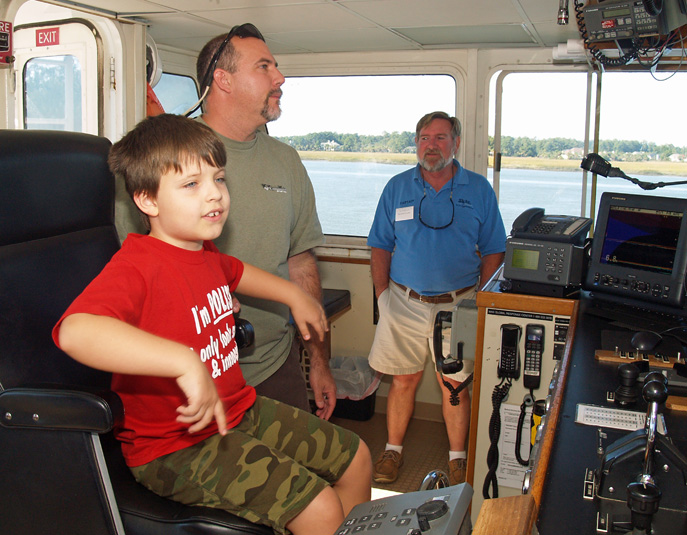
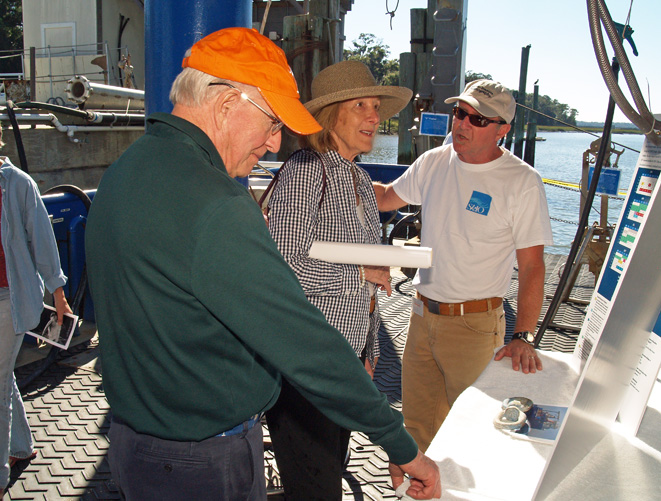
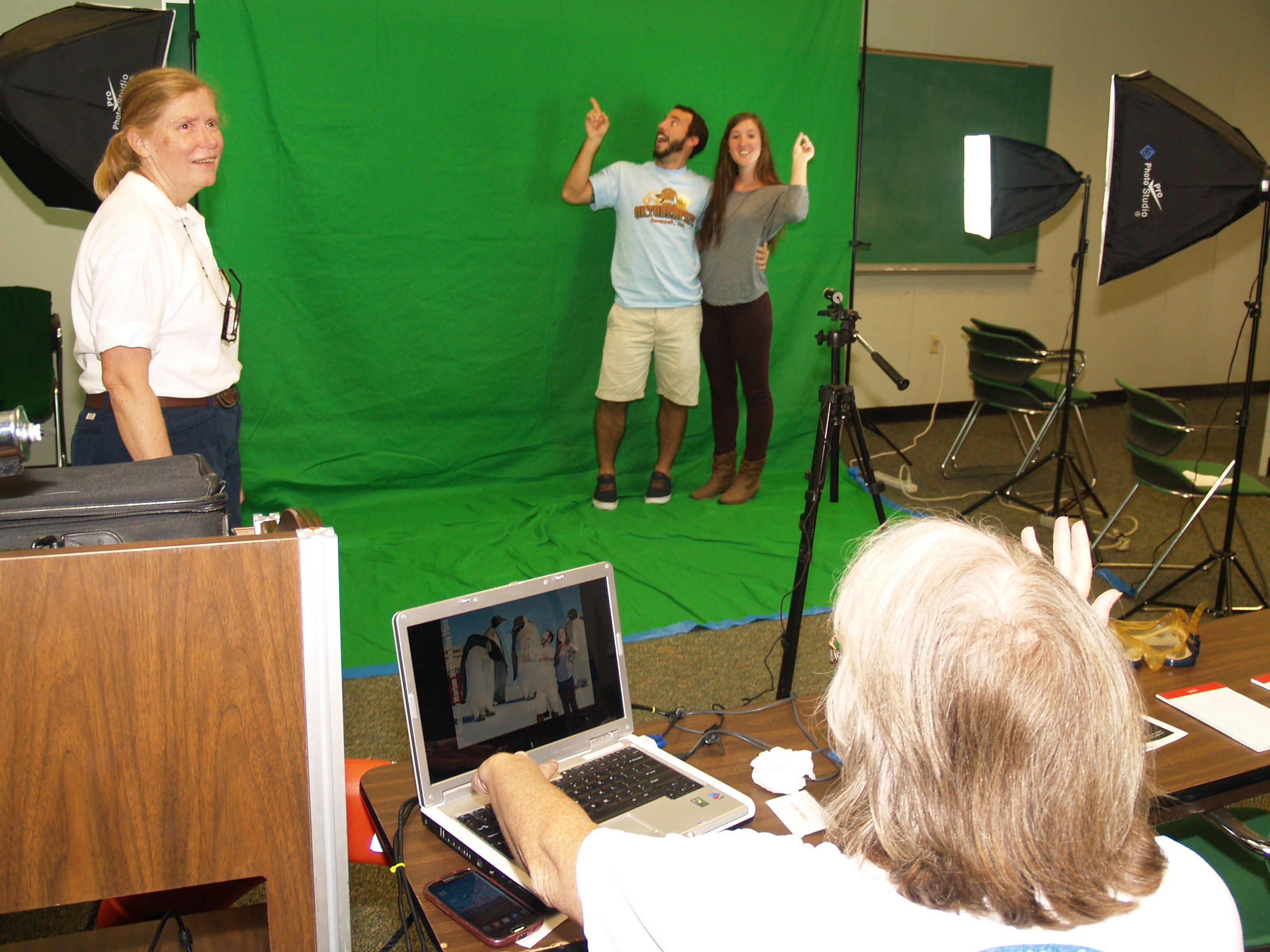
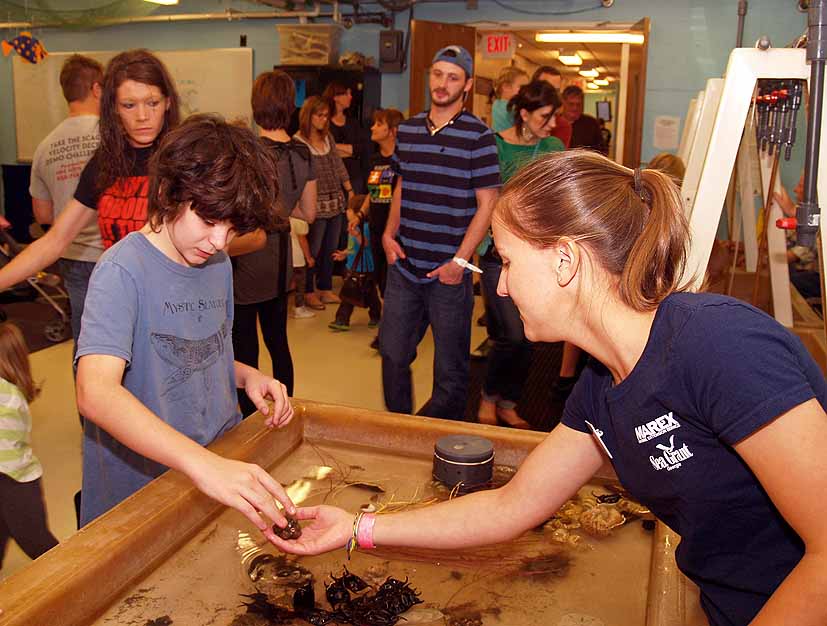
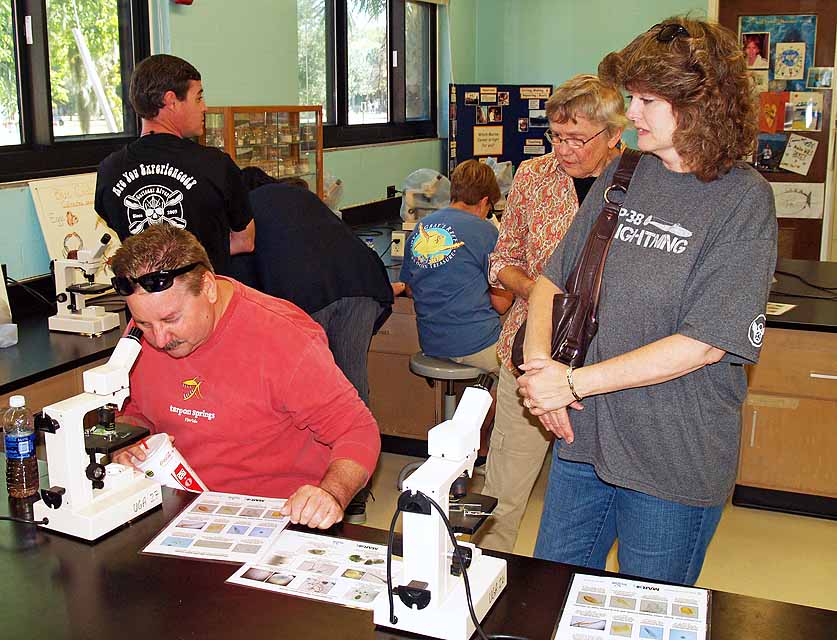
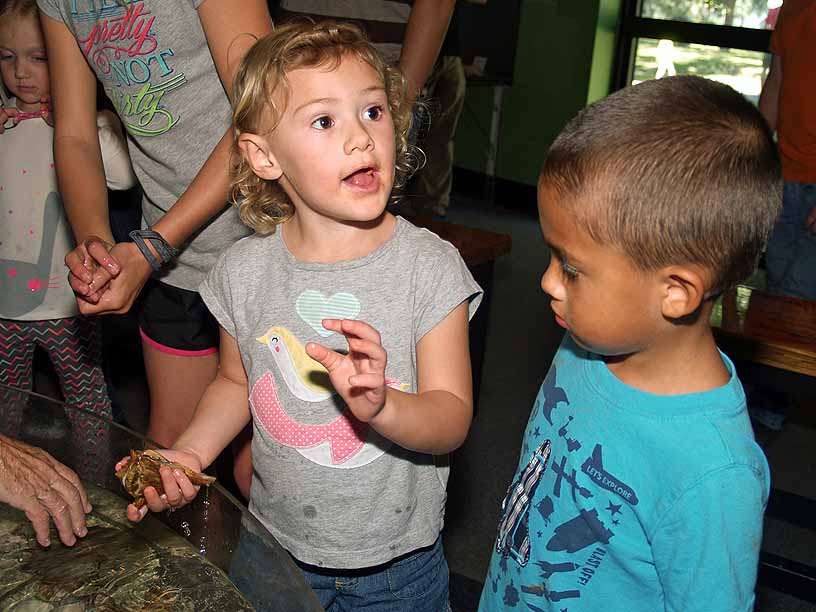
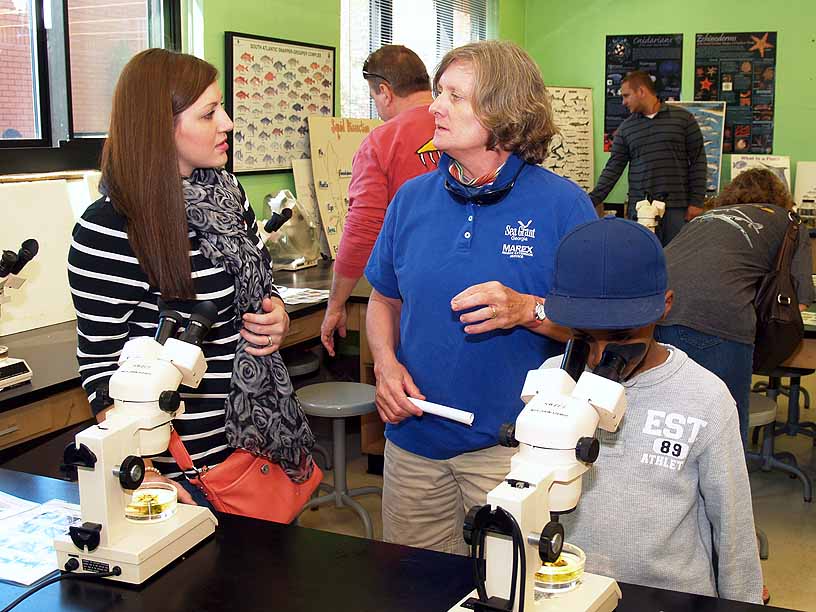
Close to 2,000 visitors enjoyed a beautiful day visiting Skidaway Marine Science Day on Saturday, October 25.

The campus-wide open house featured exhibits, programs and activities sponsored by the campus partners, including the UGA Skidaway Institute of Oceanography, the University of Georgia Marine Extension Service Aquarium, the Marine Extension Service Shellfish Laboratory and the Gray’s Reef National Marine Sanctuary.

As in past years, the open house event also featured a number of outside environmental organizations.

OLYMPUS DIGITAL CAMERA OLYMPUS DIGITAL CAMERA OLYMPUS DIGITAL CAMERA OLYMPUS DIGITAL CAMERA OLYMPUS DIGITAL CAMERA OLYMPUS DIGITAL CAMERA OLYMPUS DIGITAL CAMERA OLYMPUS DIGITAL CAMERA OLYMPUS DIGITAL CAMERA OLYMPUS DIGITAL CAMERA OLYMPUS DIGITAL CAMERA OLYMPUS DIGITAL CAMERA OLYMPUS DIGITAL CAMERA

UGA study finds high marine debris, need for standardized reporting along Georgia coast

By Molly Kate Berg

University of Georgia researchers are hoping to find a consistent way to record the marine debris—particularly pieces of plastic—crowding Georgia’s beaches as part of an effort to find a solution for the growing problem.

Marine debris has been washing up on Georgia beaches and uninhabited islands for years. Combating the issue starts with figuring out how big it is, and a new two-part study from the UGA Skidaway Institute of Oceanography and Marine Extension published online in the Marine Pollution Bulletin finds that marine debris reporting can improve if it becomes standardized.

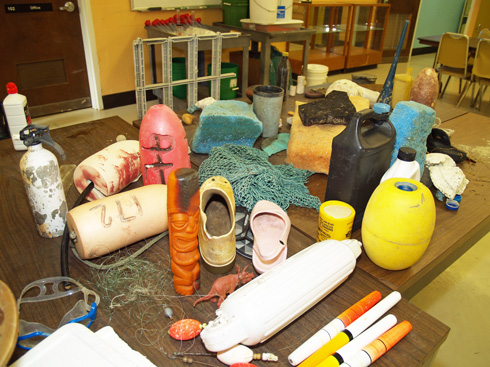
A sample of marine debris collected along the Georgia coast sits on a table at the UGA Marine Education Center and Aquarium.

A sample of marine debris collected along the Georgia coast sits on a table at the
UGA Marine Education Center and Aquarium.

The problem right now is this: A volunteer group goes out and records the weight or volume of the marine debris collected. However, volunteers don’t often record the specific square feet measured or the contents of the debris. Due to a lack of report standardization, researchers often can’t compare the marine debris, especially plastic fragments, reported by different groups.

“We’ve seen plastic usage go up dramatically,” said study co-author Dodie Sanders, a marine educator and outreach coordinator for UGA Marine Extension, a unit of the Office of Public Service and Outreach. “It’s an important 21st century global issue. We need to learn more to better understand the issues of marine debris.”

The study’s lead author Richard F. Lee, professor emeritus with the UGA Skidaway Institute of Oceanography, agrees.

“Plastic debris is created on land and then it goes into rivers, flows into the ocean and washes up on land,” he said. “We’ve found that plastic debris ends up not only on populated beaches, but on inaccessible islands as well. We’ve found plastic everywhere on the coast.”

The first part of the study gathered debris from 20 sites along Georgia’s coast, including Tybee, Cumberland and Ossabaw islands. The debris was reported from volunteer organizations like Clean Coast, which hold monthly beach and marsh cleanups in Georgia.

“The volunteer groups reported the weight of the debris, though we didn’t know the exact amount of plastic,” Lee said. “Based off the volunteer information we received, we did a follow-up study to more precisely measure the marine debris in a fixed location and period of time.”

The total collected debris ranged from 180 to 1,000 kilograms. The levels of plastic debris differed at each site over the course of the study, though plastic was consistently among the mix. Found plastic included bottles, wrappers, food utensils and fragments of fishing gear.

Sanders spearheaded the second part of the study, where she and students collected plastic debris from Skidaway and Wassaw islands over a period of two years.

“While Dr. Lee did data analysis, I did some of the field work,” Sanders said. “We picked the two islands in the second part of the study because they were accessible sites where Marine Extension often takes students for marine education.”

For the fieldwork, Sanders and students visited the islands each month. They took inventory of what kinds of plastics were on specific areas of the coast.

“On about a monthly basis, I would take students to learn about debris and tally all the items on the islands,” Sanders said. “We took areas of 200 meters by 40 meters and recorded the items found. We also used GPS units to mark what areas we had done.”

The students, many of them in middle and high school, came from all over Georgia to assist. As part of Marine Extension, Sanders regularly teaches visiting students about marine life. When students volunteered to clean up, she tried to emphasize the issues surrounding debris.

“The bulk of the plastic comes from land,” Sanders said. “When people think of marine debris, they think of the ocean. I try to emphasize watershed concepts—what happens upstream ultimately gets downstream.”

“It can take years for plastic to degrade,” Lee said, adding, “80 percent of the plastic found at Wassaw turned out to be fragments. The fragments then spread and can have a number of environmental effects.”
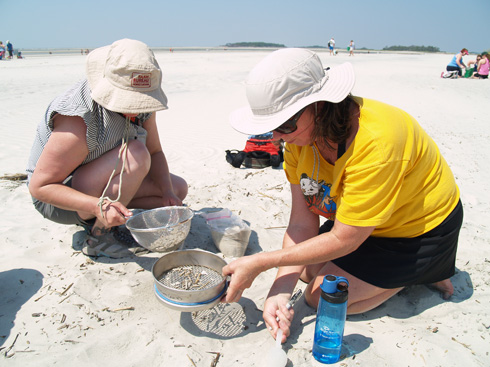
Participants in a July 2014 teacher’s workshop focusing on marine debris sift through the sands of Tybee Island in search of microplastic particles.

Participants in a July 2014 teacher’s workshop focusing on marine debris sift
through the sands of Tybee Island in search of microplastic particles.

Sanders says that since plastic debris is everywhere on the coast, it has to be addressed and reported efficiently to reduce its effects.

“There are proactive and reactive approaches to the issues of marine debris, and both are important,” she said. “We’ve been reactive so far by picking up debris. The proactive approach is our role in educating the public and researching the negative impacts of marine debris.”

The study was supported by the Georgia Department of Natural Resources Coastal Incentive Grant, NOAA Southeast Atlantic Marine Debris Initiative and the NOAA Marine Debris Program.

The full article on “The amount and accumulation rate of plastic debris on marshes and beaches on the Georgia coast” is available at www.sciencedirect.com/science/article/pii/S0025326X14008200#.

R/V Savannah getting an overhaul

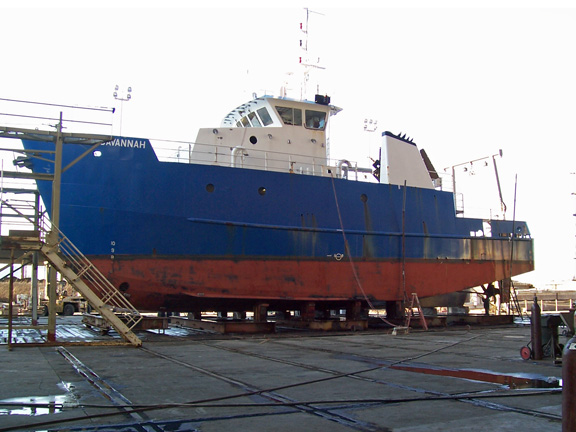
The Research Vessel Savannah is currently out of the water and up on blocks at Savannah Marine Repair for biannual maintenance and repair.

RV Savannah Haulout 1 w

RV Savannah Haulout 2 w During this shipyard period, the vessel exterior will be prepped and completely repainted. Propellers, propeller shafts and shaft bearings will be replaced. All fuel tanks will be opened and cleaned and all sea valves will opened, inspected and repaired or replaced as necessary.

A five-year inspection by the American Bureau of Shipping (ABS) is being conducted to ensure standards of hull integrity and sea-worthiness. The vessel crew is also undertaking various maintenance tasks prior to the full start of another busy year.