Tag Archives: skidaway institute

UGA Skidaway Institute scientists participate in 2020 Ocean Sciences Meeting

The UGA Skidaway Institute of Oceanography was well represented at the 2020 Ocean Sciences Meeting in San Diego in February. The Ocean Sciences Meeting is the flagship conference for the ocean sciences and the larger ocean-connected community. The Ocean Sciences Meeting was co-sponsored by American Geophysical Union, the Association for the Sciences of Limnology and Oceanography, and The Oceanography Society.

Professor Marc Frischer said he was impressed by the efforts of the ocean science community to evolve the climate change dialog and narrative.

“As Margaret Leinen said in her closing plenary address, we started at ‘the ocean is too big to be affected’, to ‘the ocean is too big to fix,’ to where we are today, ‘the ocean is too important not to fix,’” Frischer said. “The call is for the ocean science community to become engaged in searching for solutions, and we have a lot to offer.” Leinen is the director of Scripps Institution of Oceanography.

Frischer presented some of his most recent work investigating the ecological significance of doliolids in continental shelf systems. In addition to that presentation, a student from Savannah State University, who worked in Frischer’s lab last summer, presented the results of work she conducted. Frischer mentored Ashly Rivera as part of Savannah State’s Research Experiences for Undergraduates program. At the end of each summer the REU students present their research and vote on who they think did the best job. The winner is awarded an all-expense paid trip to a science meeting of their choice. This past summer Rivera won that honor and chose to attend the Ocean Sciences Meeting. Ashly presented a poster titled “The Re-Acquisition of Shrimp Black Gill Infections by Penaeid Shrimp; Oceanic or Estuarine Sources?”

Ocean Sciences 650p

Ashly Rivera (r) at her poster presentation.

Assistant professor Catherine Edwards co-chaired a session on western boundary current-shelf interaction. The session was inspired by her and fellow Skidaway Institute scientist Dana Savidge’s ongoing research into ocean currents around Cape Hatteras, “Processes driving Exchange at Cape Hatteras,” also known as PEACH. Edwards also presented a poster on the vertical structure of Hatteras and Gulf Stream fronts as part of a large group of PEACH researchers. She was a co-author on four other posters and two talks, including posters by Savidge and UGA Skidaway Institute research technician Ben Hefner. Hefner’s poster explored data from the multiple nested high frequency radars at PEACH, using different combinations of radials to get realistic data over Diamond Shoals at Cape Hatteras.

“With their high wave energy and treacherous conditions for sampling, the shallow waters of shoals are a very difficult places to get good data,” Edwards said.

Edwards’ poster looked at the vertical layering at the boundaries of Mid Atlantic Bight, South Atlantic Bight, and Gulf Stream water. “You see interleaving of up to five layers in just 20-30 meters water depth, which is important for exchange of heat and salt between the deep and shallow ocean,” Edwards said.

Assistant professor Adam Greer was the lead author and presented a poster titled “High-resolution sampling of a broad marine life size spectrum to examine shelf biophysical coupling.” He was also a co-author for three other posters and one oral presentation.

Associate professor Clifton Buck presented a poster titled “Aerosol trace element concentrations and fractional solubility in the North Pacific Ocean: US GEOTRACES GP-15 Pacific Meridional Transect.” He was also the co-author on an additional poster and two talks.

Professor Jay Brandes lead an oral presentation on “Variability of microplastics in estuarine systems and consequences for organism studies.”

“Studies of microplastic pollution have really taken off in the last couple of years,” Brandes said. “There were two solid days of talks and posters on the subject from around the world, from basic studies to community cleanup efforts. This level of interest would have been unheard of in past meetings.”

He was also a co-author for three poster presentations. Graduate student Kun Ma was the lead author on one of those poster presentations, “Constraining photochemical production rates of dissolved inorganic carbon in the open ocean using the moderate dissolved inorganic carbon (DI13C) isotope enrichment (MoDIE) method.”

Marine scientists map fish habitats

by Alan Flurry

Beyond the barrier islands of coastal Georgia, the continental shelf extends gradually eastward for almost 80 miles to the Gulf Stream. This broad, sandy shelf largely does not provide the firm foundation needed for the development of reef communities to support recreational and commercial fish species including grouper, snapper, black sea bass and amberjack.

“Natural and artificial reef habitats are important to Georgia fisheries because they provide hard, permanent structure on the Georgia shelf, which is dominantly a vast underwater desert of shifting sands,” said Clark Alexander, professor and director of the University of Georgia Skidaway Institute of Oceanography. “The Georgia Department of Natural Resources has invested significantly over the past several years in developing the capacity to map these areas to enhance the management of these reef communities.“

To increase the availability of high-quality hard bottom areas off Georgia, the DNR began an artificial reef-building program in 1971 to deploy materials at various locations across the continental shelf, from 2 to 30 miles offshore. Reef materials include concrete slabs and culverts from road, bridge and building demolition, subway cars, ships, barges, and U.S. Army tanks. Because some of these reefs are far offshore and DNR resources are limited, the status of some of that material has not been examined for decades.

Ossabaw sound 650p sq

A bathymetric survey of Ossabaw Sound.

For the past five years, Alexander has been leading an effort to improve understanding of marine, coastal and estuarine habitats and functions using high-resolution sonar to map state water bottoms, with funding from the DNR Coastal Incentive Grant program. Alexander’s team has amassed critical depth and habitat information for five of Georgia’s sounds (Wassaw, Ossabaw, St. Catherine’s, Doboy and Sapelo), revealing deeply scoured areas where underwater cliffs have formed to create hard substrate where complex ecosystems and biological communities have developed.

“These inshore, hardbottom habitats should enhance biodiversity in the areas near these structures and enhance ecosystems supporting both commercial and recreational species across the continental shelf,” Alexander said.

Alexander is currently leading a new, three-year project mapping important fish habitats in state waters — the newly discovered estuarine habitats, and artificial reef structures within 10 nautical miles of shore – those areas most accessible to recreational anglers, boaters and divers. In addition, his research group is mapping previously unmapped portions of the sounds and tidal rivers deeper than 15 meters to discover the extent of these newly identified estuarine hardbottom habitats.

Skidaway Institute researchers will work with DNR to update the online “Boater’s Guide to Artificial Reefs” with accurate locations and imagery of deployed materials for these reefs. These new, more accurate artificial reef surveys will also document recent changes in the locations and integrity of placed materials and verify the low-tide water depths over all features in the artificial reefs to enhance navigational safety.

New high-tech microscope to bolster UGA Skidaway Institute’s microplastics research

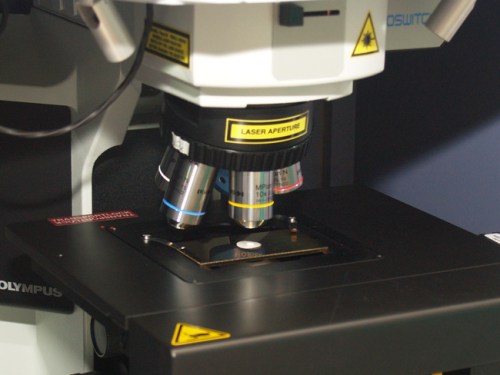
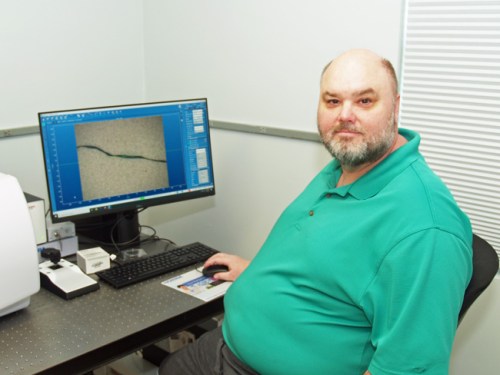
A new, high-tech microscope is giving scientists at the University of Georgia Skidaway Institute of Oceanography a tool to study the tiniest particles and organisms in our environment in a whole new light. The Horiba Jobin Yvon XplorRA Plus Confocal Raman microscope uses lasers, rather than conventional light or a stream of electrons, to examine objects measuring smaller than a millionth of a meter or .04 thousandths of an inch.

“The way a Raman microscope works is fundamentally different from how conventional microscopes, such as those found in the classroom, operate,” UGA Skidaway Institute scientist Jay Brandes said. “With this instrument, a high energy laser beam is directed at the sample, and the instrument measures the light scattered back from it.”
OLYMPUS DIGITAL CAMERA

UGA Skidaway Institute researcher Jay Brandes with the Raman microscope.

What distinguishes it even more from traditional microscopes is a phenomenon called the Raman effect. This was discovered in the 1930s by Indian physicist Chandrasekhara Venkata Raman. With the Raman microscope, some of the scattered light comes from interactions with the molecules in the sample, and these interactions leave a spectral “fingerprint” that can be isolated from the laser light and measured. Those “fingerprints” can tell scientists what the material is made of, whether it is natural organics like bacteria or detritus, inorganic minerals or plastics.

“Because it uses a high tech, automated microscope to perform these measurements, maps of sample composition and even three-dimensional maps are possible,” Brandes said.

OLYMPUS DIGITAL CAMERA

The Raman microscope uses a laser to illuminate and analyze an object.

One immediate use for this instrument will be to study microplastic pollution in Georgia’s coastal environment. Brandes and a group of educators, students and volunteers, have been researching the microplastic pollution issue in coastal Georgia for several years. He says that locating and identifying microplastics in the environment or in an organism is difficult because of their tiny size.

“It’s not like it is a water bottle where you can look it and say ‘That’s plastic,’” Brandes said. “We see all kinds of microscopic particles, and, because they are so small and not always distinctively colored or shaped, it is difficult to distinguish microplastics from other substances.

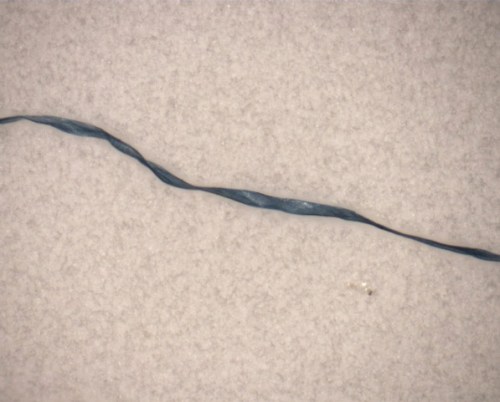
“With this microscope, we will be able to look at a fiber and tell whether it is made of polyester, nylon, kevlar or whatever.”

Laser Microscope 3

A microfiber as seen by the Raman microscope.

Brandes and his team have been looking at the microplastics problem from several angles. They have taken hundreds of water samples along the Georgia coast, filtered the samples and analyzed the captured particles and fibers. The researchers also examine marine organisms, like fish and oysters, to see what organisms are consuming the microplastics and to what extent.

The instrument will allow sub-micron analysis of complex samples from a wide variety of other projects. It will be available to UGA Skidaway Institute scientists as well as other scientists from throughout the Southeast. In addition to benefitting researchers, the Raman microscope will enhance educational programs conducted at Skidaway Institute and the through the UGA Department of Marine Sciences. Once a set of standard methods and protocols have been established, it will also be available to support scientific research from institutions and organizations from around the Southeast.

The instrument was purchased with a $207,000 grant from the National Science Foundation.

UGA Skidaway Institute scientists to study aerosol dust’s impact on life and chemistry in the ocean

A team of University of Georgia Skidaway Institute of Oceanography scientists has received a 4-year, $1 million grant from the National Science Foundation to study how dust in the atmosphere is deposited in the ocean and how that affects chemical and biological process there.

The research team of Clifton Buck, Daniel Ohnemus and Christopher Marsay will focus their efforts on a patch of the Pacific Ocean near Hawaii.

OLYMPUS DIGITAL CAMERA

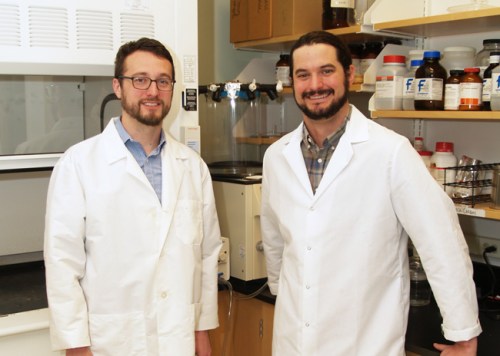
Daniel Ohnemus (l) and Clifton Buck

“Our overall goal is to look at the aerosol loading and concentrations in the atmosphere, the rate that dust is deposited into the ocean and what happens to it once it is in the water column,” Buck said.

The chemistry of the ocean can be changed by the introduction and removal of elements, including trace elements which are present at low concentrations. In some cases, these elements are known to be vital to biological processes and ocean food webs. Near the shore, rivers are a large source for material from land to the ocean. Beyond the reach of rivers, and for most of the oceans, material blown from land through the air is the largest source of trace elements to surface waters.

“The ocean and the atmosphere are connected. What is in the atmosphere ends up in the ocean.” Ohnemus said. “Some part of what is in the ocean gets recycled back into the atmosphere, but mostly the movement is from the atmosphere to the ocean.”

The material enters the oceans dissolved in rain or by settling of dust particles. Understanding atmospheric sources of trace elements to the oceans is thus important to understanding both global chemical cycles and patterns of biological production. The team will look at trace metals like iron, which may appear in extremely low concentrations, but are essential to the growth of phytoplankton, the single-cell marine plants that serve as the base of the food web and produce approximately half the oxygen in the atmosphere. They will also look at other metals, like copper and cadmium, which are toxic and have a limiting influence on phytoplankton growth.

“Long-term atmospheric and ocean measurements are really hard to get at the same time in the same place, but that is what we are trying to do,” Ohnemus said.

Beginning in early 2021, the team will begin collecting aerosol samples at the Makai Research Pier on the southeast or windward side of Oahu. They will also undertake the first of six cruises to collect water samples at a spot in the Pacific known as the Hawaii Ocean Time-Series Station Aloha. This is a six-mile wide section of ocean approximately 200 kilometers from Oahu where oceanographers from around the world study ocean conditions over long time spans.

Skidaway Hawaii Project 2 650p

This chart shows the location of the research field sites. Credit: Lee Ann DeLeo

A key goal of this project will be to obtain relatively frequent measurements over two full annual cycles. By taking weekly aerosol samples and water samples every few months, the researchers hope to be able to obtain a picture of how the atmosphere and the ocean change on a weekly, monthly or seasonal basis.

“It is important to point out that the dust transport over the North Pacific has a distinct seasonal cycle,” Buck said. “Dust concentrations are going to be different during the winter than they are in the summer.”

In the past there have been studies of aerosol dust concentrations in that region, but they were conducted at the top of the Mauna Loa volcano.

“That’s almost 12 thousand feet up, and not necessarily representative of what is being deposited in the ocean,” Buck said. “That is the leap we are trying to make here.”

The researchers chose Hawaii as the site for their field work for several reasons. Hawaii offers direct access to the remote, nutrient-limited open ocean. Hawaii also has strong seasonal fluctuations to its aerosol inputs, meaning there should be measurable changes over the two-year time series. The Hawaii Ocean Time Series has conducted regular research cruises to Station ALOHA since the mid-1980s, so there is already a historic collection of relevant data. From a practical standpoint, it also means the scientists will have regular access to those cruises to collect their ocean samples.

Although this project will not focus on marine plants, those plants are the reason the scientists want to answer questions about the marine chemistry.

“A very small amount of aerosol dust from a desert in China can provide enough nutrients to satisfy plant growth for weeks,” Ohnemus said. “So it can have a huge influence on which algae will grow where and how successful they are.”

Working with contractors from Florida International University, the research team will use a radioisotope of beryllium to measure the rate of atmospheric deposition. Beryllium-7 is created only in the upper atmosphere by the exposure of nitrogen and oxygen to cosmic rays, and has a half-life of 53 days. By measuring the concentration of beryllium-7 in samples, they will be able to estimate the deposition rate at which beryllium and other materials are being deposited on the surface.

The team will also contract with scientists at the University of Hawaii to collect aerosol samples on a more frequent basis than the Georgia-based researchers would be able to do themselves.

The project is funded by NSF Grant #1949660 totaling $1,074,114.

Despite COVID-19 delays, UGA Skidaway Institute scientist heading home from the Arctic

After four months at sea, including two and a half months on board a German ice breaker locked in the Arctic ice cap, University of Georgia Skidaway Institute of Oceanography scientist Chris Marsay is on his way home. His return trip comes six weeks later than planned due to travel restrictions imposed by the COVID-19 crisis.

Chris Bundled

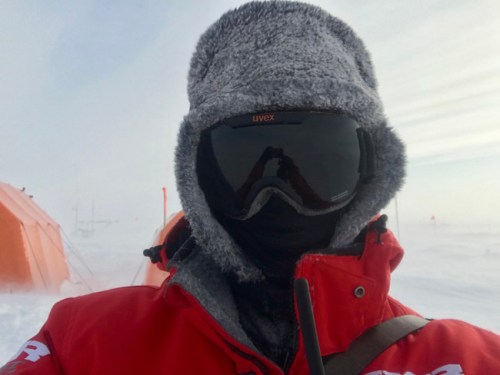
Chris Marsay, all wrapped up for working out on the ice during windy conditions.

Marsay has been on board the research vessel Polarstern as part of a major international research project to study climate change in the Arctic named Multidisciplinary drifting Observatory for the Study of Arctic Climate, or “MOSAiC.” Last fall the Polarstern sailed into the Arctic Ocean until it became locked in the ice. The plan was for the ship to drift with the ice for a year all the while serving as a headquarters for scientists to study Arctic climate change. Scientists were scheduled in shifts or “legs” to work for two to three months at a time. However, unable to exchange the science teams by either air or with another ice breaker, MOSAiC organizers decided to pull the Polarstern out of the ice pack and leave the research station for an estimated three weeks while the changeover takes place.

“My time working at the MOSAiC ice floe has come to an end, and I am currently traveling south on the Polarstern towards Svalbard where the exchange between personnel from legs three and four of the project will take place,” Marsay said. “Due to the travel restrictions in place because of COVID-19, it was not possible to carry out the exchange at the ice floe itself as originally planned.”

The replacement team is already at Svalbard aboard two other German vessels. They completed a two-week quarantine and multiple coronavirus tests before departure. The teams will exchange ship-to-ship in a fiord since Svalbard, a Norwegian archipelago, is closed to outside visitors because of COVID-19.

According to Marsay, his time at the MOSAiC ice floe has been eventful. “The ice was much more dynamic than it had been during the first months of the MOSAiC project,” he said. “Cracks and leads frequently opened up in the area around the ship, and the ice movement also formed ridges of ice blocks several feet high.”

Ice Crack 650p

A crack that opened up next to the ship in mid-March meant that some equipment had to be hurriedly moved to safety.

All of these events restricted access to some research sites, but the work continued, providing new sampling opportunities for the researchers.

This was not Marsay’s first trip to the Arctic. A 2015 research cruise took him to the North Pole, but this trip was a new experience. “It’s been unique to witness the transition from winter to spring in the central Arctic Ocean,” he said. “During our time at the floe we experienced a minimum temperature of negative 40 degrees Celsius, not accounting for wind chill, and a maximum of zero degrees Celsius. The sun did not rise until two weeks after we arrived at the floe, and has not set since late March.”

Marsay also experienced windy days with storm-force winds and whiteout conditions due to blowing snow, and days with beautiful clear skies when the sun reflecting off the snow was dazzling, he said.

Ship Blown Snow 650p

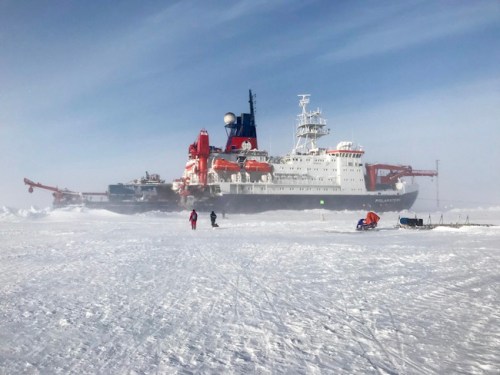
As calm conditions gradually return after a couple of days of windy conditions, Polarstern is visible through some blowing snow at ground level.

During his participation in MOSAiC, Marsay collected snow, ice cores, sea water and aerosol samples as part of our project studying the atmospheric deposition of trace elements in the central Arctic.

SkiDoo 600p

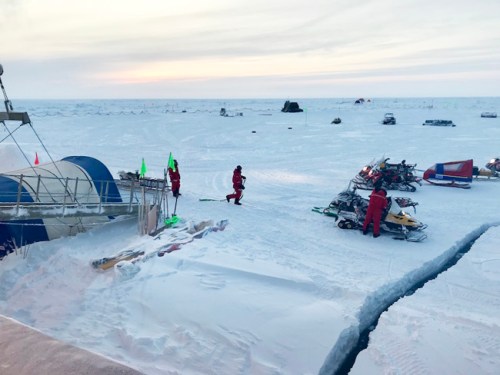
Each Monday, Marsay was part of a team that collected multiple ice cores at a site far enough away from the ship that a Ski-Doo and sledges were needed.

He also learned some new skills, including driving a Ski-Doo, and on several occasions he carried a rifle and served as a polar bear guard for colleagues.

Bear Tracks 480p

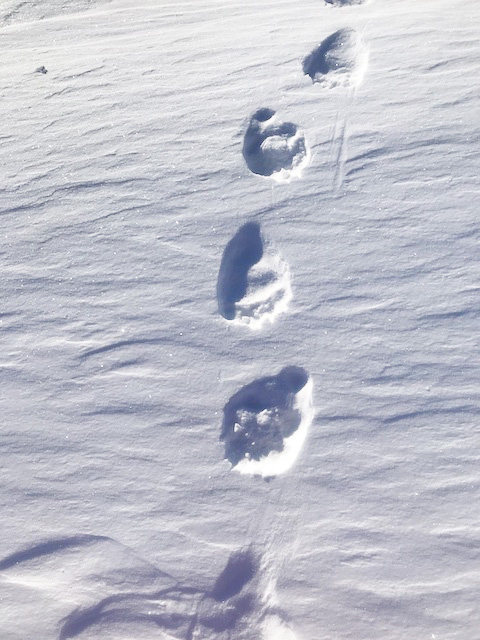
The researches had one polar bear visit (that they know of) during leg 3. These footprints within a couple of hundred yards of Polarstern.

“We on board will have been at sea for over four months by the time we get to Germany,” Marsay said. “When we started, the COVID 19 virus was not widespread outside of China.

“We have all been following the news from back home, and although we’re looking forward to getting home, everyone is expecting some initial difficulties getting used to the way that public life has changed while we’ve been away.”

Become part of Skidaway Institute’s mission!

Dear Friends of Skidaway Institute,

In these days of coronavirus restrictions and an economic downturn, the UGA Skidaway Institute of Oceanography needs your support more than ever. You have probably heard that the governor has asked for 14% budget cuts from all state agencies for the fiscal year beginning July 1, and we are preparing for some serious belt tightening. I ask you to help us by making or increasing your membership donation to our non-profit fundraising arm, the Associates of Skidaway Institute.

Your financial support is very important in helping us to continue to achieve our research and education mission in service to the state of Georgia and the nation. Your membership donation will support a variety of expenses not covered by state funds, particularly associated with providing research opportunities for undergraduates, supporting graduate students and outfitting the labs of newly hired scientists. With the Institute faculty gaining a formal educational mission in our 2013 merger with UGA, on-going student support has become critical for us, as we seek to train the next-generation of scientists while continuing our research mission. I cannot overstate the value of your financial support and the flexibility that it gives us to provide support for students to train under Skidaway scientists.

Current membership provides benefits including our quarterly Skidaway Campus Notes newsletter, invitations to on-campus events like the Evening @ Skidaway seminar series, and in-lab visits with Skidaway faculty. Along with the tangible benefits of an Associates membership, you will know that you are supporting leading-edge research and education addressing some of the most pressing questions in ocean and environmental sciences.

For your convenience, you may begin or renew your membership online with a credit card. Simply click HERE. Or you can mail your donation to:

Associates of Skidaway Institute
10 Ocean Science Circle
Savannah, GA 31411

The Associates of Skidaway Institute is a unit of the University of Georgia Foundation, a 501(c)3 tax-exempt organization. All contributions are fully tax deductible.

Thank you in advance for your continuing interest and support.

Clark Alexander
Director
UGA Skidaway Institute of Oceanography

UGA Skidaway campus reacts to COVID-19 crisis

Like everyone else in the country, the organizations on the UGA Skidaway Marine Science Campus have been affected by the COVID-19 pandemic.

In mid-March, UGA Skidaway Institute cut back on all on-campus activities. Most active research was put on hold and faculty and staff were directed to telecommute as possible. Scheduled research and educational cruises on board the R/V Savannah were postponed. A small team of staff members continue to work on campus to maintain facilities and systems. Monthly Evening @ Skidaway public programs are cancelled, at least through the summer.

clark alexander 10 650p

Alexander

“Although we are currently pausing our research and educational efforts, we are eager to restart those programs as soon as it is safe to do so,” Director Clark Alexander said.

UGA Marine Extension and Georgia Sea Grant shut down operations about the same time. The UGA Aquarium closed, and all educational field trips were cancelled for the remainder of the school year.

photoRisse

Risse

“Our biggest priorities in our response has been the health and safety of our staff and the public that we interact with regularly,” Mark Risse, director of Marine Extension and Georgia Sea Grant said. “For this reason, we made the hard decision to cancel many of our public programs and conferences this spring, as well as our summer marine science camps scheduled in June and July.”

Educators at the UGA Aquarium have transitioned several in-person public programs to virtual platforms. Registration is currently open for a series of engaging online events scheduled for June and July that focus on marine animals and coastal habitats. Learn more at gacoast.uga.edu/events.

Marine Extension and Georgia Sea Grant’s Shellfish Research Lab is supporting the aquaculture industry by providing technical assistance to shellfish growers and sharing information about COVID-related resources. A handful of extension specialists at the lab continue to keep the oyster hatchery running and are producing oyster seed for shellfish farmers on the coast.

Gray’s Reef National Marine Sanctuary remains open while its headquarters facilities on the UGA Skidaway Marine Science Campus are closed and staff is working from home. Most non-essential operations and research activities have been postponed, including the annual NOAA Ship Nancy Foster expedition, typically hosted in mid-July. The Gray’s Reef Expo on River Street has been tentatively rescheduled for November 21-22. Outreach from Gray’s Reef is focusing on digital and virtual events. Updates and additional news from the sanctuary be found at Gray’s Reef’s social media pages. This includes facebook.com/GraysReefSanctuaryor twitter.com/GraysReefNMS.

UGA Skidaway Institute, SECOORA christen new glider

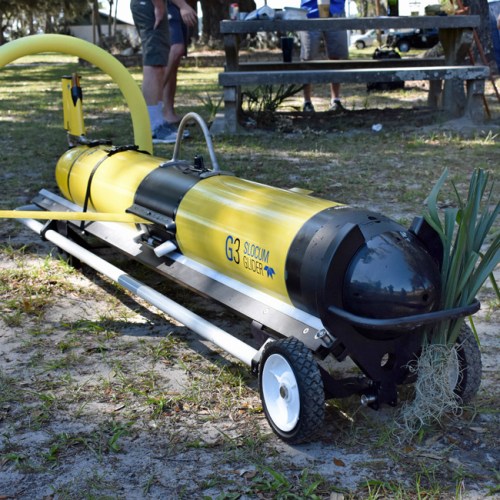
Researchers from the UGA Skidaway Institute of Oceanography and the Southeast Coastal Ocean Observing Regional Association (SECOORA) welcomed a new glider to their research fleet with a christening ceremony at UGA Skidaway Institute on Tuesday, April 23. The new glider was purchased and is owned by SECOORA, but will be based at UGA Skidaway Institute and operated by the UGA Skidaway Institute glider team headed by Catherine Edwards.

Gliders are torpedo-shaped crafts that can be packed with sensors and sent on underwater missions to collect oceanographic data, and are classified as autonomous underwater vehicles, meaning that they operate untethered on their own. Equipped with satellite phones, the gliders surface periodically to transmit their recorded data and to receive new instructions during missions that can last from weeks to months.

Glider Christen 4 sq 650p

The glider is named Franklin, after Benjamin Franklin, who ordered the first chart of the Gulf Stream.

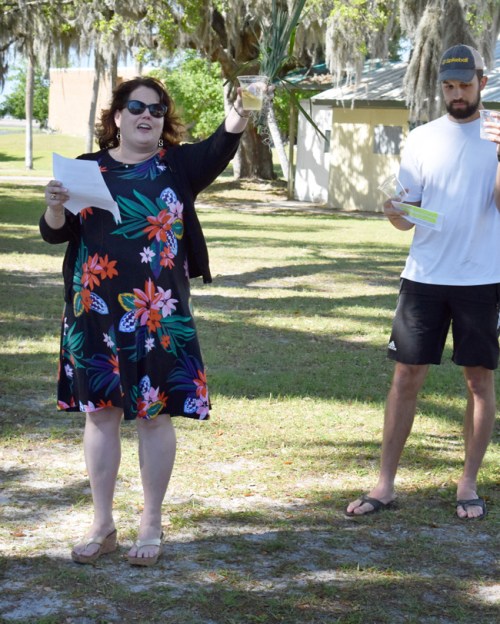
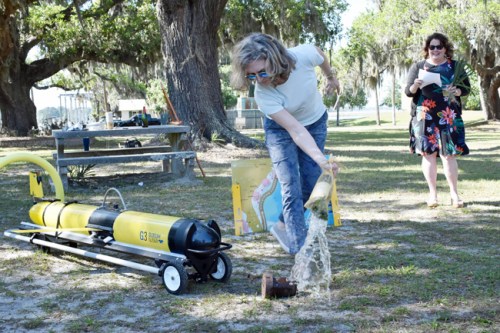
The christening ceremony, based on traditional versions for naming and renaming boats, called upon the favor of the gods of the sea, the wind, the tide and the Gulf Stream, and was offered by Edwards, research professional Ben Hefner, SECOORA executive director Debra Hernandez and UGA Skidaway Institute assistant director Marc Mascolo.

Glider Christen 2 650p

Catherine Edwards raises a glass to Franklin.

Hernandez then capped the ceremony by smashing a bottle of champagne against a metal weight positioned near Franklin’s nose.

Glider Christen 1 650p

Debra Hernandez completes the ceremony.

Franklin is outfitted with a pumped conductivity-temperature-depth sensor and a three-channel fluorometer that measures chlorophyll, dissolved organic matter and turbidity. It also has a dissolved oxygen sensor and two built-in Vemco acoustic receivers that listen for tagged fish and other animals. The glider is powered by lithium-ion batteries that will allow it to remain on mission for up to five to six weeks at a time without recharging.

Franklin’s first deployment was a SECOORA mission at Gray’s Reef National Marine Sanctuary. It was joined on the mission by UGA Skidaway Institute’s other glider, named Angus.

Grad student Kun Ma receives Georgia Sea Grant funding

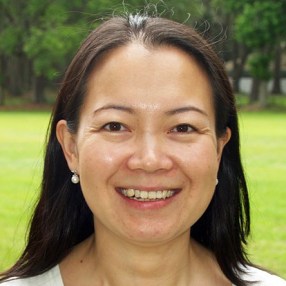
Kun Ma SquareUGA Skidaway Institute of Oceanography graduate student Kun Ma has received $25,000 in research funding as part of the Georgia Sea Grant Research Traineeship Program. Ma will use the funds to support her work studying microplastic pollution in Georgia’s marine ecosystem. The project is titled “Determining photodegradation rates and products of textile-derived plastic microfibers in aqueous environments.”

Because the study of microplastics in a marine environment is still very new, there are many basic questions about microplastic distribution, environmental effects, and the sources and sinks of the microplastics. Ma’s focus with this research program is to examine one loss pathway, the degradation of microplastics and microfibers by sunlight in estuarine and marine environments. There are at least 50 trillion microplastic particles in the global ocean and up to one trillion microplastics in Georgia’s waterways alone.

“Knowledge of microplastic degradation pathways is essential to water management of coastal ecosystems, and many types of larger plastics can be degraded by exposure to light,” Ma said. “However, there are no published studies on the rate or degradation products of plastic microfibers in aquatic environments. My study will serve as an initiative to fill this knowledge gap.”

Sea Grant Research Trainees undertake research projects that advance the goals and objectives in Georgia Sea Grant’s strategic plan. Ma’s project will address two goals, maintaining a healthy coastal ecosystem and promoting environmental literacy.

The research will form part of Ma’s thesis research. The results will be submitted for publication in a peer-reviewed scientific journal and will be presented at regional and national conferences. In addition, an educational poster summarizing results of the project will be showcased at public special events reaching diverse audiences, such as Skidaway Marine Science Day, Savannah Earth Day Festival and the World Oceans Day Celebration.

Ma is a Ph.D. student in the UGA Department of Marine Sciences. Her faculty advisor at Skidaway Institute is Jay Brandes. Her professional mentor on the project will be UGA Marine Extension and Georgia Sea Grant educator Dodie Sanders. The funding is for one year, beginning August 1.

Barn renovation progressing

The renovation of the Roebling cattle barn at UGA Skidaway Institute of Oceanography is progressing with the expectation the project will be substantially completed by August 22.

Work began in late 2018 to transform the show barn a into usable laboratory and classroom space. The renovation got the green light in 2016 when the Georgia General Assembly appropriated $3 million to fund the project.

OLYMPUS DIGITAL CAMERA

The building will house two state-of-the-art classrooms and a one large teaching lab, all capable of distance learning. There will be two faculty offices, a reception area, two student group offices and generous open collaboration space.

The ribbon cutting ceremony is scheduled for October 22.

The concrete and steel beam structure was built in 1947, when the Skidaway campus was known as Modena Plantation, and Robert and Dorothy Roebling raised black angus cattle there. In 1968, the Roeblings donated their land to the state of Georgia, a move that spurred the establishment of Skidaway Institute of Oceanography. The Roeblings constructed the barn after World War II. It was the site of the plantation’s annual cattle auctions. Roebling’s daughter, Ellin Cochran Roebling, was married there in 1950.

Since then, the barn has served a variety of purposes. In recent years, it was used primarily for storage. Because it was not heated or air conditioned, it was not suitable for classrooms or laboratories. The renovations will allow UGA Skidaway Institute to repurpose the 14,000-square-foot facility to include research laboratories, a teaching laboratory and lecture space for students and community groups.

The renovation was designed by Cogdell & Mendrala Architects. New South Construction is the general contractor.