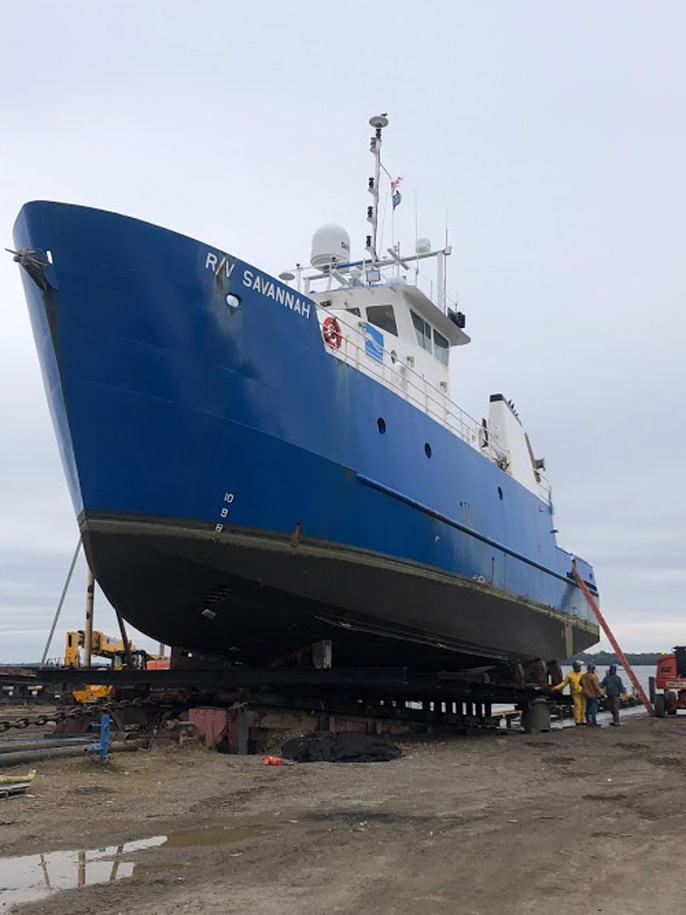
As part of the R/V Savannah’s biennial maintenance schedule, the ship was hauled out at Stevens Towing shipyard on February 17. Located on Young’s Island, S.C., near Charleston, the shipyard is close to the ship’s home port on Skidaway Island and offers top quality commercial yard services.
These shipyard periods are necessary to conduct maintenance projects that can only occur when the vessel is out of the water. This year’s projects are routine with the primary scope of work to resurface the bottom shell and top side shell coatings. Other projects include replacing the port shaft seal and standard gauging of the hull plate to measure steel thickness.
A good portion of work is conducted by the ship’s crew. Crew projects this year include, resurfacing the exterior decks, rails and superstructures; cleaning fouled pipes; and installing equipment such as a new replacement satellite communications antenna for the ship’s Fleet Express broadband internet service, to name a few. The crew understands this is a critical time for maintenance. It’s their home for much of the year, and they take a great deal of pride in making her the best platform she can be.
For 30 years, John “Crawfish” Crawford has regaled campers and school children on field trips to the UGA Aquarium, guiding them on nature walks through the salt marsh and introducing them to the many creatures that call coastal Georgia home.
His tenure officially ended Dec. 1, when Crawford retired from the University of Georgia. But his legacy will continue through an endowed educator position at UGA Marine Extension and Georgia Sea Grant, funded by a generous estate gift made by longtime supporters.
John “Crawfish” Crawford holds up a bonnethead shark on the R/V Sea Dawg.
The John “Crawfish” Crawford Public Service and Outreach Faculty Fellowship will generate incentive for a leading naturalist to fill a faculty educator role at the UGA Marine Education Center and Aquarium and provide the resources to support traditional naturalist practices that maintain an emphasis on exploration, curiosity, field interpretation and personal connection to the world.
A new film by Motion House Media tells the story of Crawford’s impact through interviews with individuals who have been inspired by the larger than life conservationist over the years. Watch it here.
The endowed funds will also enhance the faculty fellow’s ability to make a difference in the lives of students and help fulfill the university’s public service and outreach mission—as Crawford has.
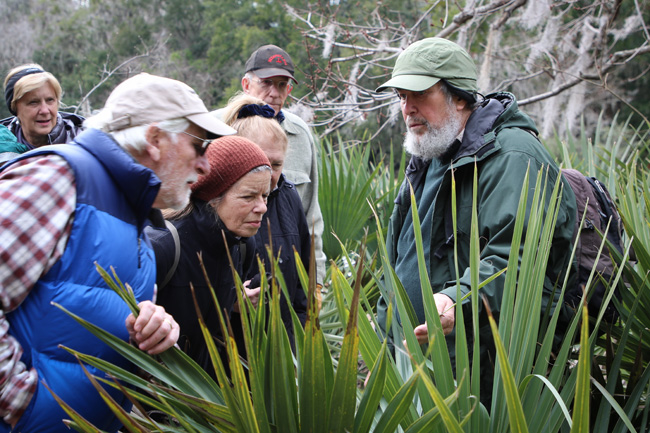
Crawford leads a hike on the UGA Aquarium’s Jay Wolf Nature Trail with Friends of the UGA Aquarium.
“Someone who gets the endowed fellowship will need to know who John is, what he cared about, and what he’s like,” says Ruth McMullin, who, with her husband Tom, made the gift. “We want to make sure the way (John) teaches, his enthusiasm, and his methodology remain when he’s no longer here.”
McMullin, who lives on Skidaway Island, has been volunteering at the UGA Marine Education Center and Aquarium for 23 years. She is inspired by Crawford’s curiosity, enthusiasm and ability to mold minds and develop stewards of Georgia’s coastal environments.
“He’s just so special,” McMullin said. “I was really happy to volunteer because I knew I would get to spend more time learning from him.”
“I have learned an awful lot from watching how he interacts with children and adults and how he shares his excitement with other people. You can’t be somebody you admire, but you can copy them.”
Crawford holds a diamondback terrapin hatchling, one of the UGA Aquarium’s animal ambassadors used in education programs.
Crawford grew up in Savannah, where he explored the coast’s mud flats and maritime forests, discovering corn snakes, fiddler crabs and other animals that often found their way into his house. At age 15, he had dozens of pet snakes, all of which he kept in his room.
He cultivated his knowledge of coastal resources at Armstrong State College and Florida Keys Community College in the late 1960s and early 1970s. After his time in Florida, he made his way back to the Georgia coast where he continued to make his mark on the conservation and environmental education community.
He joined UGA Marine Extension and Georgia Sea Grant in 1990, where as a marine educator he has spent 30 years sharing his knowledge with K-12 students, teachers, education fellows, coastal residents and conservation professionals.
“He has taught hundreds of professional educators, tens of thousands of students, and changed the landscape of environmental and marine education along the coast,” says Anne Lindsay, associate director of marine education at Marine Extension and Georgia Sea Grant. “He knows boats, plants, animals and people and a little about every other natural science or coastal topic you can think of.”
Lindsay, who was mentored by Crawford when she was hired at what was then the UGA Marine Extension Service in the 1990s, explains how he laid the foundation for the education programs that are still offered at the facility today.
“He has helped us expand our reach, establish new collaborations and partnerships, nurture long standing relationships with educators, scientists and citizens,” Lindsay said. “He has cemented the reputation of the Marine Education Center and Aquarium as an institution with a standard of educational quality that we aspire to uphold.”
Learn more about Crawford and the importance of this endowed position in a short film by Motion House Media, a video production company based in Athens, Georgia. The film tells the story of Crawford’s impact through interviews with individuals who have been inspired by the larger than life conservationist over the years.
A new equipment system is providing researchers at the University of Georgia Skidaway Institute of Oceanography greater capability to study the extremely rare, but essential chemicals in the ocean.
Trace elements, like iron, cadmium and zinc appear in the ocean in very small concentrations, yet they are vital for many oceanic processes. For example, the relative abundance or scarcity of iron is often the limiting factor for the growth of microscopic marine plants known as phytoplankton. These single-cell marine plants serve as the base of the marine food web and also produce about half the oxygen in our atmosphere.
According to UGA Skidaway Institute scientist Clifton Buck, measuring and studying trace elements in the ocean is a significant challenge.
“The concentrations we’re talking about are just so incredibly small, down to parts per billion and parts per trillion, and, so, one of the of the challenges that we face is how to collect water samples in a way that we don’t introduce contamination into the water that we’re trying to collect,” Buck said.
Buck, fellow UGA Skidaway Institute researcher Daniel Ohnemus and marine superintendent John Bichy applied to the National Science Foundation for funding to obtain a system of highly specialized equipment that will give UGA Skidaway Institute’s Research Vessel Savannah the capability of collecting contaminant-free samples in coastal waters. The system–manufactured by SeaBird Scientific–is based on a frame, called a rosette. The rosette is built of aluminum and titanium components which greatly reduces the contamination risk because these metals do not readily dissolve in seawater. The frame itself is also “powder coated” to provide additional protection. It can collect water samples from as deep as 2,000 meters. The rosette holds 12 plastic collection bottles that can be triggered to close by sending electrical signals from the surface. It also carries a number of sensors that measure characteristics such as pressure, temperature, salinity, oxygen concentration and more.
The trace metals rosette in its packing crate.
“So that really gives us a lot of power now, to be able to do relatively high-resolution sampling of the waters around the South Atlantic bight and out to the Gulf Stream, using the RV Savannah as a platform,” he said.
Buck and his colleagues are also working with Woods Hole Oceanographic Institute, which is building a specially designed winch with a dedicated non-metallic cable.
The system will be available for use by scientists outside of UGA Skidaway Institute. Researchers can use the R/V Savannah through the University-National Oceanographic Laboratory System to study coastal waters from Chesapeake Bay to the western Gulf of Mexico. They can also request the equipment be shipped to them to use temporarily on their own research vessels.
Equipping the R/V Savannah, which typically operates in continental shelf waters, reflects a shift in focus for Buck and the trace elements community as a whole. In the past, the emphasis of most trace element research was on the deep ocean, with lengthy transect cruises, thousands of miles long, that mapped trace elements across a wide stretch of ocean.
“Trace element scientists are really starting to focus more along the margins, things like rivers,” Buck said. “And the actual continental shelf sediments themselves are big influences on trace elements and as a supply and as removal functions.
“So, we are getting into using smaller ships going into shallow water, and doing what we call process studies, wherein you identify some sort of process that you think might be happening in a region, and you spend some time there to, to really kind of tease out the relationships, whatever they may be.”
The project is funded by NSF grant 2015430 totaling $182,625.
On the deck of the Sea Dawg, Marine Extension and Georgia Sea Grant’s 43-foot research vessel, Marine Educator Dodie Sanders sets up her computer, webcam and teaching props, which include live fish, corals and a stingray.
She introduces herself through her webcam and asks her first question, “What do we call water that’s in between fresh and salty?”
“Brackish!” responds a chorus of students from the speakers of her computer.
A few hundred miles away in Rome, Georgia, 25 fifth graders at the Darlington School are watching Sanders’ program on their iPads. Typically, this conversation would happen aboard the Sea Dawg while trawling for live specimens in Wassaw Sound. For the next two days, educators at UGA Marine Extension and Georgia Sea Grant’s Marine Education Center and Aquarium are bringing the on-site, outdoor experiences to the classroom for the first time by way of virtual school trips.
Sanders uses a computer and webcam to virtually teach students.
Sanders describes the importance of Georgia’s brackish water estuaries where so many different species, like red drum, shrimp and blue crabs spend all or part of their lives. She talks about the different animals in her touch tank, explaining the physical and biological characteristics that are unique to each animal.
The educational trawl is just one of 16 different virtual classes now available to K-12 classrooms across the state. Available classes include marine debris, squid dissection, maritime forest hikes and more.
“Shifting from on-site to virtual programs has made us approach everything we do from a very different perspective with the goal of creating meaningful and impactful education programs,” says Sanders, who, along with her marine educator colleagues, spent several months modifying on-site programs for a virtual setting.
“How do you virtually capture searching for invertebrates living on the underside of a floating dock, the smell of salt marsh mud, hiking across an undeveloped barrier island, or touching cool organisms collected in a trawl net?” Sanders asks. “We’re incorporating the same teaching methods, the same tricks of the trade but perhaps on a more complicated and elevated level.”
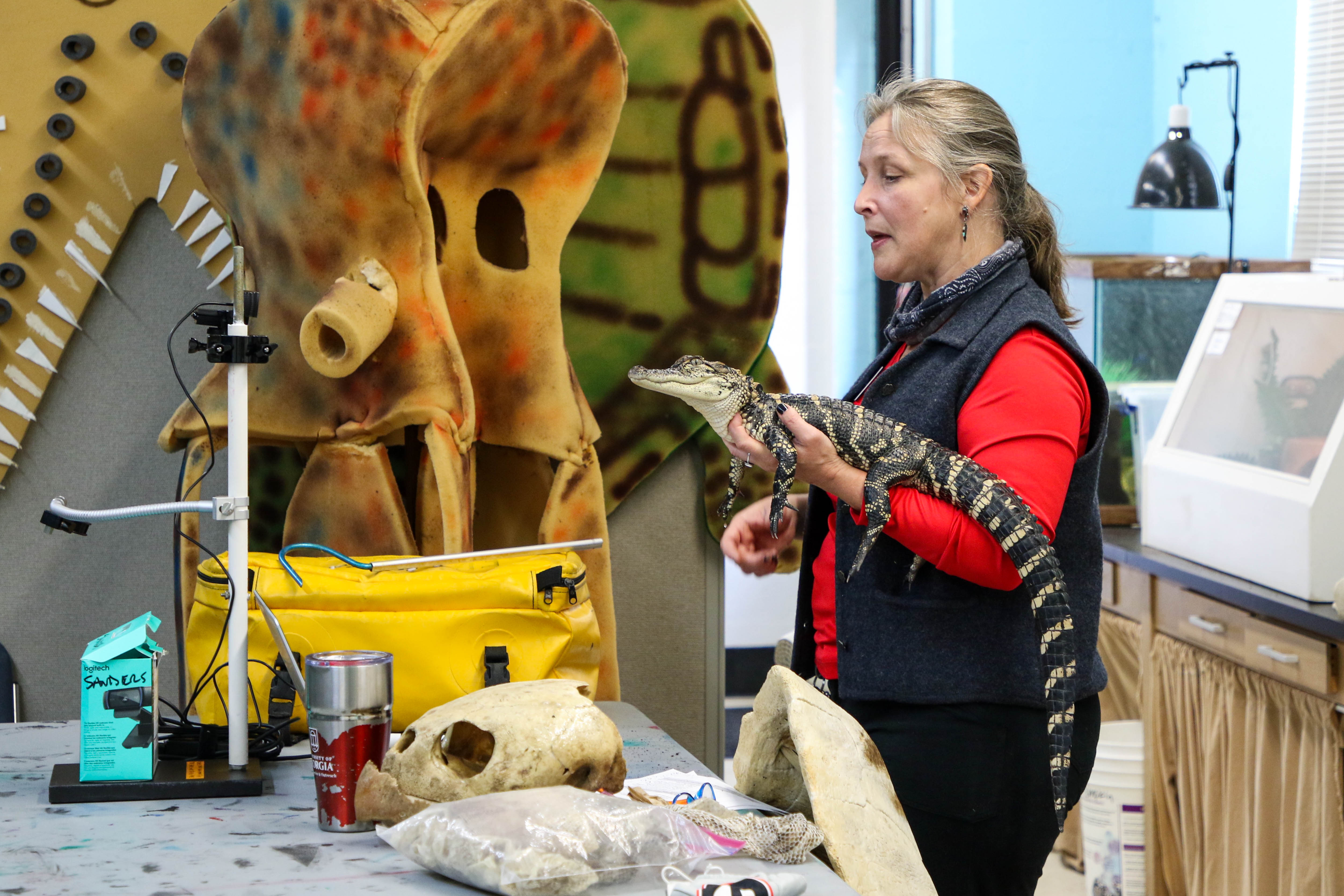
Through virtual programming, students can experience live animals such as this alligator held by Marine Educator Katie Higgins.
The education team developed program templates, wrote teaching outlines, created new pre- and post-activities and tested new audio-visual equipment to prepare for the virtual school programs.
They keep the students engaged by showing pre-recorded videos of local environments and up-close live shots of animals that are native to the coast.
They also frequently pause instruction for question and answer sessions and encourage opportunities for students to share their own stories.
“Do you ever not want to go trawling and just sit on the boat instead?” asks one student during the virtual trawl.
“What happens if you catch a shark?” asks another.
Julie Fine, a fifth-grade teacher at Darlington School, says students at Darlington have been visiting the education facility on Skidaway Island for 10 years.
“We were really concerned that our kids would be missing out on a lot of the things that make fifth grade special. So much has already changed in their world,” says Fine. “When we reached out to see what you guys might be able to offer, we were really excited to hear about the virtual experience.”
Marine Educator Nina Sassano shows students a hermit crab during a virtual program at the UGA Marine Education Center and Aquarium.
Fine and fellow fifth grade teacher Bebe Cline chose the classes they would normally have done on-site, like the squid dissection and dolphin excursion, but they also picked new classes, like the trawling trip and coastal reptiles, which ended up being big hits with their students.
“At one point, one of the fish jumped out of the little tray and they loved that. They loved seeing them up close,” Fine says.
Their goal was to make the two days as full and as exciting as possible, without actually being at the coast, Fine says. They also chose topics that aligned with their studies of classification and coastal Georgia as part of the fifth-grade curriculum.
“Our students were definitely focused and learning and really getting the material, much the same that they do while they are actually there,” Fine says.
This positive feedback from Darlington is encouraging for educators at the Marine Education Center and Aquarium, who plan to further enhance virtual school programming and reach more students in the coming year.
In the past, transportation, funding and logistics have often made field trips a challenge for schools who want to come to the Marine Education Center and Aquarium.
With the virtual programs up-and-running, teachers can bring the coast to their students with the click of a mouse and at a fraction of the cost.
“Our new world of teaching virtually affords the opportunity to reach and serve more diverse communities, especially those who may not be able to take part in our on-site programs,” says Sanders. “Virtual programs make us more accessible.”
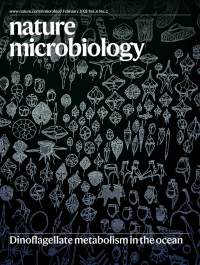
A research paper by University of Georgia Skidaway Institute of Oceanography scientist Natalie Cohen was selected as the cover article in the February issue of the journal Nature Microbiology.
The paper, “Dinoflagellates alter their carbon and nutrient metabolic strategies across environmental gradients in the central Pacific Ocean,” was based on data a team of fellow researchers collected on a 2011 cruise in the equatorial Pacific Ocean. Dinoflagellates are tiny plankton, many of which are capable of using photosynthesis in addition to eating small prey.
They play a fundamental role in the biogeochemical cycles in the ocean by transferring energy from lower to higher life forms and also transporting carbon vertically in the water column.
“Some dinoflagellates can travel vertically in the water column using their flagella,” said Cohen, the lead author of the paper. “Some are also capable of bioluminescence which can light up the sea surface at night.
“They are found throughout the world’s oceans and an important component of the ocean carbon cycle.”
When the scientists analyzed the data from the cruise, they discovered a greater abundance of dinoflagellates than they expected. Researchers found the dinoflagellates were abundant both in the sunlit surface ocean and also in deeper, darker waters. This relative abundance in two drastically different environments lead the researchers to conclude the dinoflagellates must change how they function as they move from one depth zone to the other.
Cohen conducted the research while she was a postdoctoral fellow at Woods Hole Oceanographic Institution.
Along with Cohen, the other members of the research team include Matthew McIlvin, Dawn Moran, Noelle Held, Jaclyn Saunders, Mak Saito and Michael Brosnahan, all from Woods Hole; Nicholas Hawco from the University of Southern California; Giacomo R. DiTullio from the College of Charleston; Carl Lamborg from the University of California, Santa Cruz; and John McCrow, Chris Dupont, Andrew Allen, all from the J. Craig Venter Institute.
After a lengthy hiatus due to the COVID-19 pandemic, the University of Georgia Skidaway Institute of Oceanography resumed its 2021 Evening @ Skidaway speaker series in February. The talk was the first of 11 Evening @ Skidaway programs to be presented through November.
The programs were initially presented via Zoom, but were subsequently moved to UGA Skidaway Institute’s YouTube channel and will begin at 7 p.m. Evenings @ Skidaway will continue to be presented virtually until it is possible to safely resume in-person gatherings.
Tuesday, April 13 – Dan Ohnemus, “A Look at Climate Mitigation Solutions: Ideas for the Century Ahead”
Tuesday, May 18 – Adam Greer, “The Secret Life of Ocean Critters”
Tuesday, June 8 – Clifton Buck, “Is it the Sun? Skepticism and Myth Making in Climate Science”
Tuesday, July 13 – Catherine Edwards, “Alexa, Map Fish Habitats! Artificial Intelligence for Robotic Fisheries Management”
Tuesday, August 10 – Open Lab Night, Labs TBA
Tuesday, September 14 – Clark Alexander, “I’m all shook up – Earthquakes and Tsunamis”
Tuesday, October 12 – Marc Frischer, “Climate Change and Shrimp Black Gill – Is There A Connection?”
Tuesday, November 9 – Jay Brandes, “The Ocean’s Plastic Problem – A Very 21st Century Pollutant”
For additional information, contact Michael Sullivan at (912) 598-2325.
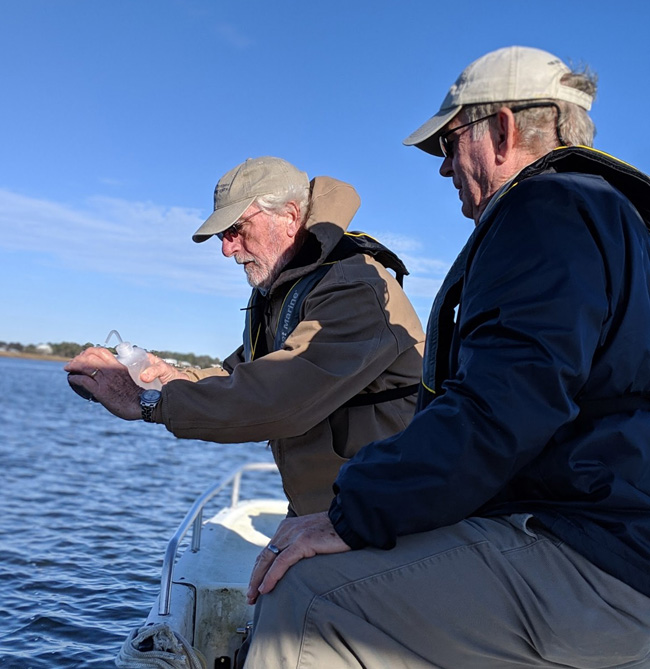
You don’t have to be a professional scientist with an advanced degree to make a meaningful contribution to scientific research. That is one conclusion of a recent paper by Dorothea Sanders, an educator at the University of Georgia Marine Extension and Georgia Sea Grant, and UGA Skidaway Institute of Oceanography researcher Jay Brandes. The article was published in the winter issue of Current: The Journal of Marine Education.
The paper focuses the researchers use of “community scientists” in a project to study the extent of microplastic pollution on the Georgia coast. The community scientists are volunteers, without extensive training or graduate degrees in the field.
Volunteers Roger Cayer and Jim Orr rinse sieves used to collect microplastics.
The initiative began in 2018 when Brandes and Sanders were faced with the daunting task of collecting monthly water samples at 12 different sites along the Georgia coast, but without a large team to conduct the field work. The previous summer, a UGA undergraduate student, Jacob Mabrey, demonstrated that using community scientists to fill the gap might be the answer. Mabrey spent the summer travelling up and down the coast and collected dozens of samples. Sanders and Brandes wanted to know whether community science could play a significant role in scientific research. They started with a model developed by the University of Florida microplastics project, Florida Microplastic Awareness Project.
“We took that model and adapted it to what we thought we needed here on the Georgia coast,” Sanders said.
Volunteers Maddie Monroe and Jim Orr collect water samples for microplastics.
Sanders and Brandes initially approached the Satilla, Altamaha and Ogeechee Riverkeeper groups, who conduct monthly water tests in their areas already. The riverkeeper groups gladly joined the project. Sanders and Brandes then expanded to include a small group of volunteers who were working with Marine Extension and Georgia Sea Grant on the Skidaway Island campus.
“It’s worked out great, because we have a group of volunteers that are very interested in learning more about this global issue,” Sanders said. “But more importantly, they’re interested in doing something about it. And so, this afforded an opportunity for volunteers to come in and not only help us do the science, but also become advocates for the project and advocates for what we were trying to accomplish.”
Roger Cayer is one community scientist volunteer. “I feel like studies like this are important to raise the awareness level of the general population about plastic pollution,” he said. “Who would have thought that synthetic clothing would become such a major problem?”
Brandes is very careful to avoid using the term “amateur” to describe the team of volunteers. “I think, sometimes, there can be a negative connotation to that word, but the people who have been working on this project have been wonderful and very dedicated.”
He said that everyone involved understands the critical importance of proper research technique, strict protocols and training in order to obtain believable data.
The COVID-19 pandemic put a halt to the field work for the past 12 months. As Brandes said, it is difficult to socially distance on a 24 foot Carolina skiff.
Sanders and Brandes would like to see their work benefit other researchers and community scientists. The overarching concept of the article is to provide a model that other researchers can put to work elsewhere.
“Take community science, and its advantages, and its bonuses and how people can be an integral, an important part of scientific research, because they are force multipliers,” Sanders said. “They allow us to do so much more on such a larger scale than we would be able to do on a day-to-day basis.”
Sanders said the community scientists opened her eyes to how the public is interested in environmental issues, especially issues that are in their own backyard. And they want to be advocates.
“So that’s been a rewarding aspect of this project, to not only get to know the volunteers or the community scientists on a personal level, but to realize their passion for the work is just as great as our passion,” she said.
That passion is echoed by Cayer who said he has enjoyed “the camaraderie, the laughs, the sharing of knowledge and ideas. And getting to know each member on a deeper level by sharing a common passion and goals.”
Molecular ecologist Natalie Cohen joined the University of Georgia Skidaway Institute of Oceanography faculty in December 2020
Cohen studies the molecular components within phytoplankton, especially their DNA, RNA and proteins.
“I’m also dabbling and trace metal geochemistry,” Cohen said. “And that makes Skidaway a really great place to be, because there are several other geochemists here, which is really nice for collaborations and coming up with new research directions.”
Although so tiny they are out of sight to a non-scientist, Cohen says the phytoplankton she studies are a vital part of the ocean.
“They carry out powerful reactions in the ocean, and they’re responsible for the transfer and movement of energy from the surface of the ocean to the ocean interior,” she said. “So, they play an essential role in our ocean biogeochemical cycles.”
Cohen received her B.S. in biology from Penn State and her Ph.D. in marine sciences from the University of North Carolina at Chapel Hill. She joins UGA Skidaway Institute from a post-doctoral fellowship at Woods Hole Oceanographic Institute.
Cohen is also an assistant professor in the UGA marine sciences department.
In recent years, some coastal communities have begun building man-made sand dunes as an alternative to hard structures like sea walls to protect their beaches from natural erosion and the effects of storm surges. Now researchers at the University of Georgia Skidaway Institute of Oceanography are studying the man-made dunes on one Georgia island to determine if man-made dunes really are the best answer to the beach erosion problem.
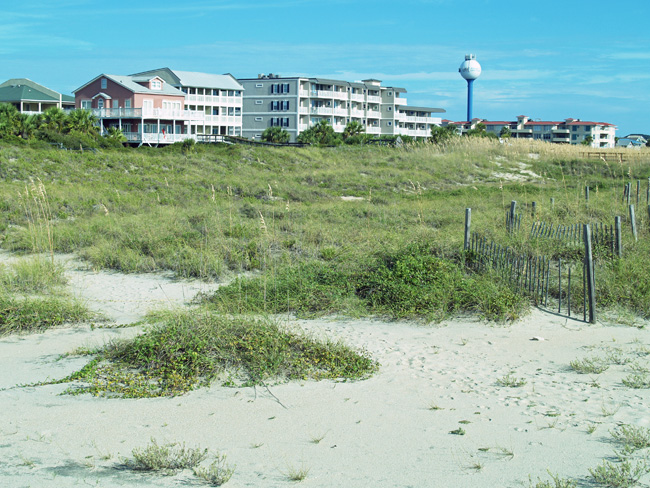
Tybee Island dunes
Every five to seven years for the past few decades, the Army Corps of Engineers has pumped thousands of tons of sand onto the beaches of Tybee Island to renourish the beaches that became reduced by natural erosion and the influence of the Savannah River ship channel. In the last renourishment, completed in early 2020, the Corps included some additional sand. The City of Tybee Island used the sand to form dunes to supplement the existing dune system. What is not known is whether this is a good long-term solution compared with other remedies like sea walls and rock revetments.
“We know sand dunes are protective, and that building dunes is better and cheaper than building seawalls,” UGA Skidaway Institute researcher Clark Alexander said. “The goal of our project is to determine how they function after you build them, and how they change so we can better manage them in the future.”
Alexander and his team are using drones and high-tech mapping technology to monitor the dunes to see how well the dunes effectively stand up to the forces of nature.
A drone in flight
“We want to monitor the dunes and let Tybee know how they are changing, where they are changing most rapidly and where they might want to concentrate future deposits of sand,” Alexander said.
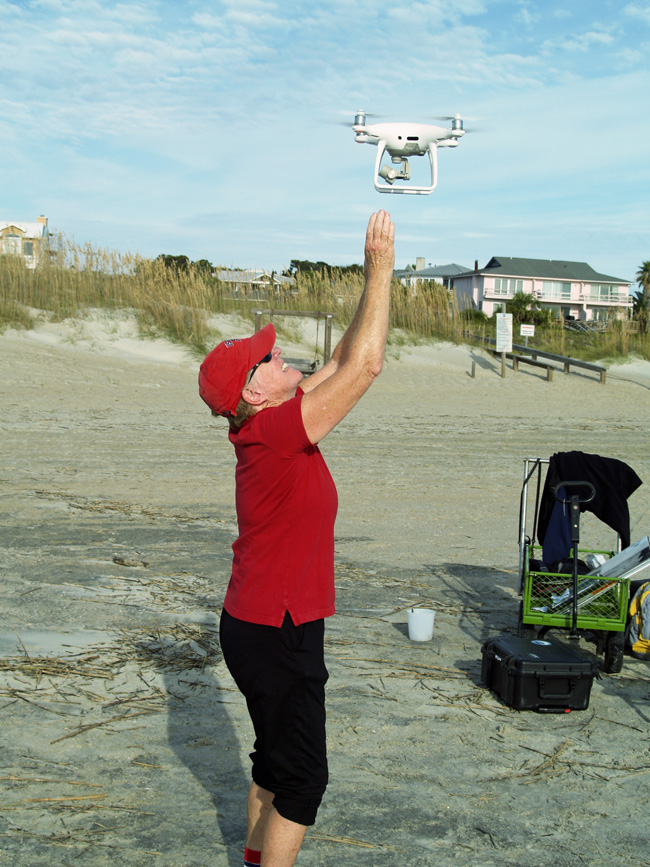
It takes four to five days for the drone to survey all the Tybee beaches. During each flight, the drone will take thousands of overlapping pictures. The drone team begins by placing markers on the ground. They pinpoint the markers’ positions and elevations using a global positioning system that is accurate to within a couple of centimeters (less than an inch). Using these markers as known reference points, geographical information software analyzes the drone pictures and creates a three-dimensional model of the beach and dunes. By comparing the results of the surveys over time, Skidaway researchers monitor the changes in the dune system.
Volunteer Kate Burns “catches” a drone as it returns from a flight.
Like many barrier islands, Tybee’s beaches do not erode uniformly from one part of the island to another. This project will help the city to better predict what sections are going to need attention before others. Alexander points to the center of the island which has multiple rows of dunes and actually developed additional dunes naturally with each renourishment project. On the other hand, the north and south ends of the island are subject to a greater rate of erosion and some sections had no dunes at all until the man-made dunes were built there.
Research technician Claudia Venherm flies a drone while volunteer Cathy Lewis looks on.
The results of this project will be felt far beyond the shores of Tybee Island. Alexander and his team plan to produce a “best practices” manual that can be used by other coastal communities. “So that other communities, if they do decide to build dunes, they will have a starting point for how to monitor them,” Alexander said. “This may be applicable to Jekyll Island that is trying to figure out how to protect their upland while their beaches are eroding. And St. Simons Island has sections of their island that are at risk.”
Alexander said beach renourishment was the first step to move away from hardening a shoreline, and describes dune building as a more environmentally friendly and sustainable solution.
“Dunes are a good solution instead of having a pile of rocks that may or may not protect you over the long term, and are really ugly, if you want to be frank,” he said. “Building dunes, creating habitat, helping to recreate the natural environment and let it function for us as it has in the past. I think this is the next step down that path using natural solutions to the problems we generate by our desire to live right at the coast.”
The project is anticipated to run for three years at $70,000/year with support from the City of Tybee Island, through a grant from Georgia’s Department of Community Affairs, and from the US Army Corps of Engineers. Alexander hopes to identify and obtain additional funding to allow the project to continue throughout the typical seven-year span between beach renourishments.
The coast has long been a place where the future happens first. Millennia before James Oglethorpe landed at Yamacraw Bluff on the Savannah River to found the Georgia colony, Native Americans, such as the Mokoma, Timucua and the Guale, had already introduced their civilizations to the area.
But on the coast, nothing is permanent—not the populations, not the vegetation. Not even the land.
Today, instead of vast marshes and uninterrupted coastal plains, there are neighborhoods, highways, commercial tracts and beach developments. There are shrimp boats and fish trawlers. There’s a shipping industry that boasts both the Port of Savannah—the fastest growing in the nation for the past 10 years—and the Port of Brunswick, the second busiest in the country for shipping motor vehicles.
Coastal Georgia is an ever-changing landscape that ebbs and flows in response to both natural and human-made forces. Scientists and researchers from an array of disciplines at the University of Georgia are dedicated to understanding how to balance those systems so the people of the state and visitors can enjoy them for years to come. UGA’s activities in pursuing coastal resilience run the gamut from educating the public to uncovering the latest science to helping communities withstand the physical and economic effects of the intruding sea.
Losing ground?
Clark Alexander
For the majority of Georgia’s population, the coast is a place to come and have fun temporarily, to visit the sites and do a little fishing, shopping and beach-combing, before they go back home. But the people who live there depend on the coast’s resilience.
“The coastal ecosystems and coastal jobs are critically important for the economy of the state. That’s everything from seafood production to ecotourism to port activities,” said Clark Alexander, director of UGA’s Skidaway Institute of Oceanography.
The state’s seafood industry employs nearly 10,000 people, to the tune of $1.4 billion in sales, while the recreational fishing industry supports more than 1,400 jobs with another $140 million in sales.
Because many of the species in these two industries spend at least part of their life cycles in the marsh, Alexander said, it’s vital for business that coastal ecosystems stay healthy.
Mark Risse
“Georgia has some of the best and most protected coastal ecosystems on the eastern seaboard. It has 14 barrier islands, and most are in long-term conservation,” said Mark Risse, director of Marine Extension and Georgia Sea Grantand Georgia Power Professor of Water Policy.
One of the biggest questions on the coast is how marshes will respond to the ongoing rise in sea level. Will they be able to withstand the ascending waterline, or will the Atlantic wash them away? According to photographic studies from the air, it looks like the marshes have been able to replenish themselves at the same rate the sea rises—so far. But models show the water’s pace is likely to increase.
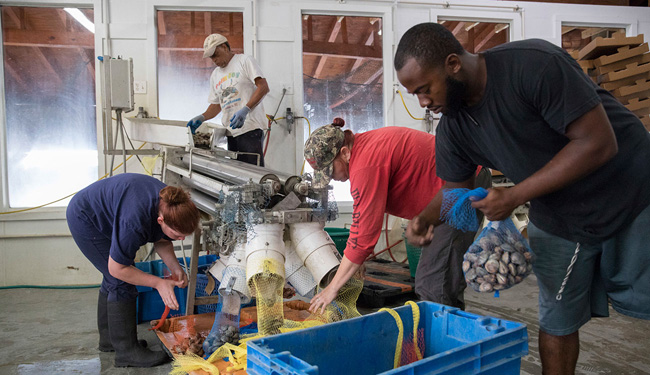
Sapelo Sea Farms employees sort and grade clams at the company’s dock in Townsend, Georgia. With support from Marine Extension and Georgia Sea Grant, owner Charlie Phillips began farming clams to diversify his business after the commercial shrimping and fishing industry began to decline. (Photo by Peter Frey)
“When we look forward, it’s a little scarier because we see the pace of sea-level rise increasing, and it means the marsh has to keep up. It’s going to have to sort of run faster to stay in place,” explained Merryl Alber, director of the UGA Marine Institute on Sapelo Island.
Merryl Alber, director of the UGA Marine Institute on Sapelo Island, is studying the impacts of sea-level rise that we can’t see. She and her colleagues are mapping what’s happening to coastal plant life underneath the soil. (Photo by Peter Frey)
Alber is working with research scientist Jessica O’Connell on a study mapping what’s going on under the soil in the marshes.
“There’s evidence that we might be losing ground that we’re not seeing when we look from above,” said Alber. “That could lead to the loss of that marsh, which would result in less carbon being stored by the plants.”
If plants aren’t able to store as much carbon, it will stay in the air where it could contribute to higher temperatures. What’s more, marshes are a nursery of nutrients for developing plant and animal life. Take away the marshes, and you wipe out a good portion of the base of the food web of the coast.
In the midst of mapping this loss, they’re trying to see if they can identify the most vulnerable spots and share it with the Department of Natural Resources to protect those areas.
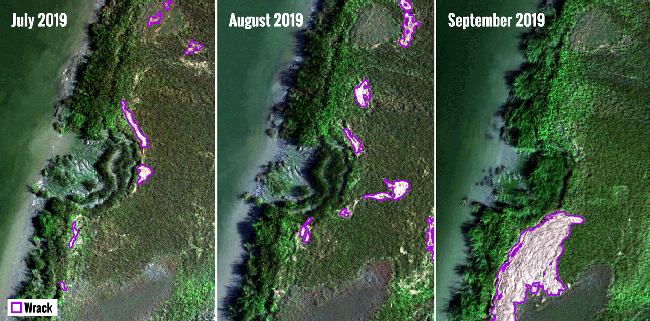
These drone images from the UGA Marine Institute show disturbances to sea wrack (seaweed) over time. Taken in three successive months in 2019, the photos show wrack disturbances in purple and provide information about the size, extent and amount of time that these disturbances last and what that means for the health of the salt marsh. (Image courtesy of UGA Marine Institute)
The resilience of a living shore
One way to help keep the coast resilient may be to convince developers to switch from using armored shorelines, made of steel, asphalt or concrete, to using natural materials like grasses, oyster shells, sand or rock in an array known as a “living shoreline.” Whereas armored shorelines simply keep the water at bay, sometimes just moving its destructive force down the coast, living shorelines can absorb the water.
Brian Bledsoe’s Institute for Resilient Infrastructure Systems works with state and local permitting agencies to help communities progress toward infrastructure systems that operate more in harmony with natural systems and are more tolerant to environmental disruptions. (Photo by Dorothy Kozlowski)
“Living shorelines can adjust and regenerate after a hurricane or a major storm. It may look a little beat up, but it’s going to patch itself back together using solar energy,” said Brian Bledsoe, director of UGA’s Institute for Resilient Infrastructure Systems (IRIS).“How many bulkheads that get hammered do you see building themselves back up?”
These shorelines work by trapping sediment in the water, which promotes plant growth. They also can absorb much more of the incoming waves, with a small portion of marsh absorbing a large portion of the wave energy, explained Bledsoe.
The living shorelines also protect those species that are a critical part of the costal ecosystem. Studies show an increase in fish, crabs and shrimp at living shorelines built by Marine Extension on Tybee, Sapelo and Little St Simons islands. Bagged oyster shells and native vegetation provided the base, with natural oyster reefs forming above. In addition to erosion control, the oyster shells improved water quality by naturally filtering pollutants from runoff.
“Living shorelines in Georgia are doing the job they were designed to do and have remained intact after storm events and continue to stabilize the shoreline,” said Tom Bliss, director of the Shellfish Research Lab at Marine Extension. “Continued monitoring will allow us to determine their longevity.”
Bledsoe is working on teaching permitting agencies up and down the coast about the benefits of living shorelines, which can work in concert with armored shorelines for a hybrid approach, making the system stronger overall.
“If you go down to your permitting agency and you want to get a permit for a bulkhead, they have a standard process and can issue those relatively quickly. It’s something they’re familiar with,” said Bledsoe. “But if you want to build a living shoreline, they’re not as accustomed to handling that. It’s often outside their comfort zone.”
Living shorelines, like this one at Cannon’s Point Preserve on St. Simons Island, use natural materials like oyster shells, sand or rock to absorb some of the water and wave energy unleashed during a tropical storm or hurricane. (Photo by Courtney Balling and Tommy Jordan)
IRIS and the Marine Extension collaborate with state and federal agencies, as well as private partners, to raise awareness of living shorelines as a prudent investment. IRIS has proposed a resiliency plan to the National Fish and Wildlife Foundation for the backside of Tybee Island, which would create living shorelines along with natural pathways to move floodwaters in a way that reduces damage to infrastructure.
It’s a critical time, according to Risse. As shore communities like Tybee and St. Mary’s experience flooding during high tides, there’s a real concern that people’s homes and retirement nest eggs will be drowned. With the region expected to double in population over the next 40 years, helping communities understand the ongoing risk while creating sustainable development is one of its biggest challenges.
Marine Extension for years has been working with coastal communities to join the Consumer Ratings System (CRS), a Federal Emergency Management Agency program that reduces flood insurance premiums—sometimes by as much as 80 percent—for property owners in cities and counties that take action to exceed minimum floodplain management standards.
Tybee Island put $1 million into drainage improvements and began requiring new property owners to build at least one foot above the base flood elevation. As of 2017, Tybee Island property owners had saved more than $3 million in insurance premiums.
The troubles with floods
In addition to flooding from the sea, overworked stormwater systems can inundate the streets as well. Because these systems are designed to drain to rivers or the ocean, high tide can bring an intrusion of saltwater. When it rains, the basins are already partially full, giving the streets nowhere to drain.
Crumbling septic systems are one potential risk, said Alexander. As sea level rises, the coastal water table is pushed up, reducing the amount of dry soil the system uses to filter the waste and making it easier for disease-bearing materials to potentially contaminate drinking water.
An inventory of septic systems in an 11-county region along the Georgia Coast was completed by the Marine Extension last year. Risse and Scott Pippin, a faculty member with UGA’s Carl Vinson Institute of Government, are now working with the individual counties to determine which systems may be at risk and adding them to a public database.
In partnership with IRIS, Pippin has funding from the National Atmospheric and Oceanic Administration to use this septic inventory to assess present and future vulnerabilities in Bryan County, west of Savannah and home to the Fort Stewart Army Base. Bryan is also one of Georgia’s fastest-growing counties.
One way to create sustainable development is to use the marsh-front for parks and other public landscapes, so they are available for the entire community. This creates a more sustainable, living barrier than building housing right on the shore, said Jon Calabria, associate professor in the College of Environment and Design.
History is at stake as well. Calabria is working with the National Park Service, who, within a few years, will have to decide which historical seaside military forts it will try to save as the sea encroaches. “At some point, they may not be able to afford to maintain all of them just because the position they’re in is very vulnerable,” said Calabria. “If there’s an opportunity to redo some of the levees, that may buy them a few more years.”
Jill Gambill, coastal community resilience specialist at Marine Extension, helps communities and coastal residents plan for future incursions of the sea. Following Hurricane Matthew, Gambill led a series of focus groups in coastal communities to assess residents’ attitudes and behaviors related to evacuation. Using this information, Gambill produced materials to help better prepare coastal residents in the event of a storm, rolling out a YouTube video, social media and graphics to encourage residents to evacuate in advance of Hurricane Irma in 2017.
“One of the biggest take-homes is that storm surge is complex and there are lots of aspects to it,” Risse said. “We need to do a better job communicating what the risks are.”
Nik Heynen in geography is working with the Gullah Geechee community of Hog Hammock on Sapelo Island to reintroduce crops like sugar cane on the island. The project would help Hog Hammock residents become more self-sufficient and provide a boost to the community’s economy. (Photo courtesy of Nik Heynen
Environmental justice for all
Taking practical steps is very much influenced by one’s economic means, explained Alber. “One thing people are starting to key into is understanding the differences in people’s ability to respond to the challenges,” she said. “If you have more money and live in a flooded area, you can probably move. But if you don’t have a lot of money, it may be challenging. So there are some environmental justice questions.”
The identity and economic class of a community can have a significant effect on how much help and access they get to these solutions, said Nik Heynen, professor in the Department of Geography.
As part of UGA’s Cornelia Walker Bailey Program on Land and Agriculture, co-directed by Heynen and Sapelo Island business leader Maurice Bailey, Heynen spends a lot of time working with the island’s Gullah Geechee community of Hog Hammock. These direct descendants of people brought over as slaves from West Africa possess a unique culture. The community was once as large as 500 people but has dwindled to around 40. It’s a relationship that took a lot of time and care to build, Heynen said.
“Stripping assumptions about what people in the community want, opening lines of communications between people who respect each other and are willing to be honest, even when it’s difficult, [goes a long way],” he said.
Heynen works alongside residents as they reintroduce several crops, like sugar cane, that were once grown on the island. Currently, with five plots of land, one as large as 25 acres, they’re working it on a shoestring, using a lot more manual than mechanized labor.
“If we can get a tractor, it’ll really be a game-changer,” said Heynen.
The UGA Marine Education Center & Aquarium, located on Skidaway Island as part of the Marine Extension and Georgia Sea Grant, holds summer camps for elementary, middle and high schoolers, as well as internships and adult education programs for older students, to help the public learn about the flora and fauna of coastal ecosystems, in hopes of inspiring people to preserve and protect them. (Photo by Peter Frey)
Teaching the future
In Savannah, UGA’s Marine Education Center and Aquarium, part of Marine Extension, hosts kids aged 6 to 15 during the Summer Marine Science Camp and provides educational field trips to student during the school year, where they learn from scientists about the coastal ecosystem, sea life and local habitats. The aquarium also conducts adult education programs. Its offerings are designed around the concept that educating and familiarizing the public with the ecosystem will inspire people to preserve and protect their environment.
In addition, Marine Extension hosts internship programs for students, teachers and the public in topics such as aquarium science, water quality, shellfish, coastal septics and socioeconomic issues. College students take part in courses where they learn about and prepare for careers in the marine sciences and coastal management.
To help teach residents about the dangers of staying in place during an evacuation order, Sun Joo (Grace) Ahn, associate professor in the Grady College of Journalism and Mass Communication and director of the Games and Virtual Environments Lab, has created a virtual reality system that gives them a first-person experience of a hurricane.
“Virtual reality is particularly good at placing users in a situation that can be potentially fatal or even impossible in the physical world, in a way that’s very realistic to the senses,” said Ahn.
By experiencing a storm in a virtual world, Ahn is giving people a way to see just how dangerous a storm can be. Users can look in all directions and see the water entering a house and surrounding them with debris, mud and furniture, making it difficult for them to move, much less leave. At the end, the simulation shows what someone should do in such a situation.
“It’s a very visceral, frightening experience,” said Ahn.
The big picture
“One third of the salt marsh in the eastern United states is along our 100 mile coast and these marshes have a tremendous impact on the entire Atlantic ocean,” Risse said. “Key parts of our coastal food web including many fish and sea turtles originate in coastal Georgia and travel around the world.”
Add to that biodiversity, the cultural diversity of those who call the Georgia coast home, from the Gullah Geeche, the descendants of the European settlers, to the newcomers arriving from the four corners of the globe, and it’s clear that the coast is a lot more complex than previously understood. It takes patience, the ability to learn from what each other sees, and an openness to new ideas to fully comprehend how the natural world responds to the activities of humankind. One thing is sure: We’ll get a lot farther working the puzzle together than on our own.
That goes for scientists too.
“You have to learn your colleagues’ thought structures, their tools, models, how they view the world,” said Bledsoe. But it gives researchers a more holistic view of the region, so they can understand how everything works together. “It takes a lot of time, discussions and humility.”













 skidawaycampusnotes.com